Technology · AI
South Korean Chipmaker Rebellions Targets H2 2026 Launch for AI Inference Accelerator
The Seoul-based startup is preparing commercial shipments of its Rebel100 chip as enterprise demand pivots from training infrastructure to inference workloads
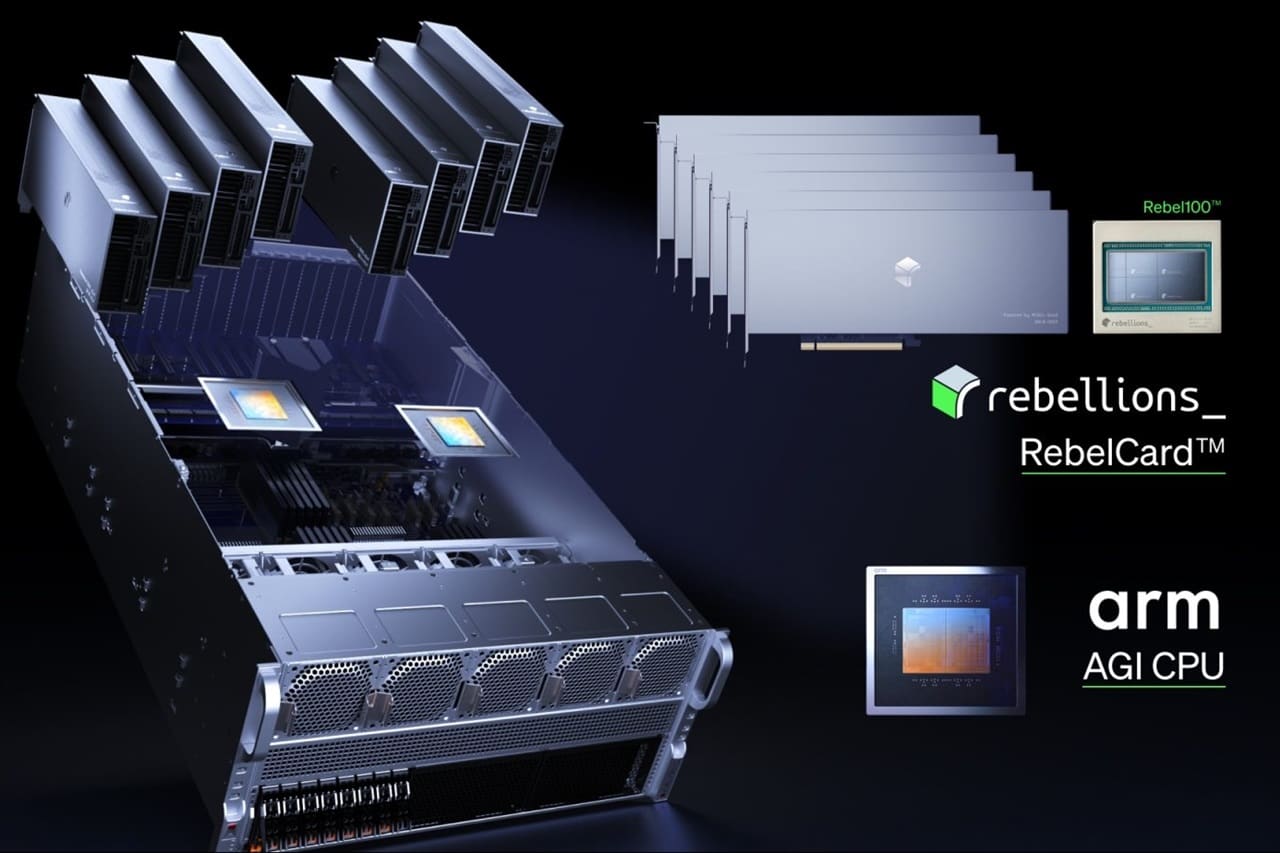
KEY TAKEAWAYS
- ·Rebellions will ship its Rebel100 AI inference accelerator in the second half of 2026, targeting enterprise deployments across Asia.
- ·Infrastructure spending is shifting from model training to inference as commercial AI services and autonomous agents scale in production environments.
- ·South Korea is positioning itself as a strategic alternative in AI semiconductors, supported by government funding and partnerships with local telecommunications and cloud operators.
Shipping Timeline and Product Strategy
Rebellions, a Seoul-based AI chip designer, will begin commercial shipments of its Rebel100 accelerator during the second half of 2026, according to the company. The move comes as infrastructure buyers across Asia increasingly allocate capital to inference workloads rather than model training clusters.
The Rebel100 represents the company's second-generation architecture, purpose-built for inference tasks that power real-time AI applications, chatbots, recommendation engines, and autonomous agents. Rebellions has not disclosed pricing or performance specifications, but the chip targets the same data center segment currently dominated by Nvidia's H-series and emerging competition from Graphcore, Cerebras, and China's Biren Technology.
South Korea has positioned itself as a strategic alternative in the AI semiconductor supply chain, with government backing for domestic chip design through the K-Semiconductor Belt initiative. Rebellions has raised multiple funding rounds from local investors, including SK Telecom and Temasek-linked funds, and counts several Korean cloud providers and telecommunications operators among its design partners.
The Inference Shift
Training large language models and generative AI systems requires massive compute clusters running for weeks or months. Inference, by contrast, happens millions of times per second across distributed edge and cloud infrastructure as end users interact with deployed models. The economics differ sharply: training is a one-time capital event; inference is a recurring operational cost that scales with user adoption.
Enterprise buyers in Singapore, Tokyo, Seoul, and Hong Kong are now deploying AI agents for customer service, financial analysis, logistics optimization, and compliance monitoring. These applications demand low-latency inference at scale, creating sustained demand for specialized accelerators rather than one-off purchases of training hardware.
Rebellions is betting that this shift will open a wedge for challengers outside the incumbent GPU ecosystem. Inference chips can be optimized for lower power consumption, smaller form factors, and narrower precision arithmetic, all of which reduce total cost of ownership for operators running millions of queries per day.
Regional Context and Competition
Asia accounts for roughly 40 percent of global semiconductor fabrication capacity and a growing share of AI chip design talent. South Korea, Taiwan, and Japan have each launched national programs to reduce reliance on US-designed AI hardware, spurred by export controls and supply chain fragility exposed during the pandemic.
Rebellions competes domestically with Sapeon, a Samsung spinout focused on hyperscale inference, and internationally with established players like AMD, Intel's Habana Labs, and a crowded field of venture-backed startups. The company has not disclosed customer names, but industry observers expect initial deployments at Korean telecommunications and internet platforms before expansion into Southeast Asia and Japan.
China's inference chip sector, led by companies like Biren and Moore Threads, remains constrained by US export rules on advanced packaging and EDA tools. That regulatory environment has created an opening for Korean and Taiwanese suppliers to serve customers across the region who need cutting-edge performance without navigating US licensing requirements.
What Comes Next
Rebellions plans to ramp production through partnerships with Korean packaging houses and TSMC's advanced node capacity. The company has not announced a foundry partner publicly, but South Korean chip designers typically split production between Samsung Foundry for domestic supply and TSMC for volume manufacturing.
The second half of 2026 will also see new inference products from Nvidia, AMD, and Intel, making it a pivotal period for market share formation. Rebellions will need to demonstrate competitive performance per watt and total cost of ownership to win design-ins at scale. Early traction in Korea and Japan will be critical for establishing credibility before tackling the larger, more competitive markets in China and North America.
For now, the company's timeline aligns with broader industry expectations that inference spending will overtake training expenditure by 2027, driven by the proliferation of commercial AI services and the shift from experimental pilots to production deployments. Whether Rebellions can capture meaningful share in that transition will depend on execution, ecosystem support, and the willingness of regional cloud operators to diversify their hardware stack.
RELATED STORIES
Samsung and SK Hynix Turn Down KEPCO's Multibillion-Dollar Prepayment Demand
Cheng Wei-Lun · 4 min

South Korea Records Highest September Export Start on Semiconductor Demand
Tran Quoc Bao · 3 min
Hyosung Heavy Gains Ground in US Power Grid Market With Early Manufacturing Push
Jun-ho Seo · 4 min
LG Pivots to AI-Defined Vehicle Platform as Korea Chases China's Self-Driving Lead
Jun-ho Seo · 3 min
Spot something wrong? Email editor@briefasia.com. We log every correction publicly.