Technology · AI
Razer and NUS Launch AI Gaming Lab to Develop Narrow Intelligence Models
The Singapore-based gaming hardware maker is pushing deeper into software and artificial intelligence, establishing a joint research facility focused on interactive digital environments.
KEY TAKEAWAYS
- ·Razer and National University of Singapore opened a joint AI research lab on August 5 focused on gaming artificial narrow intelligence, employing 15 to 20 NUS researchers.
- ·AI in gaming is projected to grow from $4.2 billion in 2025 to $66.8 billion by 2035, driven by enhanced gameplay mechanics and immersive environments.
- ·Razer has invested in software development for years without monetization, prioritizing user engagement, though the company may eventually pursue revenue from AI products.
A Hardware Maker's Software Ambitions
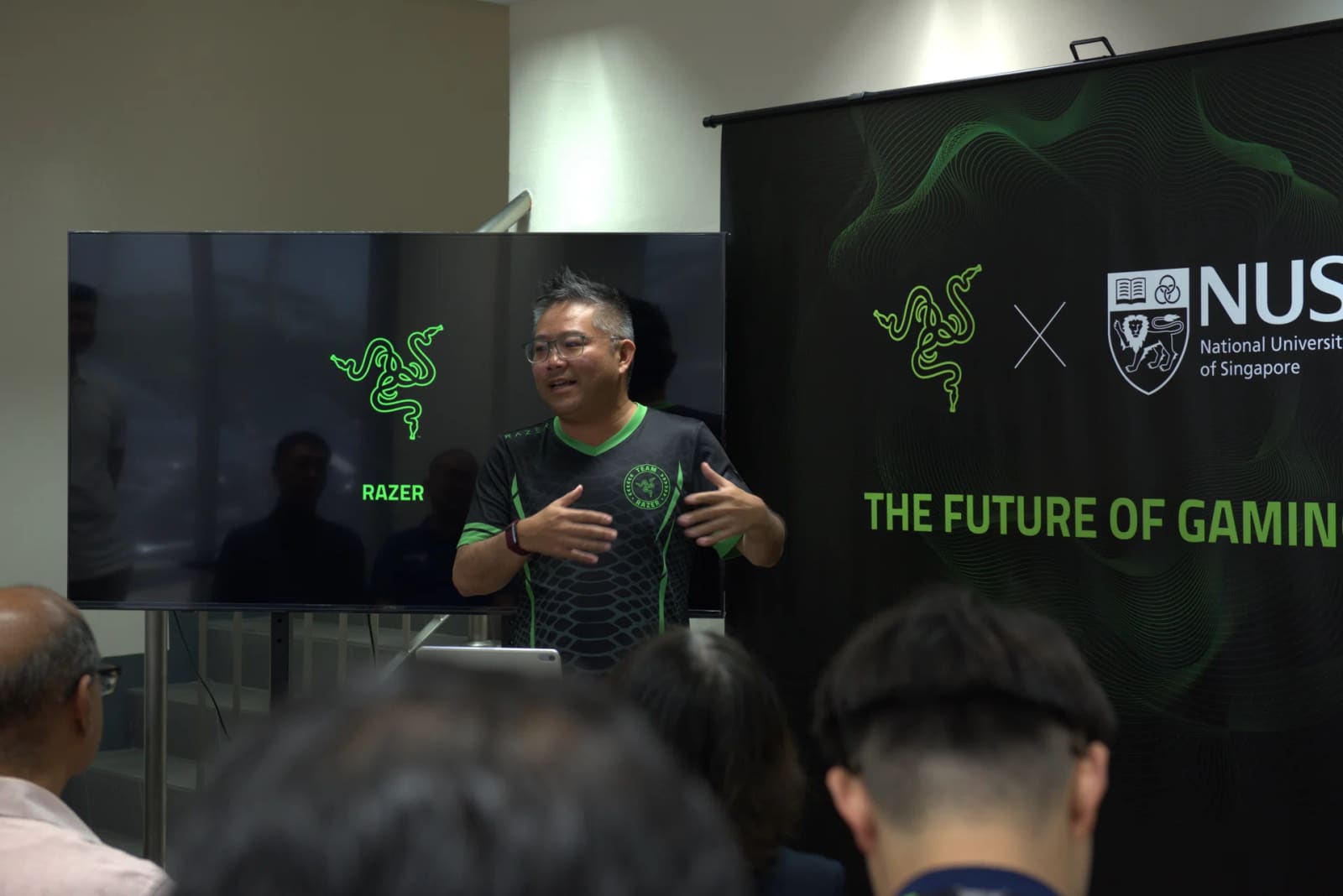
Razer opened a joint artificial intelligence research laboratory with the National University of Singapore on August 5, marking the gaming peripheral maker's latest move into software development and machine learning. The facility will focus on what the partners call gaming artificial narrow intelligence, or Gani, a category of AI models built specifically for interactive digital settings.
The lab will employ 15 to 20 researchers from NUS' School of Computing, with Razer personnel contributing on a project basis. Chief Strategy Officer Lee Li Meng framed the initiative as part of a broader pivot. Hardware, he noted, represents the straightforward portion of Razer's business. The complexity lies in building software that works across different device formats.
Razer has poured capital into software development for years without extracting revenue, Lee said. The goal has been user engagement rather than immediate monetization, though the company may eventually pursue commercial applications. No timeline or business model has been disclosed.
Three Research Pillars
The lab's work will concentrate on three areas: core model innovation, real-time content generation systems, and personalization technology. These pillars aim to enable AI that can adjust game difficulty during live matches, generate context-specific dialogue on the fly, or create dynamic objectives tailored to individual players.
Associate Professor Ooi Wei Tsang from NUS' computer science department will direct the facility. Intellectual property developed through the partnership will be jointly owned by both institutions.
Lee emphasized that Razer cannot advance this research alone. The company intends to collaborate with other gaming industry players and provide doctoral students with opportunities to translate academic work into tangible products. NUS contributes research talent and pipeline development, while Razer offers real-world implementation and distribution channels.
Industry Context
AI adoption in gaming has accelerated across both hardware and software segments. Market research firm InsightAce Analytic projects the sector's AI value will climb from $4.2 billion in 2025 to $66.8 billion by 2035, a compound annual growth rate of 32 percent. The firm attributes this expansion to enhanced gameplay mechanics, immersive experiences, and more sophisticated in-game environments.
Razer's initiative arrives as the company expands beyond its core enthusiast audience. The firm is developing Razer AVA, a holographic digital assistant capable of responding to voice commands. No pricing or release date has been announced.
Singapore's AI Infrastructure
The new NUS lab sits upstream from Razer's existing AI Centre of Excellence, established in August 2025 at the company's Southeast Asian headquarters in Singapore's one-north district. That facility houses over 100 AI specialists working on consumer-facing applications and hardware integration. Razer operates a second Centre of Excellence in France focused on quality assurance and haptics technology.
Lee described the research lab's role as forward-looking, positioned to explore concepts two steps ahead of current product development. The NUS partnership represents a longer research horizon compared to the more immediate engineering work conducted at the Singapore AI hub.
Monetization Questions
Razer has built its brand on high-performance peripherals: mechanical keyboards, precision mice, and gaming headsets. The company's move into AI-driven software layers raises questions about how it will capture value from these investments. Lee acknowledged that revenue generation will eventually become a priority but offered no specifics on subscription models, licensing arrangements, or embedded AI features in future hardware.
The gaming artificial narrow intelligence domain remains largely undefined. Unlike general-purpose large language models, Gani systems would operate within constrained interactive environments, potentially offering lower computational overhead and more predictable behavior. Whether this approach yields commercially viable products will depend on adoption by game developers and publishers beyond Razer's ecosystem.
For now, the company appears willing to treat AI development as a long-term strategic investment rather than a near-term profit center. That calculus may shift as the technology matures and competitive pressures intensify across the gaming hardware and software markets.
RELATED STORIES

Southeast Asian Workers Embrace AI Tools Faster Than Global Peers
Priyanka V. Rao · 3 min
APAC Enterprises Struggle to Prove What Their AI Systems Actually Did
Priyanka V. Rao · 4 min

Singapore Banks Hit Record Highs on Wealth Management Surge
Priyanka V. Rao · 2 min

Allianz Acquires HSBC Singapore Insurance Operations in $2.3 Billion Deal
Priyanka V. Rao · 3 min
Spot something wrong? Email editor@briefasia.com. We log every correction publicly.