Technology · Products
Ray-Ban Meta AI Glasses Launch in South Korea with Local Language Support
Three major carriers bring Meta's voice-controlled eyewear to Korean consumers, marking the latest Asian market expansion for the AI wearable
KEY TAKEAWAYS
- ·South Korea's three mobile carriers launched Ray-Ban Meta smart glasses with Korean-language AI voice control, marking the product's entry into a key Asian market.
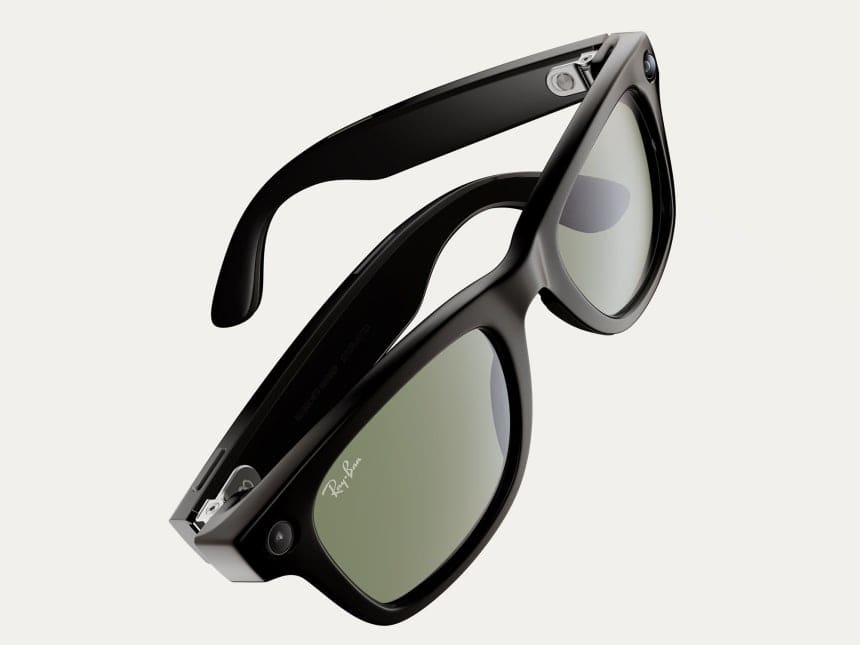
- ·The glasses feature five microphones and allow users to capture media, ask questions, and manage messages through voice commands in Korean, developed by Meta and EssilorLuxottica.
- ·Korea's high smartphone penetration above 95 percent and fast 5G networks position the market as a test case for AI wearable adoption across Northeast Asia.
Korean Carriers Roll Out AI Eyewear
South Korea's three major mobile operators introduced Ray-Ban Meta smart glasses to local consumers this week, bringing voice-activated artificial intelligence capabilities to one of Asia's most connected consumer markets. The launch includes full Korean-language support for Meta AI, allowing users to interact with the device using natural voice commands in their native language.
The glasses represent a collaboration between Meta and EssilorLuxottica, combining the social platform giant's AI technology with the Italian eyewear manufacturer's design and optical expertise. Users can now ask questions, capture photos and video, manage media playback, and respond to messages entirely through voice interaction in Korean.
Hardware and Features
The device integrates five microphones into its frame, enabling robust voice capture and processing in various environments. This multi-microphone array helps the glasses distinguish user commands from ambient noise, a critical feature for wearable AI devices intended for everyday use in crowded urban settings like Seoul, Busan, and Incheon.
Beyond voice interaction, the glasses maintain the classic Ray-Ban aesthetic while housing cameras and processing hardware. The combination aims to deliver AI functionality without the conspicuous appearance that has hindered adoption of previous smart eyewear attempts in consumer markets.
Market Context
South Korea's launch follows the product's success in Western markets, where Ray-Ban Meta glasses have become the top-selling AI wearable category. The country's high smartphone penetration rate, above 95 percent among adults, and strong consumer appetite for connected devices make it a strategic market for AI hardware expansion.
The timing coincides with growing competition in the AI wearable space across Asia. Several Chinese manufacturers have announced smart glasses with local language models, while Japanese electronics firms are exploring similar form factors. Korea's own Samsung Electronics has patents filed for AR and AI eyewear, though no consumer product has reached market.
Local carriers are positioning the glasses as an extension of their 5G and AI service ecosystems. With Korea's mobile networks consistently ranking among the world's fastest, the infrastructure supports real-time AI processing and cloud connectivity that voice-controlled wearables require.
Regional Implications
The Korean language integration signals Meta's commitment to localization beyond its core English-speaking markets. Korean, with its unique script and grammatical structure, requires dedicated natural language processing models rather than simple translation layers. This investment in language-specific AI suggests Meta views Northeast Asia as a priority region for wearable growth.
For Korean consumers, the glasses offer hands-free access to information and communication tools that align with the country's fast-paced, digitally integrated lifestyle. Commuters on Seoul's subway system and professionals in the capital's business districts represent target demographics for ambient AI interaction.
The product's reception in Korea will likely influence Meta's approach to other Asian markets, including Japan and Taiwan, where similar consumer profiles and infrastructure conditions exist. Sales data from Korea's tech-forward early adopters often serves as a bellwether for broader regional trends.
Competitive Landscape
Ray-Ban Meta glasses enter a market where consumers already embrace smartwatches, wireless earbuds, and other wearable technology at high rates. Korea's wearable device market grew 18 percent year-over-year in 2025, driven by health tracking and connectivity features.
However, the glasses face questions around privacy and social acceptance that have challenged previous smart eyewear launches. Korea has strict regulations around recording in public spaces, and social norms around photography and video capture in shared environments may shape how consumers use the devices.
The carrier distribution model provides Meta with established retail channels and customer relationships, bypassing the need to build standalone brand presence. This approach mirrors successful launches of other premium consumer electronics in the Korean market, where carrier partnerships drive initial adoption before broader retail expansion.
As AI capabilities become embedded in more everyday objects, Korea's launch reflects the ongoing shift from smartphone-centric computing toward distributed intelligence across multiple devices. Whether voice-controlled glasses gain mainstream traction will depend on sustained software improvements, compelling use cases, and consumer comfort with ambient AI interaction in daily life.
RELATED STORIES

South Korea Taps Three Telecom Giants to Deliver Free AI Services Nationwide
Cheng Wei-Lun · 3 min

Samsung Display Restarts Asan OLED Campus as Foldable Phones Stage Recovery
Cheng Wei-Lun · 4 min
South Korean Chip Materials Suppliers Ride AI Boom to Profit Surge
Cheng Wei-Lun · 3 min
Nexon Commits $179M to Gaming IP Fund Targeting Asian Developers
Cheng Wei-Lun · 3 min
Spot something wrong? Email editor@briefasia.com. We log every correction publicly.