Asia · Trade
Provincial Export Hubs Pivot Strategy as Trade Turbulence Reshapes Asia Supply Lines
Vietnam's manufacturing centers accelerate diversification efforts while navigating tariff pressures and shifting demand patterns across key markets
KEY TAKEAWAYS
- ·Export-oriented provinces in Vietnam are diversifying industrial bases as tariff pressures and uneven demand recovery force manufacturers to serve multiple markets rather than concentrate shipments.
- ·Provincial authorities are shifting recruitment focus from low-cost assembly to higher-margin sectors including semiconductor packaging, precision machining, and battery assembly to reduce dependence on final assembly alone.
- ·Logistics infrastructure and customs digitization are emerging as key differentiators, with provinces offering faster port access and real-time cargo tracking gaining advantage in attracting multinational tenants.
Recalibration at the Factory Floor
Vietnam's export-oriented provinces are undergoing a strategic reset as trade friction and demand volatility force manufacturers to rethink their market positioning. Industrial zones from Bac Ninh to Dong Nai, which anchored the country's integration into global supply chains over the past decade, now face a more complex calculus: how to maintain growth when the old playbook no longer guarantees results.
The shift is visible in investment patterns. Provincial authorities are courting suppliers for emerging sectors while existing manufacturers adjust production lines to serve multiple end markets rather than concentrating shipments to a single geography. The approach reflects a broader recognition across Southeast Asia that export dependency carries risk when trade policy becomes unpredictable.
What Changed
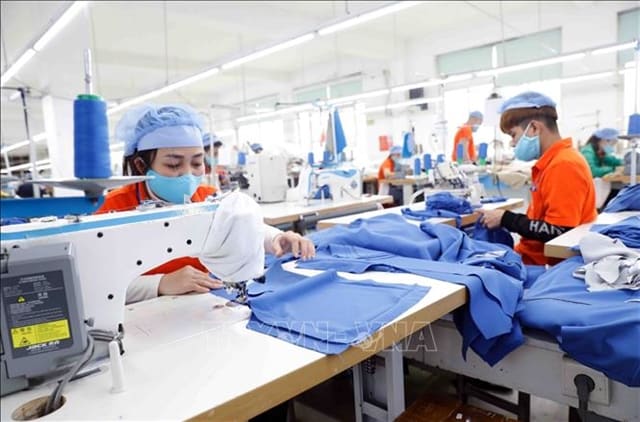
Two forces converged to accelerate this rethink. First, tariff adjustments and export controls in major markets created margin pressure for electronics and textile shipments, two categories that account for a substantial share of provincial revenue. Second, demand patterns shifted as post-pandemic consumption normalized unevenly across regions, leaving some factories with excess capacity while others scrambled to fulfill orders for different product categories.
Provinces that built their industrial base around a narrow set of buyers or product lines felt the impact first. Those with diversified tenant rosters and logistics infrastructure adaptable to new cargo types weathered the transition more smoothly. The divergence has prompted slower-moving provinces to accelerate efforts to attract component makers, testing labs, and distribution centers that reduce reliance on final assembly alone.
The New Pitch
Economic development agencies are refining their value propositions. Rather than emphasizing low labor costs, a pitch that has diminished in effectiveness as wage levels rise, provinces now highlight skilled workforce pipelines, proximity to deep-water ports, and regulatory environments that support rapid scaling. Several are investing in technical training centers tailored to semiconductor packaging, precision machining, and battery assembly, betting that these capabilities will draw higher-margin projects.
The competition is regional. Thailand, Malaysia, and Indonesia are pursuing similar strategies, each leveraging different strengths. Vietnam's advantage lies in its network of industrial parks already equipped with power, water, and customs infrastructure, but maintaining that edge requires continuous investment as neighboring countries upgrade their own facilities.
Market Rebalancing
Exporters are spreading shipments across a wider set of destinations. While the United States and European Union remain critical markets, manufacturers are increasing allocations to Japan, South Korea, and intra-ASEAN trade as a hedge against policy shifts in any single geography. The rebalancing is gradual but measurable, visible in customs data showing incremental gains for previously secondary markets.
This diversification carries costs. Serving multiple markets requires navigating different technical standards, labeling requirements, and payment terms. Smaller exporters, which lack the scale to absorb these complexities, are forming consortia to share compliance overhead and negotiate freight rates. Provincial trade promotion offices are facilitating these arrangements, recognizing that collective action can preserve competitiveness where individual firms would struggle.
Infrastructure as Enabler
Logistics capacity is emerging as a differentiator. Provinces with direct highway access to seaports or international airports can offer faster turnaround times, a critical factor for manufacturers shipping high-value electronics or perishable goods. Several provincial governments are co-investing with private developers to expand warehouse space and cold-chain facilities, infrastructure that supports a broader range of export categories.
Digital trade infrastructure is also advancing. Customs digitization, electronic certification, and real-time cargo tracking reduce friction for exporters managing complex supply chains across borders. Provinces that implement these systems effectively gain an edge in attracting tenants that prioritize speed and transparency over cost alone.
Watching the Cycle
The current adjustment phase will test which provinces can sustain momentum when external conditions remain uncertain. Those that succeed will likely be the ones that treat industrial policy as iterative, continuously refining incentives and infrastructure in response to market signals rather than locking into fixed plans. The race to become a regional manufacturing node is no longer about replicating a template; it is about adapting faster than competitors when the rules change.
For investors and multinational corporations evaluating where to allocate the next tranche of capital, provincial performance during this transition offers a preview of resilience under stress. The regions that emerge stronger will be those that view global trade headwinds not as obstacles but as forcing functions for overdue strategic evolution.
RELATED STORIES
Chinese Brands Capture Vietnam's $92 Million Robot Vacuum Market
Siti Nuraini · 3 min

Phu Quoc Prepares $5 Billion Infrastructure Push for 2027 APEC Summit
Tran Quoc Bao · 3 min

Vietnam Faces Productivity Challenge as Capital-Led Growth Model Stalls
Priyanka V. Rao · 3 min
Vietnam Mobilizes $38 Billion Public Investment to Fuel Economic Expansion
Tran Quoc Bao · 3 min
Spot something wrong? Email editor@briefasia.com. We log every correction publicly.