Finance · Deals
Powerchip Projects Double-Digit Revenue Growth Amid Leadership Transition
Taiwan's logic and memory chipmaker plans first dividend in four years as AI foundry business gains traction
KEY TAKEAWAYS
- ·Powerchip Semiconductor forecasts double-digit revenue growth in the second half of 2026 and plans to distribute its first cash dividend in four years following a return to profitability.
- ·The company posted NT$17.52 billion in net profit for the first half of 2026, reversing a NT$4.43 billion loss from the same period in 2025, with earnings per share of NT$4.08.
- ·Acting chairman Brian Shieh signals a more cautious expansion approach than predecessor Frank Huang, while president Martin Chu targets 20 percent AI-related foundry revenue within three years, up from 5 percent last quarter.
Leadership Shift and Growth Trajectory
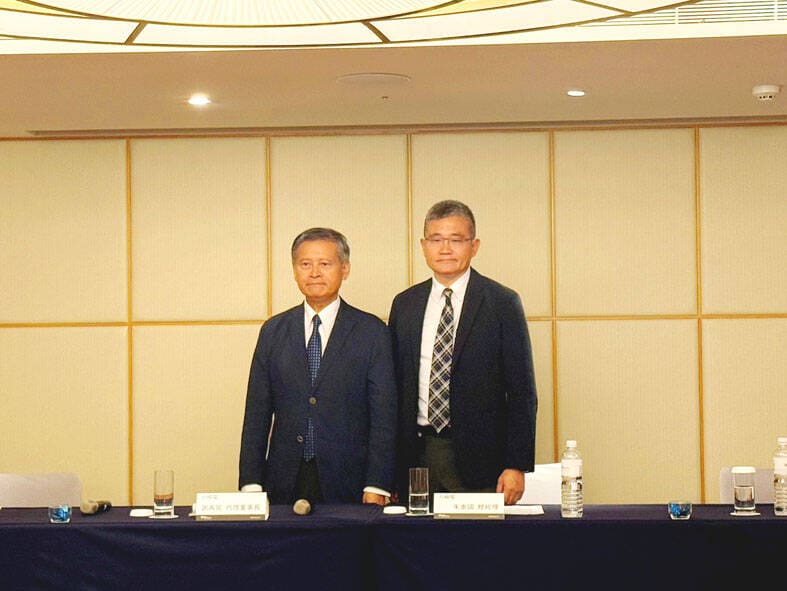
Powerchip Semiconductor Manufacturing Corp., a Taiwan-based producer of logic and memory chips, expects revenue to increase by a double-digit percentage in the second half of 2026, with monthly gains building toward a year-end peak. The company also plans to issue its first cash dividend in four years, acting chairman Brian Shieh said at a press conference in Taipei.
The announcement follows the unexpected death of chairman Frank Huang on July 29, 2026. Huang's family has affirmed its support for the existing management team, Shieh told reporters. The company's operational direction remains intact, though Shieh acknowledged a shift in approach compared to Huang's aggressive expansion style.
"We expect revenue to grow month on month in the second half and to hit a high at the end of the year," Shieh said. "We believe the company will report quite decent revenue and profit growth this year."
Financial Turnaround
Powerchip generated NT$17.52 billion in net profit during the first half of 2026, reversing a NT$4.43 billion loss in the same period last year, according to company data. Earnings per share reached NT$4.08, compared to a loss of NT$1.06 per share a year earlier.
The management team may propose a cash dividend distribution next month, aligning with the company's dividend policy. Under that framework, Powerchip aims to pay dividends twice annually once profitability is sustained, Shieh said. Huang had committed to resuming dividends as soon as the company returned to profit, a pledge made at an earnings conference in July.
Strategic Caution on Expansion
Shieh described his management philosophy as more cautious than Huang's, particularly regarding overseas investment. While the company will continue to pursue growth opportunities, the pace of expansion is likely to be more measured under the new leadership structure.
President Martin Chu outlined the company's core growth strategy: accelerating expansion into artificial intelligence-related foundry services. This includes post-wafer-finish services, interposers for advanced chip-on-wafer-on-substrate packaging, and integrated passive devices.
AI-related foundry business accounted for roughly 5 percent of revenue in the second quarter of 2026. Powerchip aims to grow that share to 20 percent within three years, Chu said.
Regional Context
The leadership transition at Powerchip arrives as Taiwan's semiconductor sector navigates intensifying demand for AI-capable chips and advanced packaging technologies. The island's chipmakers are racing to secure capacity and technical capabilities in high-margin segments, from silicon photonics to heterogeneous integration.
Powerchip's pivot toward AI foundry services mirrors moves by larger contract manufacturers across the region. United Microelectronics Corp. recently announced a $5 billion investment over two to three years to expand silicon photonics and advanced packaging capacity, targeting more than $1 billion in AI-related revenue within three years. ASE Technology Holding raised its 2026 capital expenditure budget to $10.5 billion, up 23.5 percent, with most of the increase directed toward leading-edge advanced packaging.
The competitive pressure is acute in Taiwan, where foundries must balance capital intensity with margin expansion. Powerchip's relatively modest AI revenue share suggests it is in the early stages of this transition, and the company's ability to scale specialized services will determine whether it can capture a meaningful slice of the AI supply chain.
What Comes Next
Shieh's emphasis on operational stability and cautious expansion sets a tone distinct from Huang's tenure. The company's profitability in the first half provides a cushion for investment, but the shift to a 20 percent AI revenue mix within three years will require sustained capital allocation and customer wins in a crowded field.
Investors will watch whether Powerchip can maintain its growth trajectory through the second half and into 2027, especially as the broader semiconductor cycle shows signs of unevenness outside AI-driven segments. The planned dividend, if approved, would mark a symbolic return to shareholder returns and underscore management's confidence in the turnaround's durability.
RELATED STORIES
TSMC Shifts CoW Packaging Work to Third-Party Contractors as AI Demand Strains Capacity
Cheng Wei-Lun · 3 min

Asian Tech Stocks Surge as Weak US Jobs Data Dims Rate Hike Outlook
Cheng Wei-Lun · 4 min

Franklin Templeton Restructures Leadership With Two Senior Appointments
Priyanka V. Rao · 4 min

VisEra Technologies Reports Q2 Recovery on Smartphone Sensor Shipments
Cheng Wei-Lun · 3 min
Spot something wrong? Email editor@briefasia.com. We log every correction publicly.