Asia · Business
Port Tycoon Razon Unseats Sy Siblings Atop Philippine Wealth Rankings
Enrique Razon Jr. claims the top spot with $21.8 billion as the country's five richest see combined wealth decline 2.3% year-on-year

KEY TAKEAWAYS
- ·Enrique Razon Jr. now holds the top spot among Philippine billionaires with $21.8 billion, built primarily through port operator International Container Terminal Services and diversified energy holdings.
- ·The Sy siblings dropped to second place as their combined wealth fell $2.6 billion to $9.2 billion, driven by an 18% decline in SM Prime shares and weakness in the residential property market.
- ·Lucio and Susan Co entered the top five for the first time with $3.3 billion, as their Puregold retail chain posted 24% net profit growth amid consumer preference for value formats.
A New Leader Emerges
Enrique Razon Jr. has claimed the top position on the Philippines' wealth rankings for the first time, ending the Sy siblings' multi-year reign as the country's richest. The 66-year-old port and infrastructure tycoon's net worth stands at $21.8 billion, according to Forbes' latest assessment published this week.
The shift marks a significant reshuffling among the archipelago's economic elite. The five wealthiest Filipinos collectively hold $40.8 billion, down $950 million from the prior year, reflecting headwinds across property, energy and consumer sectors.
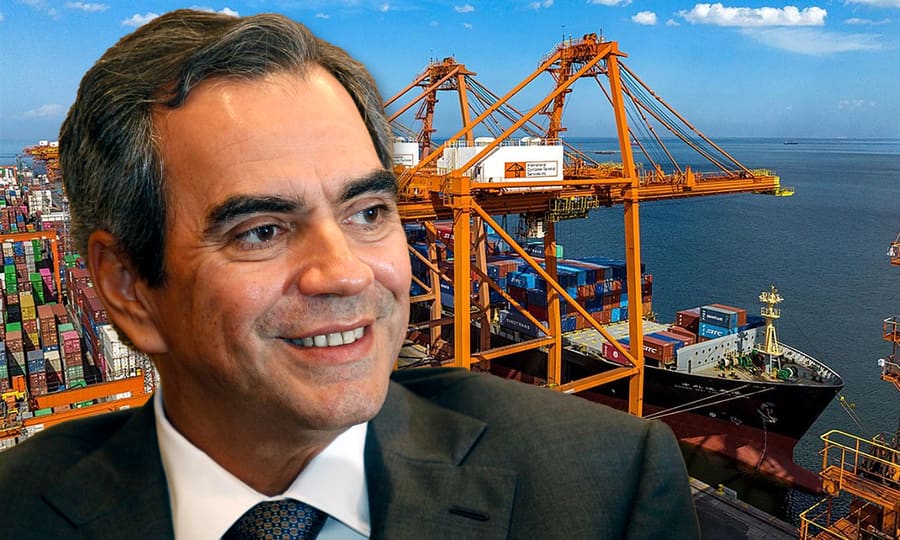
Razon built his fortune primarily through International Container Terminal Services, a publicly listed port operator that his grandfather founded in 1916. He controls 51% of the company directly and through three holding entities. The terminal operator ranks among the world's largest independent players in its sector, with facilities spanning multiple continents.
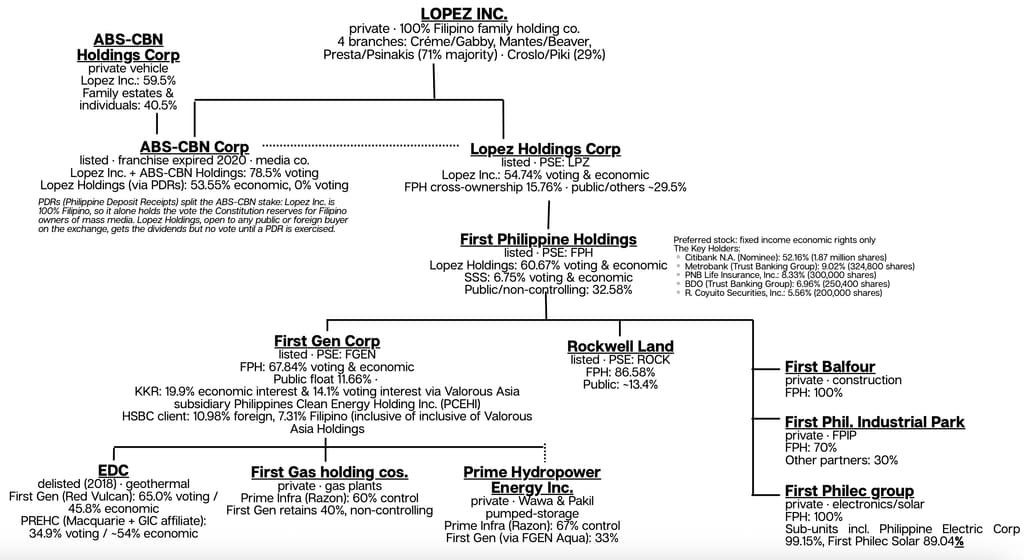
The firm's stock appreciated over the past twelve months as Razon pursued aggressive international expansion despite geopolitical friction affecting global trade routes. Beyond ports, his holdings include substantial stakes in Bloomberry Resorts, Manila Water utility, and Apex Mining. In a notable move last year, Razon acquired 60% of four gas-fired power plants previously owned by the Lopez conglomerate, deepening his footprint in the energy sector.
The Sy Family's Decline
The six Sy siblings saw their combined wealth drop $2.6 billion to $9.2 billion, costing them the summit position they had occupied for years. Their fortune traces to Henry Sy Sr., who transformed a modest shoe store into the SM Group, now one of Southeast Asia's most diversified conglomerates with operations in retail, banking, hospitality, property and mining.
The siblings' wealth is concentrated in SM Investments and SM Prime, both publicly traded. SM Prime's share price fell 18% over the past year as the residential property market weakened across the Philippines. SM Investments stock also faced sustained pressure from negative investor sentiment, compounding the family's valuation losses.
The Middle Ranks Shift
Ramon Ang moved up to third place despite his net worth slipping to $3.5 billion from $3.7 billion. The 72-year-old leads San Miguel Corporation, a conglomerate established in 1890 as a brewery that has since expanded into food and beverages, packaging, fuel, energy and infrastructure. Its subsidiary Petron operates the Philippines' sole remaining oil refinery.
San Miguel's stock declined nearly 10% over the year as concerns mounted over the group's debt load, a recurring theme in analyst commentary on the company.
Lucio and Susan Co made their first appearance in the top five, landing at fourth with $3.3 billion. The husband-and-wife duo founded Puregold Price Club in 1998, growing it from a single supermarket to a network of nearly 800 stores, including warehouse clubs and quick-service pizza outlets. Their son now runs day-to-day operations.
Puregold posted a 24% increase in net profit to 3.3 billion pesos in the first quarter, according to company disclosures, as revenue climbed to 59 billion pesos. The Cos also hold investments in finance, real estate and energy.
Consunji Family Holds Fifth
Isidro Consunji and his siblings retained fifth place, though their wealth fell 19% to $3 billion. They inherited DMCI Holdings, a property developer founded in 1954 that also operates mining, power generation and water services.
The firm's coal and energy unit, Semirara Mining and Power, secured regulatory approval last year for a $5 billion expansion of its coal mine in Antique province. Semirara reported full-year 2025 net income of 13.1 billion pesos, down 33% year-on-year, according to company filings. Energy prices normalized and operational costs rose despite record coal production and electricity sales.
What the Shuffle Reveals
The rankings shift underscores the divergent performance of Philippine business sectors over the past year. Infrastructure and logistics assets benefited from trade volume recovery, while property and consumer-facing businesses struggled with weaker domestic demand and elevated interest rates.
Razon's ascent reflects the enduring value of port and utility assets in an archipelago economy where logistics infrastructure commands structural premiums. His diversification into energy and resorts provides additional revenue streams less correlated with property cycles.
The Sy family's decline, meanwhile, illustrates the exposure of retail and property empires to consumer sentiment and credit conditions. With residential property markets across Metro Manila showing signs of oversupply and mortgage rates remaining elevated, the group's core assets face continued pressure.
The entry of the Cos into the top five highlights the resilience of value-oriented retail formats. Puregold's warehouse club model has gained market share as cost-conscious consumers trade down from premium supermarkets, a trend likely to persist as inflation remains above the central bank's target range.
For the Consunji family, the challenge lies in navigating the energy transition. Coal remains profitable in the near term, but regulatory and financing headwinds for fossil fuel projects are intensifying across Southeast Asia. The $5 billion mine expansion may represent one of the last major coal investments in the country before stricter climate policies take hold.
RELATED STORIES

Puregold Founders Lucio and Susan Co Join Philippines' Top Five Richest With $3.3 Billion Fortune
Priyanka V. Rao · 3 min
Port Empire Growth Lifts Enrique Razon Jr. to Top of Philippine Wealth Rankings
Priyanka V. Rao · 3 min
San Miguel's Ramon Ang Takes Quarter Stake in Lopez Holding Company
Priyanka V. Rao · 5 min

Manila Eyes Nickel Processing to Escape China's Price Control
Priyanka V. Rao · 4 min
Spot something wrong? Email editor@briefasia.com. We log every correction publicly.