Asia · Politics
Philippines Faces Cost Puzzle After Marcos Pledges to Remove System Loss Charges
President's State of the Nation promise to scrap electricity line item leaves regulators and utilities scrambling to determine who absorbs the cost
KEY TAKEAWAYS
- ·President Marcos pledged to remove system loss charges, which account for roughly five percent of electricity bills in Metro Manila and higher shares in areas served by electric cooperatives.
- ·Energy regulators say the cost cannot simply vanish and warn it may reappear as higher generation or distribution charges unless the government provides a direct subsidy to utilities.
- ·Implementing the pledge requires Congress to amend the Electric Power Industry Reform Act, a legislative process that could take up to a year and has stalled in previous sessions.
A Promise Without a Plan
President Ferdinand Marcos Jr. drew a standing ovation during his fifth State of the Nation Address on Monday when he called for the removal of system loss charges from electricity bills. For millions of Filipinos paying Southeast Asia's highest average residential power rates, the announcement sounded like relief. But energy regulators and utilities say the devil is in the details: scrapping a line item does not make the cost behind it disappear.
Energy Secretary Sharon Garin confirmed that her department will meet with the Energy Regulatory Commission and the National Electrification Administration within days to discuss implementation. Yet neither she nor ERC chairman Francis Saturnino Juan could say when consumers would see lower bills. Garin suggested relief might arrive before Marcos' final State of the Nation Address next year, describing a one-year maximum timeframe.
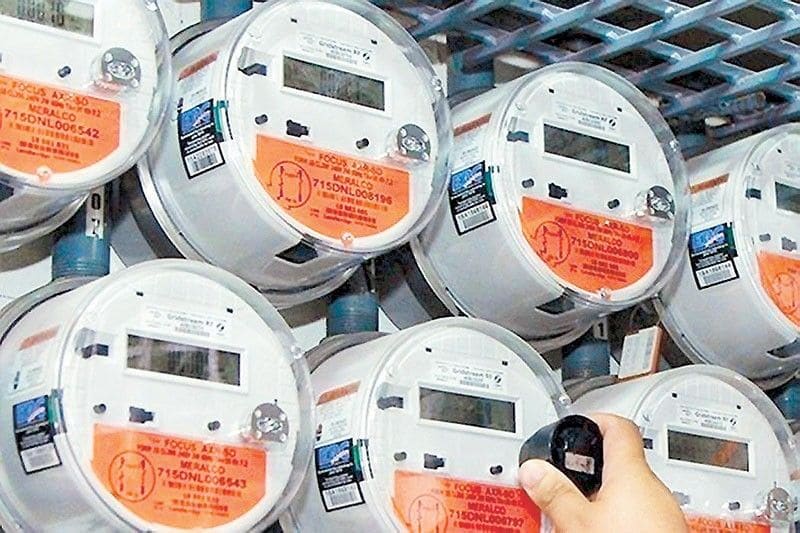
System loss refers to electricity that never reaches consumers, lost either through technical inefficiencies in transmission and distribution infrastructure or through non-technical causes such as theft and unauthorized connections. In Metro Manila, where power distributor Meralco operates, system loss typically accounts for around five percent of total bills. A household paying 3,000 pesos in July would see 150 pesos attributed to system loss. The share runs higher for customers of electric cooperatives in rural areas.
Where the Money Goes
Juan explained that most system loss charge revenue flows to generation companies, which supply electricity to distribution utilities. A smaller portion goes to the National Grid Corp. of the Philippines, which operates the transmission network. Before the government can eliminate the charge, he said, it must decide who absorbs the cost: distribution utilities, generation companies, the grid operator, or taxpayers.
If generation companies shoulder the expense, Juan warned they could raise their wholesale prices to distribution utilities, which would then pass higher generation charges to consumers. Generation already accounts for more than half of most power bills, and the ERC has no regulatory authority over genco pricing.
Distribution utilities might absorb system losses, but Juan questioned whether they could do so without eventually raising distribution charges. The Philippine Rural Electric Cooperatives Association was blunt: without a direct government subsidy, a total ban on system loss recovery would bankrupt the country's non-profit electric cooperatives.
Legislative Roadblock
Removing system loss charges is not an administrative tweak. Juan told reporters it requires Congress to amend Section 43(f) of the Electric Power Industry Reform Act, which explicitly allows utilities to recover system loss costs subject to caps set by the ERC. That means both the House of Representatives and the Senate must pass an amendment before the charge can be scrapped.
The Senate is currently convened as an impeachment court, adding to its legislative workload. Amending the Electric Power Industry Reform Act has been a recurring pledge in previous Marcos State of the Nation Addresses, yet the law has remained unchanged for years.
Consumer Groups Unimpressed
Power for People Coalition, a consumer advocacy group, welcomed the move but called it "absurd" for Marcos to present the idea as novel. The group noted that consumers have demanded the suspension of unfair charges for decades and criticized the administration for ignoring what it called the biggest extra charge on power bills: high fuel costs.
The coalition's statement captured the broader skepticism: Filipinos are not hoping for the system loss charge to disappear from their bills only to reappear under another name. They want the actual cost to vanish, and they want accountability for why losses remain so high in the first place.
The Real Test
The Energy Regulatory Commission has set caps on system loss recovery, but enforcement and reduction of actual losses have proven difficult. Technical losses stem from aging infrastructure and inefficiencies in power lines and equipment. Non-technical losses, including theft and households using unregistered submeters, are harder to quantify and eliminate.
Unless the government commits to a subsidy funded by general revenue, the arithmetic is unforgiving. Electricity lost in the system costs money to generate and transmit. Someone has to pay for it. Distribution utilities, generation companies, and the grid operator have all made clear they cannot absorb the expense indefinitely without raising other charges or cutting investment in grid improvements.
Garin's promise of a solution within a year will be tested by political will, legislative gridlock, and the balance sheets of utilities that operate on thin margins. For now, millions of Filipinos are left wondering whether Monday's applause was for real relief or just another rebranding exercise.
RELATED STORIES

Philippine Water Operator Earmarks $400 Million for Southeast Asia Expansion
Mariel D. Santos · 2 min
Philippine Manufacturing Expands at Fastest Pace Since 2016
Priyanka V. Rao · 3 min

Philippines Energy Budget Climbs 26% as Electric Vehicle Funding Surges
Priyanka V. Rao · 3 min

Southeast Asian Firms Overlook Digital Pact Worth USD 2 Trillion
Lim Hui Ying · 4 min
Spot something wrong? Email editor@briefasia.com. We log every correction publicly.