Asia · Business
Philippines Pushes Rabbitfish Farming to Diversify Aquaculture Sector
Bureau of Fisheries promotes siganids cultivation as livelihood alternative for coastal communities amid shifting market demands
KEY TAKEAWAYS
- ·The Department of Agriculture's fisheries bureau is promoting rabbitfish cultivation to diversify Philippine aquaculture and create new income streams for coastal communities.
- ·Rabbitfish offer lower feed costs due to their herbivorous diet and tolerate brackish water, making them suitable for existing pond infrastructure across the archipelago.
- ·Scaling the sector hinges on expanding hatchery capacity for fingerlings and building technical extension networks to train farmers in siganid grow-out practices.
A New Catch for Filipino Farmers
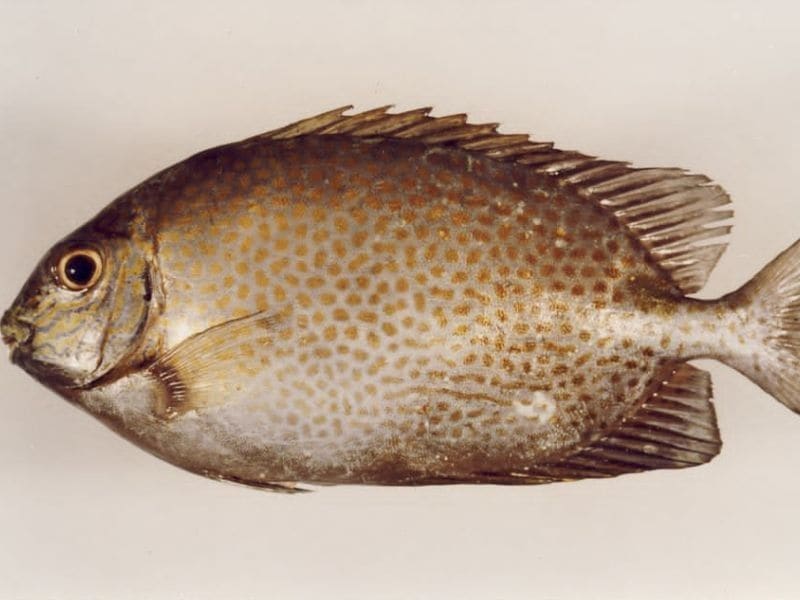
The Department of Agriculture's Bureau of Fisheries and Aquatic Resources is backing the cultivation of siganids, commonly called rabbitfish or locally known as samaral, according to the agency. The initiative aims to broaden the aquaculture mix in the Philippines and open fresh income channels for coastal communities that have traditionally relied on a narrower set of species.
Rabbitfish belong to the genus Siganus, a group of herbivorous marine fish found across Indo-Pacific waters. In Philippine markets, samaral has long appeared as a wild-caught staple, prized for its firm white flesh and relatively mild flavor. Yet farming the species at scale has remained uncommon compared to the country's dominant aquaculture outputs: milkfish, tilapia, and shrimp.
Why Diversify Now
Philippine aquaculture has grown into a multi-billion-peso industry, yet concentration risk persists. Milkfish alone accounts for roughly half of national marine aquaculture volume, leaving producers vulnerable to disease outbreaks, feed-price swings, and shifting export demand. The bureau's push into rabbitfish farming reflects a broader recognition that a more varied species portfolio can buffer income shocks for small-scale operators.
Siganids offer several practical advantages. They feed primarily on algae and seagrass, reducing reliance on formulated feeds that have climbed in cost as global grain and fishmeal prices rise. Rabbitfish also tolerate a range of salinity levels, making them suitable for brackish-water ponds and coastal cage systems already in use across the archipelago. Growth rates are competitive: juveniles can reach market size in six to eight months under optimal conditions.
Domestic demand for samaral remains steady in provincial wet markets and urban seafood stalls, and the species commands prices comparable to other mid-tier finfish. Regional export potential exists as well; rabbitfish is consumed widely in Malaysia, Indonesia, and parts of the Middle East, where Filipino seafood exporters have established distribution networks.
Infrastructure and Knowledge Gaps
Scaling rabbitfish aquaculture will require addressing several bottlenecks. Hatchery technology for siganids lags behind that for milkfish and grouper; reliable fingerling supply remains patchy outside a handful of government and university research stations. Feed formulations tailored to the species' herbivorous diet are still under development, and many farmers lack hands-on experience managing rabbitfish grow-out cycles.
The bureau has signaled it will expand technical extension services, including training modules on pond preparation, stocking density, and harvest timing. Partnerships with state universities and regional fisheries councils are expected to accelerate knowledge transfer. Access to affordable credit and insurance products tailored to new species adoption will also shape how quickly fisherfolk can pivot.
Regional Context
The Philippines is Southeast Asia's fourth-largest aquaculture producer by volume, trailing China, Indonesia, and Vietnam. Yet per-capita fish consumption in the country has climbed faster than domestic production over the past decade, widening the import gap. Diversifying the species base is part of a national strategy to lift output, improve food security, and keep more value within local supply chains.
Neighboring Indonesia has successfully commercialized rabbitfish farming in parts of Sulawesi and Java, demonstrating that siganids can be integrated into smallholder systems without heavy capital investment. Vietnamese producers have likewise experimented with mixed-species polyculture that includes rabbitfish alongside grouper and snapper. Those regional precedents suggest the Philippines has room to catch up, provided extension support and market linkages are in place.
The bureau's samaral initiative arrives as climate pressures mount. Warmer sea-surface temperatures and more frequent typhoons are disrupting traditional capture-fishery calendars, pushing coastal households to seek steadier income from pond-based aquaculture. Rabbitfish, with their tolerance for variable conditions and lower feed costs, may prove a practical hedge for communities navigating that transition.
Whether the species gains traction will depend on how quickly fingerling supply chains mature and whether processors and traders build the volume needed to unlock export economies of scale. For now, the bureau's endorsement signals that Manila sees diversification not as a side project but as a pillar of the sector's next phase.
RELATED STORIES

Philippine Water Operator Earmarks $400 Million for Southeast Asia Expansion
Mariel D. Santos · 2 min

Philippines Energy Budget Climbs 26% as Electric Vehicle Funding Surges
Priyanka V. Rao · 3 min

Five ASEAN Members Back Regional Oil Stockpile as Study Nears Completion
Tran Quoc Bao · 3 min

Philippine Manufacturing Expands at Fastest Pace Since 2016
Priyanka V. Rao · 3 min
Spot something wrong? Email editor@briefasia.com. We log every correction publicly.