Technology · AI
Philippines Maps 30-Year Buildout for Pax Silica Chip Hub
New Clark City site targets up to $70 billion in investment, 190,000 direct jobs by 2058 under U.S.-backed supply chain initiative
KEY TAKEAWAYS
- ·The Philippines will begin construction of the Pax Silica chip hub in New Clark City in 2028, with a 30-year development plan targeting $40 billion to $70 billion in total investment.
- ·The first phase covers 500 hectares and expects 10 to 20 firms to commit $10 billion for roads, water, and power infrastructure within three to five years.
- ·BCDA projects the completed hub will generate $200 billion in exports, create up to 190,000 direct jobs, and deliver 60 billion pesos in lease income over 25 years.
Construction to Start in 2028
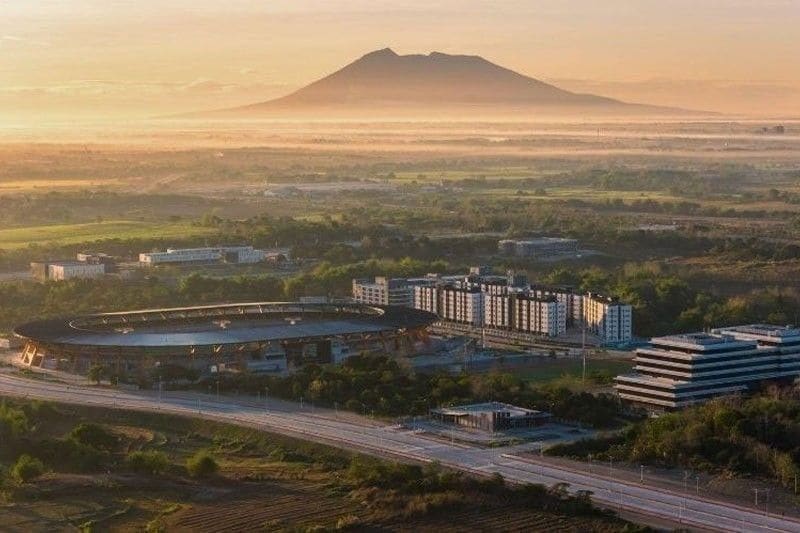
The Bases Conversion and Development Authority has laid out a 30-year roadmap for the Pax Silica artificial intelligence and semiconductor manufacturing hub in New Clark City, Tarlac. BCDA president and CEO Joshua Bingcang announced that development will commence in 2028 and proceed across three phases.
The first phase spans approximately 500 hectares and is designed to host between 10 and 20 companies. Bingcang expects this initial stage to reach completion within three to five years. Foreign tenants have committed an initial $10 billion to build supporting infrastructure, including roads, water systems, and power facilities tailored to chip fabrication and assembly operations.
The Philippines joined the U.S.-led Pax Silica initiative in April, part of a broader effort to diversify and secure supply chains for semiconductors and AI hardware across allied nations. The hub will focus on manufacturing chips used in mobile phones, laptops, and servers, rather than the large-scale data-center infrastructure sometimes referred to as hyperscalers.
Governance Framework and Lease Terms
BCDA expects to finalize a framework agreement with its U.g. partner this year. The document will specify which industries qualify for tenancy and establish operational guidelines for the site. A separate commercial lease arrangement is under negotiation.
Bingcang clarified that no hyperscale data-center projects will be permitted within the Pax Silica zone. An American firm previously explored building such a facility elsewhere in New Clark City but withdrew after concluding that local power grids could not meet its requirements.
Trade Undersecretary Ceferino Rodolfo stated that the project will not displace farming communities or indigenous groups. New Clark City operates under a master development plan with an existing environmental compliance certificate, and the land designated for the hub is government-owned industrial property.
Bingcang dismissed recent reports suggesting BCDA had offered to purchase farmland at 30 pesos per square meter, emphasizing that the parcels in question are already state-owned. The authority has indicated it will provide financial assistance to any residents affected by construction activity.
Revenue and Employment Projections
At full buildout, BCDA anticipates total investment in the Pax Silica hub will range between $40 billion and $70 billion. The authority projects 60 billion pesos in lease revenue over 25 years and annual tax receipts of 68 billion to 75 billion pesos once operations reach steady state.
Export value from the completed hub is estimated at $200 billion. Employment forecasts include 130,000 to 190,000 direct positions and an additional 500,000 to 800,000 indirect jobs across logistics, services, and supplier networks.
Regional Context
The timeline places the Philippines in a cohort of Southeast Asian nations racing to capture a larger share of semiconductor assembly and test operations. Vietnam, Malaysia, and Thailand have each announced multibillion-dollar incentive packages over the past two years, and Singapore continues to anchor advanced packaging and design work.
New Clark City lies roughly 100 kilometers north of Manila and was conceived as a planned urban center to relieve congestion in the capital. The site already hosts government offices, a sports complex, and a container depot linked to the Subic Bay Freeport.
Power availability remains a constraint across the archipelago. The national grid recorded peak demand of 17,000 megawatts in 2025, and industry groups have called for at least 3,000 megawatts of new baseload capacity to support manufacturing expansion through 2030.
The Pax Silica project will test whether the Philippines can assemble the infrastructure, workforce training, and regulatory stability required to compete for the mid-tier and back-end segments of the chip industry. With the first tenants expected to break ground in 2028, execution will hinge on resolving land-use questions, securing long-term power contracts, and delivering the transport links that chipmakers demand.
RELATED STORIES
Philippines Electronics Exports Target $54 Billion on AI and Data Center Demand
Priyanka V. Rao · 2 min

Manila Eyes Nickel Processing to Escape China's Price Control
Priyanka V. Rao · 4 min
Philippine Economy Stalls as Investment Collapse Drags Growth to Pandemic Lows
Priyanka V. Rao · 3 min

Manila's New Bulacan Airport Faces Construction Delays Over Sand Supply
Mariel D. Santos · 3 min
Spot something wrong? Email editor@briefasia.com. We log every correction publicly.