Technology · Products
Philippines Electronics Exports Target $54 Billion on AI and Data Center Demand
SEIPI doubles its 2026 growth forecast to 10 percent as semiconductor support equipment rides the infrastructure boom across Asia
KEY TAKEAWAYS
- ·The Philippines' electronics industry now projects 10 percent export growth in 2026, up from an earlier five percent forecast, targeting $54 billion in total shipments driven by AI and data center demand.
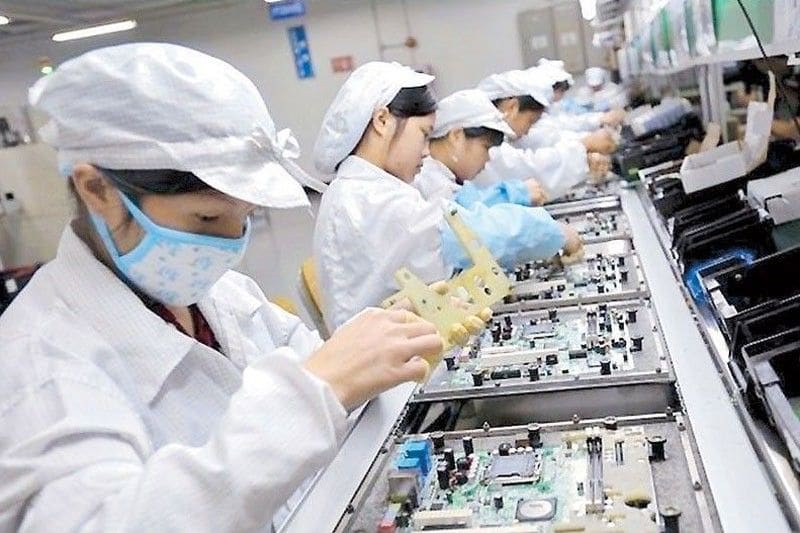
- ·Philippine firms produce support equipment for AI systems and data centers rather than chips themselves, capturing roughly five percent of the global semiconductor market and one percent of electronics manufacturing services.
- ·SEIPI aims to establish a domestic wafer fabrication lab by 2027 and reach $110 billion in annual electronics exports by 2030 under its industry roadmap.
Revised Forecast Reflects Surging Demand
The Philippines' electronics and semiconductor sector has doubled its export growth forecast for 2026, now targeting 10 percent expansion as artificial intelligence infrastructure and data center construction accelerate across the region. If achieved, annual electronics exports would reach approximately $54 billion, marking a record for the industry.
Dan Lachica, president of the Semiconductor and Electronics Industries in the Philippines Foundation Inc., confirmed the revised projection in recent remarks. The industry body had previously forecast five percent growth from the $49.64 billion recorded in 2025. The upgrade reflects stronger-than-expected performance in the first half of the year, with electronics shipments climbing 20.7 percent to $26.10 billion through June, according to Philippine Statistics Authority data.
Support Equipment, Not Chips
While the Philippines does not manufacture AI processors themselves, local firms produce critical support equipment for AI systems and data center operations. This positioning has allowed the sector to capture growing demand without competing directly with advanced chipmaking hubs in Taiwan, South Korea, and Japan.
Lachica emphasized that both AI adoption and data center expansion remain in early stages, with substantial room for growth ahead. Beyond AI-related products, the industry continues to serve automotive electronics and telecommunications segments, both of which are expanding.
The country currently holds roughly five percent of the global semiconductor market and just one percent of the electronics manufacturing services sector, according to industry estimates. Closing that gap is a central aim of the Philippine Semiconductor and Electronics Industry roadmap, which targets $110 billion in annual electronics exports by 2030.
Fabrication Ambitions
SEIPI is collaborating with the Department of Science and Technology to establish a wafer fabrication laboratory capable of converting raw silicon wafers into integrated circuits. The initiative, expected to be resubmitted for approval in 2027, would serve as a proof of concept for domestic chipmaking capacity.
The sector's revised outlook aligns with broader trends across Southeast Asia, where governments are competing to attract semiconductor investment amid global supply chain reconfiguration. Indonesia, Vietnam, and Malaysia have all announced incentive packages aimed at luring fabrication and assembly operations, while Singapore continues to anchor the region's advanced manufacturing base.
Regional Context
The Philippines' electronics sector accounts for a significant share of national merchandise exports, making the industry's performance a key indicator of trade health. The first-half surge in shipments has provided a buffer against weaker-than-expected GDP growth, which registered 2.3 percent year-on-year in the second quarter, the slowest pace in 17 years.
Manila's ability to sustain momentum in electronics will depend on continued capital expenditure by hyperscale cloud providers and AI developers, as well as the country's success in moving up the value chain. The proposed wafer fab project represents an initial step toward capturing higher-margin segments, though execution timelines remain uncertain.
With the roadmap targeting a more than doubling of exports by decade's end, the industry faces pressure to expand manufacturing capacity, secure advanced technology partnerships, and develop a deeper pool of specialized engineering talent. Whether the $110 billion goal proves realistic will hinge on both global demand trajectories and the Philippines' competitiveness relative to regional peers.
RELATED STORIES
Southeast Asian Workers Embrace AI Tools Faster Than Global Peers
Priyanka V. Rao · 3 min
Philippine Economy Stalls as Investment Collapse Drags Growth to Pandemic Lows
Priyanka V. Rao · 3 min

Philippines Central Bank Fielded 120,000 Customer Disputes in 2025
Priyanka V. Rao · 3 min

Manila's New Bulacan Airport Faces Construction Delays Over Sand Supply
Mariel D. Santos · 3 min
Spot something wrong? Email editor@briefasia.com. We log every correction publicly.