Asia · Business
Philippines' Maibarara Geothermal Taps Lopez Driller for Batangas Exploration
The Yuchengco and Zobel-backed venture has contracted ThermaPrime Drilling to test three firm wells in untapped sections of its geothermal concession, with first rigs scheduled for October.
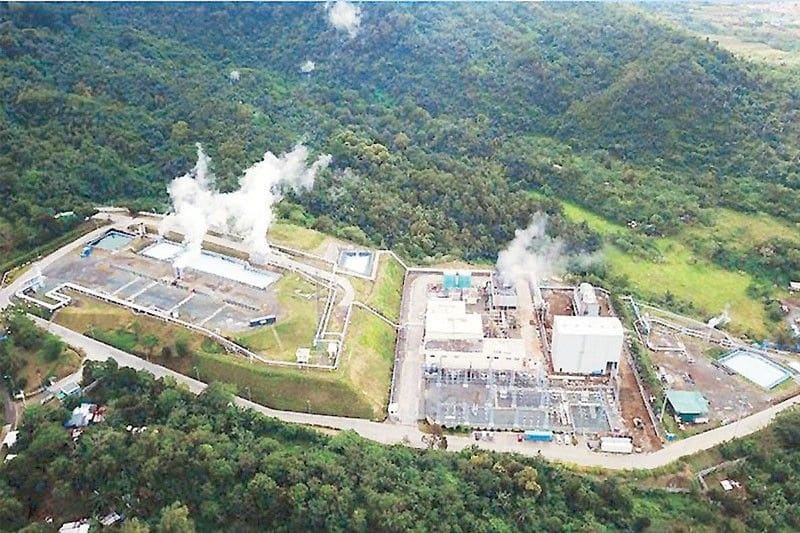
KEY TAKEAWAYS
- ·Maibarara Geothermal Inc., backed by the Yuchengco and Zobel families, has contracted Lopez-owned ThermaPrime Drilling to drill three firm and one contingent geothermal wells in Batangas and Laguna, with drilling scheduled from October 2026 through May 2027.
- ·The exploratory campaign will test depths of 2,100 to 3,000 meters in undrilled sections of the Maibarara concession, aiming to determine whether additional reserves can support a third power plant beyond the existing 32 megawatts.
- ·Success in the drilling program could help replenish the Philippines' aging geothermal pipeline, as the country ranks third globally in installed capacity but has added little new generation in the past decade.
The Contract
Maibarara Geothermal Inc. has awarded Lopez-controlled ThermaPrime Drilling Corp. a contract to drill three firm and one contingent exploratory wells across its Batangas and Laguna concessions. The wells will probe depths between 2,100 and 3,000 meters in sections of the Maibarara geothermal field that remain undrilled.
Rig mobilization is scheduled for September, with drilling expected to commence in October and wrap by May 2027. ThermaPrime will deploy equipment and crews meeting global safety and operational standards, according to Maibarara.
The campaign seeks to determine whether additional geothermal reserves exist beyond the company's two operating plants, which together generate 32 megawatts in Santo Tomas, Batangas. Maibarara-1 contributes 20 MW, while the Maibarara Geothermal Power Project adds 12 MW.
Why This Matters for Philippine Energy
Geothermal capacity is a cornerstone of the Philippines' renewable portfolio, yet expansion has slowed. Upfront capital requirements run high, lead times stretch years, and subsurface risk remains acute until wells prove productive.
Maria Victoria Olivar, executive vice president and chief operating officer at Maibarara, noted that the Philippines needs additional geothermal capacity to meet rising demand and align with government energy transition targets. "Building new geothermal plants requires large upfront costs, long lead times and various technical risks," she said in a statement. Tapping a driller with proven expertise helps mitigate early-stage technical and operational hazards, she added.
ThermaPrime is a wholly owned subsidiary of First Balfour Inc., part of the Lopez Group. The Lopez conglomerate, through Energy Development Corp., operates the largest geothermal portfolio in the Philippines. Antonio Mabasa, president and chief operating officer at ThermaPrime, described the contract as aligned with the group's core energy mission.
Ownership and Regional Context
Maibarara Geothermal is majority-owned by the Yuchengco Group, which holds 65 percent through PetroGreen Energy Corp. The Zobel family's ACEN Corp. controls 25 percent, and state-owned PNOC Renewable Corp. holds the remaining 10 percent.
The partnership reflects a broader pattern in Southeast Asia, where family conglomerates and state enterprises co-invest in geothermal projects to share risk and access specialized drilling and engineering capabilities. The region sits along the Pacific Ring of Fire, endowing countries such as the Philippines, Indonesia and New Zealand with abundant geothermal potential. Yet development remains uneven, constrained by exploration risk, permitting delays and financing gaps.
The Philippines ranks third globally in installed geothermal capacity, behind the United States and Indonesia. Despite that standing, the country has added little new capacity in the past decade. Existing fields are aging, and reservoir pressures at some sites have declined. Fresh exploration campaigns like Maibarara's are essential to replenish the pipeline and maintain geothermal's share of the national generation mix.
What Comes Next
Results from the exploratory drilling will inform whether Maibarara pursues a larger development phase. If the wells confirm commercial-grade steam flows, the company could move toward permitting and engineering for a third power plant. If results disappoint, the capital preserved by limiting the initial campaign to four wells will reduce downside exposure.
The timeline positions Maibarara to make an investment decision by mid-2027, assuming drilling proceeds on schedule and reservoir data can be analyzed promptly. In parallel, the Philippine Department of Energy continues to auction new geothermal service contracts, hoping to attract fresh capital and technology into the sector. Whether those auctions yield commitments will depend in part on the success of projects like Maibarara, which serve as proof points for investors weighing subsurface risk against long-term revenue visibility.
RELATED STORIES
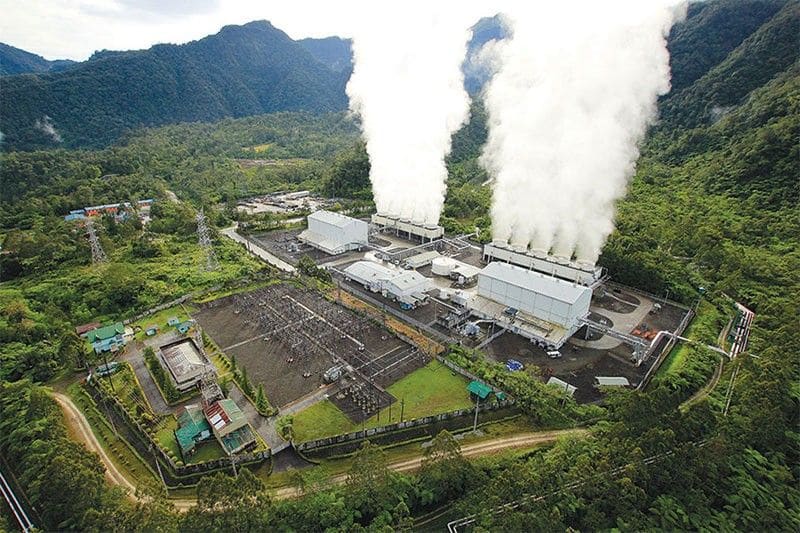
Seventeen Firms Compete for Manila's $200 Million Geothermal Risk Fund
Priyanka V. Rao · 3 min
Five ASEAN Members Back Regional Oil Stockpile as Study Nears Completion
Tran Quoc Bao · 3 min

Philippines Energy Budget Climbs 26% as Electric Vehicle Funding Surges
Priyanka V. Rao · 3 min

Southeast Asian Firms Overlook Digital Pact Worth USD 2 Trillion
Lim Hui Ying · 4 min
Spot something wrong? Email editor@briefasia.com. We log every correction publicly.