Asia · Business
Philippines Launches Digital Platform to Unify Farm Data and Speed Subsidy Delivery
Agriculture-based Central Data Ecosystem cuts subsidy processing from 26 days to five, ending decades of fragmented databases across the sector
KEY TAKEAWAYS
- ·The Philippine Department of Agriculture launched the Agriculture-based Central Data Ecosystem, reducing subsidy distribution time from 26 days to five and farmer registration from 10 days to five minutes.
- ·The $3.6 million platform, built with South Korea's agriculture ministry, consolidates over 100 fragmented databases and uses AI to validate beneficiaries and eliminate duplicate entries.
- ·Implementation time for new support programs has dropped 80 percent, positioning the Philippines among Southeast Asia's leaders in AI-driven agricultural data infrastructure.
Ending the Era of Disconnected Databases
The Philippine Department of Agriculture has rolled out a unified digital infrastructure to consolidate farm records scattered across more than one hundred separate systems, a move designed to accelerate subsidy payments and improve supply chain visibility.
Agriculture Secretary Francisco Tiu Laurel Jr. announced that the Agriculture-based Central Data Ecosystem (AbCDE) Platform will reduce the time required to distribute farm assistance from 26 days to five, according to the department. The platform also compresses farmer registration from a 10-day wait to five minutes, replacing the older Registry System for Basic Sectors in Agriculture.
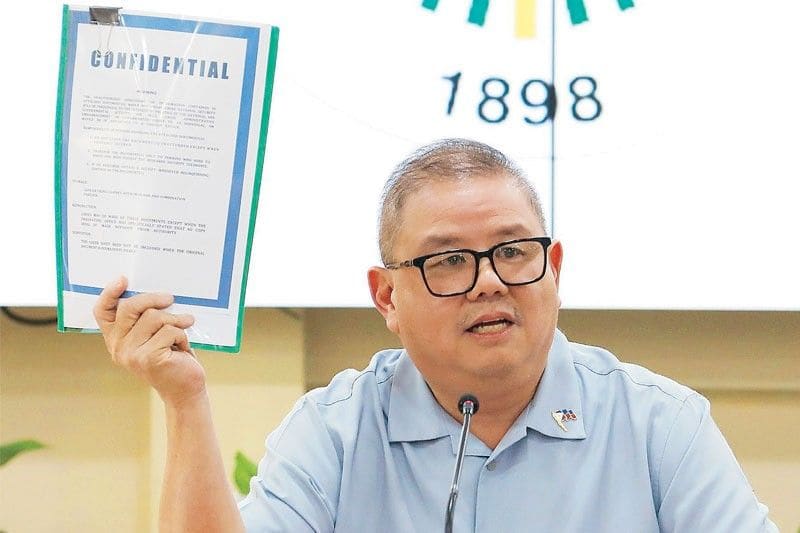
"For many years, our sector grappled with over a hundred disparate digital initiatives functioning in isolation," Tiu Laurel said at the program launch. The new system unifies beneficiary verification, tracks government interventions, and monitors agricultural supply chains in a single environment.
The department reports that implementation time for new support programs has dropped by 80 percent since the platform went live. Artificial intelligence tools embedded in the system validate beneficiaries, flag duplicate entries, and strengthen transparency across the subsidy pipeline.
A $3.6 Million Build with Seoul
The platform was developed through a $3.6 million partnership with South Korea's Ministry of Agriculture, Food and Rural Affairs and the Korea Agency of Education, Promotion and Information Service in Food, Agriculture, Forestry and Fisheries. The collaboration marks Manila's latest effort to import digital governance models from East Asian peers.
Tiu Laurel framed the rollout as part of a broader digitalization push. "This is part of our digitalization, making our process faster. We should be able to register more, improve data accuracy and avoid duplications," he told reporters.
The Philippine agricultural sector has historically operated with limited IT infrastructure, leaving farmers dependent on paper-based registration and manual subsidy workflows. Duplicate records and disconnected agency databases have complicated both policy planning and emergency response.
What the Platform Changes on the Ground
The AbCDE system centralizes data that previously lived in agency silos, including beneficiary lists, crop production figures, and distribution records for seeds, fertilizers, and financial assistance. By automating cross-checks, the platform aims to eliminate ghost beneficiaries and speed up verification for legitimate farmers.
Faster subsidy delivery carries particular weight in a country where smallholder farmers often lack access to credit and face volatile commodity prices. A five-day turnaround for cash or input transfers can determine whether a farmer plants on schedule or misses a growing season.
The department has not disclosed how many farmers have been registered under the new system or what share of the country's estimated five million farm households the platform currently covers. Rollout details, including regional deployment timelines and integration with local government units, remain sparse.
Regional Context and Next Steps
The Philippines joins a growing list of Southeast Asian governments investing in agricultural data infrastructure. Vietnam has piloted blockchain-based traceability systems for rice exports, while Indonesia has deployed satellite imagery to monitor palm oil concessions. Thailand's Ministry of Agriculture operates a centralized database linking farmer IDs to subsidy programs and crop insurance.
Manila's platform, however, is among the first in the region to emphasize AI-driven beneficiary validation and real-time supply chain monitoring at a national scale. Whether the system can maintain data integrity as it scales to millions of users, particularly in remote provinces with limited connectivity, will test the department's implementation capacity.
The department has signaled that the platform will eventually support data-driven policymaking, enabling officials to model the impact of interventions before deployment. For now, the immediate goal is operational: getting money and inputs to farmers faster, with fewer leaks and less paperwork.
RELATED STORIES
Philippine Water Operator Earmarks $400 Million for Southeast Asia Expansion
Mariel D. Santos · 2 min

Philippines Energy Budget Climbs 26% as Electric Vehicle Funding Surges
Priyanka V. Rao · 3 min
Five ASEAN Members Back Regional Oil Stockpile as Study Nears Completion
Tran Quoc Bao · 3 min
Philippine Manufacturing Expands at Fastest Pace Since 2016
Priyanka V. Rao · 3 min
Spot something wrong? Email editor@briefasia.com. We log every correction publicly.