Asia · Trade
Philippines and India Target $10 Billion Trade Through Free Trade Pacts
Bilateral commerce has expanded at 15-16 percent annually, with revised ASEAN-India agreement and bilateral PTA expected to accelerate the trajectory toward the ambitious goal within six years.
KEY TAKEAWAYS
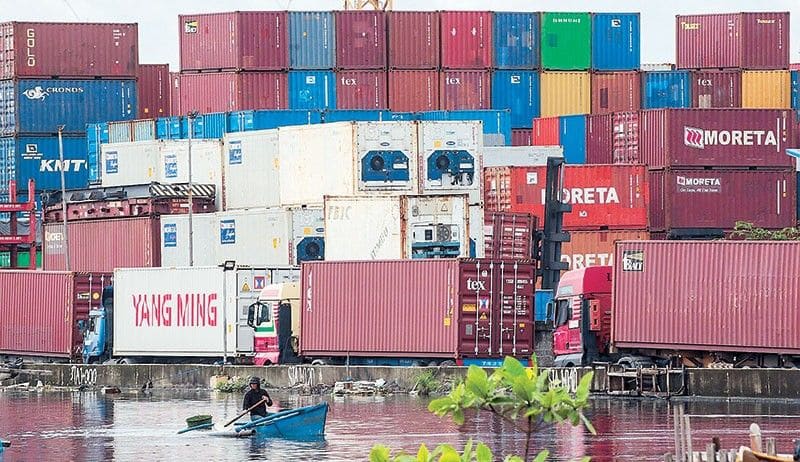
- ·Bilateral trade between the Philippines and India reached $3.55 billion last year, growing at 15 to 16 percent annually, with negotiators targeting $10 billion within six years through two pending trade frameworks.
- ·The expansion depends on finalizing a revised ASEAN-India Trade in Goods Agreement before the November ASEAN Summit in Manila, followed by a bilateral preferential trade pact to deepen sector-specific market access.
- ·Philippine exports to India center on electronics, semiconductors, and minerals, while imports are led by Indian pharmaceuticals, engineering products, and agricultural goods including buffalo meat.
Bilateral Commerce Gains Momentum
Trade flows between the Philippines and India stand at $3.55 billion as of last year, with negotiators on both sides eyeing a near-tripling of that figure by the early 2030s. The path runs through two trade frameworks now taking shape: a revised ASEAN-India Trade in Goods Agreement and a bilateral preferential trade agreement between Manila and New Delhi.
India's ambassador to the Philippines, Harsh Kumar Jain, told a gathering of business executives that the first milestone of $5 billion in bilateral trade looks achievable in the near term once the regional pact takes effect. The second leg to $10 billion would follow over the subsequent five to six years, he said, speaking at a business-to-business and business-to-government session convened for an Indian trade delegation in Manila.
The commerce relationship has been expanding at an annual clip of 15 to 16 percent, according to Jain, with the balance tilting in India's favor. Philippine buyers are pulling in Indian pharmaceuticals, engineering products, and agricultural goods, notably buffalo meat. Shipments in the opposite direction are dominated by electronics, semiconductors, and mineral commodities.
Two-Track Negotiation Strategy
The trade expansion hinges on completion of the ASEAN-India review, which negotiators hope to wrap up ahead of the ASEAN Summit scheduled for Manila this November. Once that regional framework is locked in, the two governments plan to layer additional concessions into a standalone bilateral preferential trade agreement.
Jain expressed confidence that the ASEAN-India goods pact would be finalized within a couple of months, establishing a baseline for deeper bilateral engagement. The preferential arrangement would then build on those tariff cuts and market-access commitments, tailoring provisions to sectors where Philippine and Indian exporters see particular opportunity.
The strategy reflects a broader pattern across Southeast Asia, where governments are stacking bilateral deals atop multilateral frameworks to capture sector-specific gains. For the Philippines, the approach offers a route to diversify export destinations at a time when electronics manufacturers are recalibrating supply chains and mineral producers are hunting for stable long-term buyers.
Sector Exposure and Supply-Chain Fit
India's appetite for Philippine semiconductors and electronics aligns with New Delhi's push to deepen its position in global technology supply chains. The country has been courting chip assemblers and component makers as part of an industrial strategy that includes production-linked incentives and infrastructure investment in manufacturing zones.
On the flip side, Philippine demand for Indian pharmaceuticals taps into one of India's most competitive export sectors. Indian generic-drug makers have built scale in biosimilars and active pharmaceutical ingredients, offering cost advantages that resonate with healthcare systems across Southeast Asia. Engineering products, another major category in the export mix, span everything from automotive components to industrial machinery, sectors where Indian manufacturers have been gaining share in regional markets.
Agricultural trade, though a smaller share of the total, carries strategic weight. Philippine imports of buffalo meat reflect both price competitiveness and halal certification, factors that matter in a market with significant Muslim-majority regions. The category also illustrates how bilateral trade can fill gaps left by traditional suppliers facing logistical or regulatory constraints.
Regional Context and Timing
The push to finalize the ASEAN-India framework ahead of the Manila summit carries symbolic and practical significance. ASEAN chair rotates annually, and host countries typically seek to notch trade or security agreements during their tenure. For the Philippines, landing the revised goods pact would burnish its credentials as a convener and signal momentum in economic diplomacy.
More broadly, the timing intersects with a period of flux in Asian trade architecture. Mega-regionals like the Regional Comprehensive Economic Partnership are bedding down, while smaller economies are pursuing bilateral and plurilateral deals to lock in market access and hedge against protectionist drift in larger markets. India, which opted out of RCEP, has been pursuing a hub-and-spoke model, negotiating separately with ASEAN members and other regional partners.
The $10 billion target, while ambitious, is not without precedent. Vietnam and India crossed the $10 billion threshold several years ago, driven by similar product categories and supported by a bilateral trade agreement. The Philippine trajectory would need to sustain current growth rates and benefit from tariff reductions embedded in the two pending frameworks.
Execution risk remains. Trade agreements can stall over rules of origin, non-tariff barriers, or domestic industry lobbying. Both countries will need to manage sensitivities around agricultural imports, pharmaceutical pricing, and labor standards as negotiations advance. But with annual growth rates in the mid-teens and two negotiating tracks converging, the foundation for a step-change in bilateral commerce is taking shape.
RELATED STORIES

Southeast Asian Firms Overlook Digital Pact Worth USD 2 Trillion
Lim Hui Ying · 4 min

Philippine Water Operator Earmarks $400 Million for Southeast Asia Expansion
Mariel D. Santos · 2 min
Philippine Manufacturing Expands at Fastest Pace Since 2016
Priyanka V. Rao · 3 min

Five ASEAN Members Back Regional Oil Stockpile as Study Nears Completion
Tran Quoc Bao · 3 min
Spot something wrong? Email editor@briefasia.com. We log every correction publicly.