Asia · Business
Philippines Growth Slows to Five-Year Low Amid Regional Conflict and Domestic Turmoil
Second-quarter GDP expansion of 2.3 percent reflects declining household consumption and infrastructure investment as geopolitical tensions and corruption scandal weigh on Southeast Asia's once-resilient economy.
KEY TAKEAWAYS
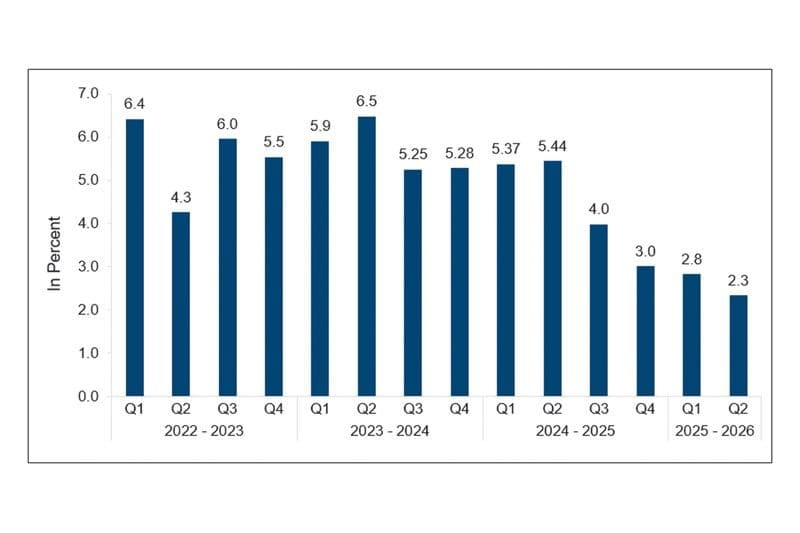
- ·The Philippines recorded 2.3 percent GDP growth in Q2 2026, the slowest expansion in five years, according to the Philippine Statistics Authority.
- ·Household consumption weakened due to Middle East conflict effects, while a domestic infrastructure corruption scandal froze public construction and investment.
- ·The economy now lags regional peers including Vietnam and Indonesia, raising pressure on policymakers to restore investor confidence and accelerate stalled projects.
Growth Stalls Across Key Sectors
The Philippines recorded 2.3 percent economic expansion in the second quarter of 2026, marking the country's weakest performance since 2021, according to data released by the Philippine Statistics Authority. The figure represents a sharp deceleration from previous quarters and underscores mounting pressures on Southeast Asia's seventh-largest economy.
Household consumption, which typically accounts for more than 70 percent of Philippine GDP, remained subdued throughout the quarter. The ongoing conflict in the Middle East has created supply chain disruptions and elevated energy costs, eroding purchasing power among Filipino families. Remittances from overseas workers in the Gulf states have also softened, reducing a critical source of income for millions of households across the archipelago.
Infrastructure Scandal Freezes Public Spending
Investment activity contracted as a corruption scandal involving infrastructure procurement brought several major public construction projects to a halt. The controversy has delayed bidding processes and prompted government agencies to review existing contracts, creating uncertainty for contractors and suppliers who had anticipated steady work through the year.
Public construction spending, a pillar of the administration's growth strategy over the past several years, fell sharply during the quarter. The slowdown has ripple effects across the construction materials industry, logistics providers, and regional employment in provinces where infrastructure projects were previously underway.
Private sector investment also weakened as businesses adopted a wait-and-see approach amid political noise and unclear policy signals. Foreign direct investment inflows, which had shown resilience in previous quarters, moderated as investors reassessed risk premiums in light of governance concerns.
Regional Context and Comparative Performance
The Philippines now lags behind most of its Southeast Asian peers in growth momentum. Vietnam, Indonesia, and Thailand have each posted stronger quarterly figures, benefiting from diversified export bases and more stable domestic political environments. Singapore and Malaysia, while facing their own headwinds from global semiconductor demand softness, have maintained steadier trajectories.
Manila's slowdown comes at a time when regional central banks are navigating complex trade-offs between supporting growth and managing inflation. The Bangko Sentral ng Pilipinas has held rates steady in recent meetings, signaling concern that further tightening could deepen the downturn even as inflation remains above the central bank's target range.
Outlook and Policy Challenges
Economists expect third-quarter growth to remain tepid unless household confidence improves and the infrastructure scandal is resolved swiftly. The government faces pressure to restore credibility in public procurement while accelerating project timelines to meet fiscal year targets.
Export performance will depend heavily on global demand conditions, particularly in electronics and semiconductors, where the Philippines has carved out a niche in assembly and testing. Any further escalation in Middle East tensions could push oil prices higher, compounding the strain on consumer budgets and import costs.
The broader question for policymakers is whether current fiscal and monetary settings are sufficient to revive momentum, or whether more aggressive stimulus measures will be required. With public debt levels elevated relative to pre-pandemic norms, the room for maneuver is narrower than it was during previous downturns.
Business groups have called for faster resolution of the infrastructure contracting issues and clearer regulatory guidance to restore investor confidence. Without a rebound in both public and private capital formation, the economy risks settling into a prolonged period of below-potential growth that could erode job creation and wage gains achieved in recent years.
RELATED STORIES
Philippine Economy Stalls as Investment Collapse Drags Growth to Pandemic Lows
Priyanka V. Rao · 3 min
Philippine Economy Slows to 2.3% Growth in Second Quarter
Priyanka V. Rao · 2 min
Philippine Economy Slows to 2.3% as Energy Crisis and Spending Cuts Bite
Mariel D. Santos · 3 min

Philippines GDP Growth Slows to 2.3 Percent, Lowest in 17 Years Outside Pandemic
Priyanka V. Rao · 3 min
Spot something wrong? Email editor@briefasia.com. We log every correction publicly.