Asia · Business
Philippines Cuts Growth Target Twice as Corruption Fallout Meets Mideast Oil Shock
Manila now expects 3.5 to 4.5 percent expansion in 2026 after dual crises hit consumer spending and infrastructure investment
KEY TAKEAWAYS
- ·The Philippine government cut its 2026 GDP growth target to 3.5 to 4.5 percent, down from an original 6 to 7 percent forecast, after a flood control corruption scandal and Middle East conflict triggered inflation of 6.8 percent in May.
- ·First-quarter GDP grew just 2.8 percent, the slowest pace in five years, as fuel price shocks from the February 28 Middle East war outbreak hit the Philippines harder than regional neighbors due to heavy oil import dependence.
- ·The economy must expand at least 3.7 percent over the next three quarters to meet the lower end of the revised target, with the government prioritizing governance reforms, anti-corruption measures and household price relief to restore investor confidence.
Double Downgrade
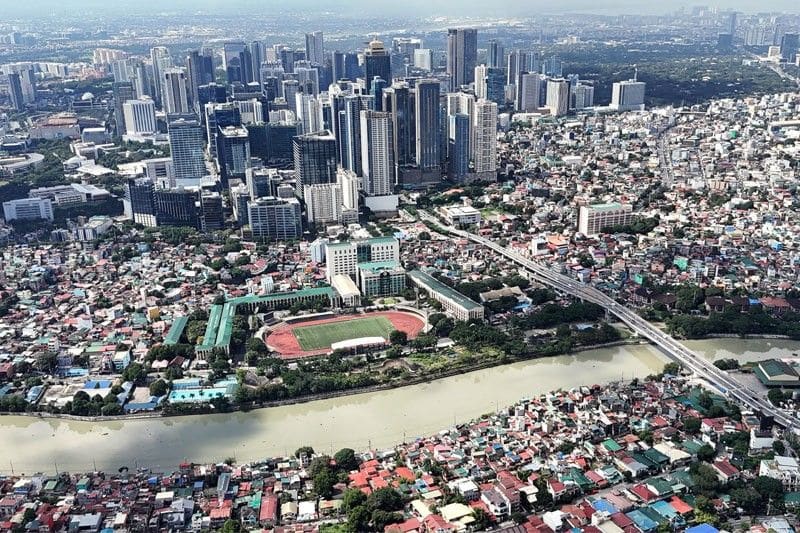
The Philippine government has revised its 2026 economic growth forecast downward for the second time this year, now targeting 3.5 to 4.5 percent GDP expansion after a corruption scandal and Middle East conflict hammered consumer confidence and infrastructure spending.
The latest cut, announced by the Development Budget Coordination Committee, marks a sharp retreat from the original 6 to 7 percent target set before a massive flood control corruption case surfaced in late 2025. The government had already lowered projections to 5 to 6 percent in December, but deteriorating conditions forced another adjustment.
First-quarter GDP grew just 2.8 percent, the slowest pace in five years, according to Department of Economy, Planning and Development Secretary Arsenio Balisacan. The figure reflects twin shocks: collapsing business and investor confidence after the infrastructure scandal, and surging fuel costs triggered by the February 28 outbreak of war involving the United States, Israel and Iran.
The Philippines declared a national energy emergency in response to the conflict. As a heavy oil importer, the country absorbed larger price increases than regional neighbors, with inflation hitting 6.8 percent in May before easing slightly to 6.4 percent in June. Both figures remain well above the Bangko Sentral ng Pilipinas' 2 to 4 percent target band. Average inflation for the first half reached 4.8 percent.
Energy Crisis Squeezes Households
Fuel price spikes rippled through the economy, driving up food, transport and logistics costs. Roderick Aboga, a ride-hailing driver in Manila, now works 16-hour days to earn 800 to 1,000 pesos, down from 1,500 pesos for 12-hour shifts before the crisis. Gasoline expenses and platform commissions have eaten into margins while rider demand has fallen as cash-strapped commuters cut spending.
The second quarter proved equally challenging, with Balisacan describing it as the peak period of Middle East conflict impact. Weakening consumption, the economy's traditional growth engine, compounded problems as El Niño weather patterns threatened agricultural output.
For 2027 through 2030, the government lowered growth targets to 5 to 6 percent from the previous 6 to 7 percent range.
Middle-Income Milestone, Ground-Level Reality
The World Bank reclassified the Philippines as an upper-middle income economy on July 1, ending a nearly four-decade stay in the lower-middle income bracket. The upgrade reflects average GDP growth of 5.8 percent per year from 2021 to 2025, with gains across major industries.
Yet the milestone has drawn muted reactions from households grappling with high prices and stagnant wages. Diwa Guinigundo, country analyst at GlobalSource Partners, cautioned that the new classification reflects average national income and conceals wide disparities across regions, sectors and households. Many Filipinos still face limited access to quality education, healthcare, infrastructure and employment opportunities.
Ateneo de Manila University assistant professor Ser Percival Peña Reyes said the income upgrade underscores the need for productivity-driven reforms, including digital adoption and lower business costs, to avoid a middle-income trap and ensure inclusive growth. University of Asia and the Pacific economist Marco Antonio Agonia pointed to structural weaknesses exposed by recent crises, particularly over-reliance on consumption-driven expansion.
Path to Faster Growth
To hit the lower end of the revised 3.5 to 4.5 percent target, the economy must grow at least 3.7 percent over the next three quarters. Balisacan said the government will focus on restoring confidence, shielding households from price shocks, enhancing productivity and competitiveness, and strengthening governance.
Michael Ricafort, chief economist at Rizal Commercial Banking Corp., said catch-up spending and anti-corruption measures could lift investor sentiment and drive job creation. Serious implementation of governance reforms would serve as a catalyst for increased investment, business activity and financial market gains, he noted.
Balisacan described the upper-middle income status as a milestone, not a destination, and called for growth exceeding 5 to 6 percent. The government aims to level up governance standards, pursue policies that improve ease of doing business, and cultivate human capital to translate headline economic gains into grassroots improvements.
The question now is whether second-half momentum can offset a difficult start to the year and position the Philippines for sustained expansion beyond the current crisis.
RELATED STORIES

Philippine Water Operator Earmarks $400 Million for Southeast Asia Expansion
Mariel D. Santos · 2 min

Philippines Energy Budget Climbs 26% as Electric Vehicle Funding Surges
Priyanka V. Rao · 3 min
Philippine Manufacturing Expands at Fastest Pace Since 2016
Priyanka V. Rao · 3 min
Philippines Central Bank Raises Rate to 5% Despite Economic Slowdown
Priyanka V. Rao · 3 min
Spot something wrong? Email editor@briefasia.com. We log every correction publicly.