Asia · Politics
Philippines' Casino Filipino Privatization Could Cost Health Program Up to ₱2.1 Billion Annually
Legal analysis warns that decoupling PAGCOR's commercial operations from regulatory role threatens critical funding stream for universal healthcare coverage
KEY TAKEAWAYS
- ·Privatizing Casino Filipino branches will cost the Philippines' Universal Health Care program between ₱1.7 billion and ₱2.1 billion per year based on recent revenue figures.
- ·PAGCOR's projected ₱30-50 billion sale proceeds will not offset the loss because healthcare earmarks apply only to gaming income, not asset sales.
- ·The Governance Commission will submit its recommendation by Q3 2026, with branch sales planned for late 2026 through 2027 and full decoupling by 2028.
Health Funding at Stake
The planned privatization of Casino Filipino branches could drain between ₱1.7 billion and ₱2.1 billion annually from the Philippines' Universal Health Care program, according to an analysis released by Geronimo Law.
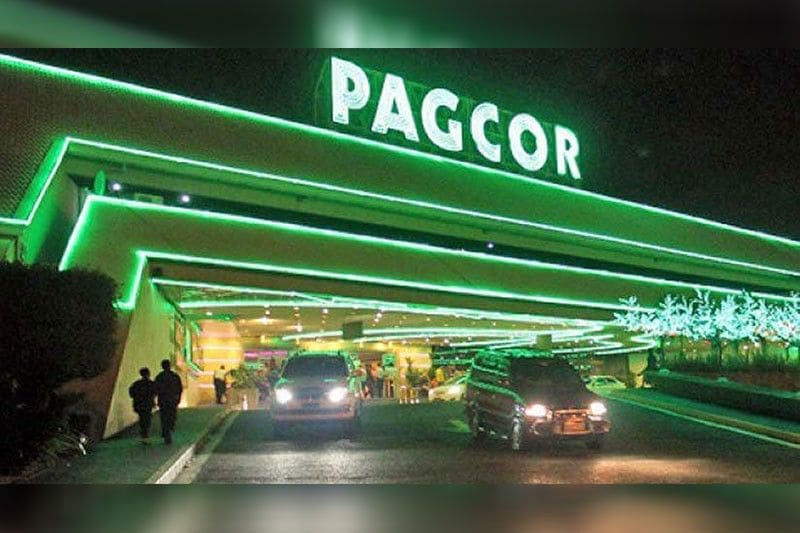
The Manila-based firm examined the fiscal impact of separating the commercial and regulatory functions of the Philippine Amusement and Gaming Corporation, which currently operates Casino Filipino under a legislative franchise running until July 2033. While the restructuring may address governance conflicts and trim operating expenses, it threatens a vital revenue channel for public health initiatives.
Under Republic Act 11223, the Universal Healthcare Law, half of PAGCOR's treasury remittances flow directly to the Philippine Health Insurance Corporation to expand equitable access to medical services. Casino Filipino delivered ₱3.02 billion to the UHC program in 2024 and ₱2.47 billion in 2025.
The Regulatory Shift
Once privatization proceeds, PAGCOR would abandon its operator role and function exclusively as a regulator collecting license fees from private casino owners. The firm's July 22 report highlights a fundamental arithmetic problem: "For UHC to be made whole through license fees alone, privatized branches would have to more than triple their gross gaming revenue."
PAGCOR chair Alejandro Tengco previously indicated that the Governance Commission for government-owned and controlled corporations will deliver its recommendation to the Office of the President during the third quarter of 2026, with an executive order anticipated by year-end. The sale of approximately 40 branches is scheduled to run from late 2026 through 2027, culminating in full decoupling by 2028.
Purchase Price Won't Fill the Gap
PAGCOR projects sale proceeds between ₱30 billion and ₱50 billion. Yet none of that windfall will reach UHC coffers. The healthcare earmark applies exclusively to ongoing gaming income, not one-time asset sales.
Geronimo Law quantified the recurring cost to universal health care at approximately ₱1.6 billion to ₱2.3 billion for every year following the sale. The firm acknowledged that privatization may carry merit on regulatory grounds, separating oversight from commercial interests, but emphasized the measurable fiscal consequence for public health financing.
The analysis surfaces a policy tension familiar across Southeast Asia: governments seeking to modernize state enterprise governance while preserving social welfare funding streams that evolved around those enterprises. Indonesia's restructuring of state lottery operations and Malaysia's debates over casino licensing have encountered similar trade-offs between regulatory clarity and revenue stability.
What Comes Next
The timeline points to concrete decisions within months. If the executive order materializes by year-end as Tengco suggested, the first branch sales could close before the second quarter of 2027. License fee structures and any compensatory funding mechanisms for UHC will need legislative or executive definition before the transition completes in 2028.
The ₱1.7-2.1 billion annual shortfall represents roughly 1.4 to 1.7 percent of PhilHealth's 2025 budget, a gap large enough to affect coverage breadth or benefit generosity if left unaddressed. Whether the administration opts to backfill the loss through general appropriations, adjust the license fee formula, or accept reduced health spending remains an open question as the Governance Commission finalizes its recommendation.
RELATED STORIES
Philippine Water Operator Earmarks $400 Million for Southeast Asia Expansion
Mariel D. Santos · 2 min

Philippines Energy Budget Climbs 26% as Electric Vehicle Funding Surges
Priyanka V. Rao · 3 min
Philippine Manufacturing Expands at Fastest Pace Since 2016
Priyanka V. Rao · 3 min
Five ASEAN Members Back Regional Oil Stockpile as Study Nears Completion
Tran Quoc Bao · 3 min
Spot something wrong? Email editor@briefasia.com. We log every correction publicly.