Asia · Business
Philippine Steel Industry Pushes for Accelerated Rebar Safety Standards
Trade group calls on government to fast-track mandatory compliance with earthquake-resistant construction specifications
KEY TAKEAWAYS
- ·The Philippine Iron and Steel Institute is urging the Department of Trade and Industry to reduce the transition period for mandatory stricter deformed steel bar standards.
- ·The push aims to improve building safety against earthquakes in a country located along the seismically active Pacific Ring of Fire.
- ·A faster mandate would require steel mills, importers, and construction firms to accelerate compliance investments and quality control measures.
Industry Group Targets Shorter Timeline
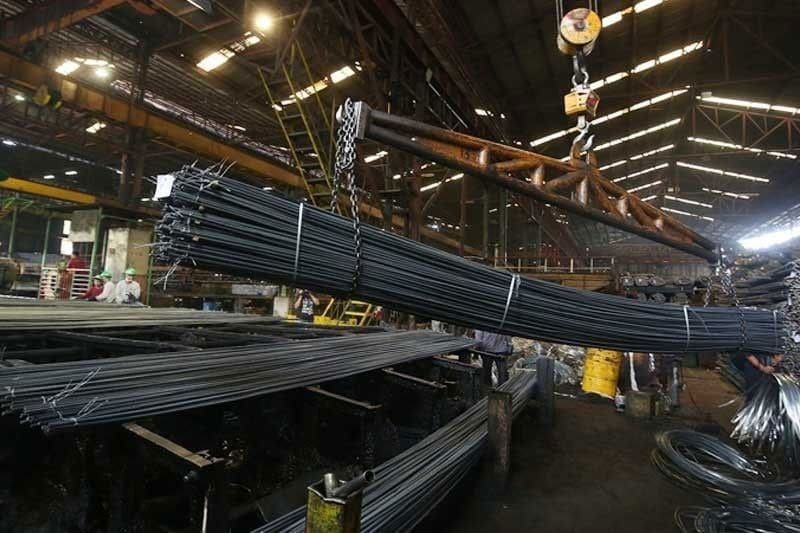
The Philippine Iron and Steel Institute has called on the Department of Trade and Industry to compress the timeline for mandatory adoption of enhanced deformed steel bar specifications, citing the need to strengthen buildings against seismic activity across the archipelago.
The trade organization's appeal focuses on reducing the transition period currently allowed for construction suppliers and contractors to meet the upgraded technical requirements. Deformed steel bars, commonly known as rebar, form the skeletal reinforcement in concrete structures and play a critical role in how buildings withstand earthquake forces.
Seismic Risk Drives Urgency
The Philippines sits along the Pacific Ring of Fire, where tectonic plate boundaries generate frequent seismic events. Manila and other major urban centers face elevated earthquake risk, making the structural integrity of buildings a matter of public safety rather than mere regulatory compliance.
Current standards for rebar already exist, but the push from PISI centers on tightening specifications and eliminating extended grace periods that allow older, less rigorous norms to remain in use. The institute argues that a shorter transition would close the gap between regulatory intent and actual market practice, ensuring that steel entering construction sites meets the higher bar for ductility, tensile strength, and consistency.
Market Implications
A faster mandate would affect steel mills, importers, construction firms, and property developers throughout the supply chain. Producers would need to accelerate investments in quality control systems and testing equipment to verify compliance. Importers would face tighter scrutiny at customs checkpoints, where samples are tested against the updated benchmarks.
Construction companies, meanwhile, would need to update procurement contracts and verify that their suppliers can deliver certified material within the compressed timeline. The shift could create short-term bottlenecks if domestic capacity lags or if imported rebar fails to meet the new specifications, potentially affecting project schedules in a market already grappling with infrastructure backlogs.
Regional Context
The call comes as several Southeast Asian nations review their own building codes in the wake of recent seismic events. Indonesia updated its earthquake design parameters after the 2018 Sulawesi quake, while Japan continues to refine its already stringent standards following decades of seismic engineering experience. The Philippines, with its combination of rapid urbanization and high seismic hazard, faces pressure to keep pace.
Steel quality has emerged as a recurring concern in regional construction. Substandard rebar has been linked to building failures in past earthquakes, where structures collapsed not because of design flaws but because the steel inside the concrete did not perform as specified. Ensuring that every bar meets rigorous mechanical properties is as important as the architectural and engineering design itself.
Next Steps
The Department of Trade and Industry has not yet announced a revised timeline. Any decision will need to balance the safety imperative with the practical capacity of the industry to comply. A phased approach, with clear milestones and enforcement mechanisms, would likely accompany any accelerated schedule.
For developers and contractors, the message is clear: the window for transitioning to stricter rebar standards is narrowing. Those who move early to secure compliant supply chains will avoid disruption; those who wait may face delays and cost overruns as the market adjusts to the new normal.
RELATED STORIES

Philippine Water Operator Earmarks $400 Million for Southeast Asia Expansion
Mariel D. Santos · 2 min

Philippines Energy Budget Climbs 26% as Electric Vehicle Funding Surges
Priyanka V. Rao · 3 min
Philippine Manufacturing Expands at Fastest Pace Since 2016
Priyanka V. Rao · 3 min
Seventeen Firms Compete for Manila's $200 Million Geothermal Risk Fund
Priyanka V. Rao · 3 min
Spot something wrong? Email editor@briefasia.com. We log every correction publicly.