Technology · AI
Philippine Enterprises Lag in AI Readiness Despite Workforce Enthusiasm
Only 22% of companies have infrastructure to support AI at scale, while individual workers rapidly adopt tools like ChatGPT and Gemini
KEY TAKEAWAYS
- ·Only 22% of Philippine enterprises have the infrastructure to support AI at scale, despite widespread individual worker adoption of tools like ChatGPT and Gemini across major business districts.
- ·Cisco data shows just 22% of local organizations have adequate GPU capacity and only 45% have implemented necessary security safeguards for AI workloads.
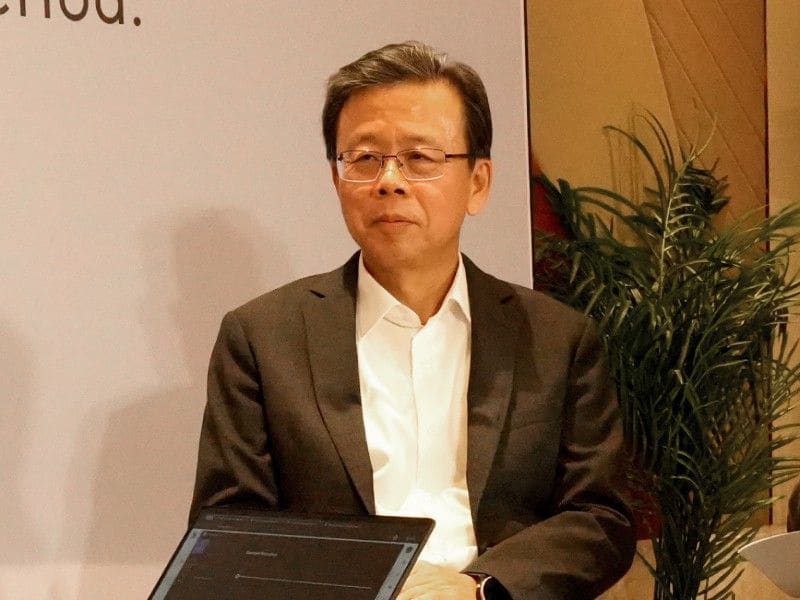
- ·ASUS Co-CEO Samson Hu identifies three missing pillars for enterprise AI: appropriate software tools, AI-capable hardware devices, and redesigned workflows that embed AI into daily operations.
The Workforce-Enterprise Divide
Filipino professionals have integrated AI into daily routines faster than their employers can keep pace. Marketing teams generate copy through large language models, executives draft correspondence with AI assistants, and knowledge workers transcribe meetings automatically. Yet only 22% of Philippine enterprises possess the infrastructure to support AI at scale, according to Cisco's 2024 readiness assessment.
ASUS Co-CEO Samson Hu addressed this disconnect during the launch of the company's ExpertBook Ultra in Manila. The gap, he explained, stems not from workforce capability but from organizational structure. "The challenge is quite about the organizational readiness, how to move AI from the experimentation stage to really enterprise-wide deployment," Hu said.
An individual can integrate an AI tool in minutes. An enterprise must navigate data governance frameworks, security protocols, architectural integration, and systemic risk before deploying similar capabilities across thousands of employees.
Three Pillars Missing
Hu outlined three requirements for enterprise AI that most organizations lack in full. The first involves software: the large language models, copilots, and productivity platforms that automate tasks and accelerate decisions. Many companies stop here, treating AI adoption as a software procurement exercise.
The second pillar requires workflow redesign. AI must embed into daily operations rather than exist as a standalone tool employees access occasionally. ASUS built features like AI ExpertMeet for automatic meeting transcription and Knowledge Hub for semantic enterprise search directly into its business laptop suite, making AI a continuous presence rather than a discrete application.
The third pillar, often overlooked in enterprise AI discussions focused on cloud platforms, involves hardware. AI workloads demand significantly greater computing power than traditional office applications, performing billions of simultaneous mathematical operations. Without devices capable of handling these requirements, organizations create bottlenecks regardless of software investment.
Infrastructure Shortfall
The hardware gap appears particularly acute in the Philippines. Cisco data shows just 22% of local organizations have sufficient GPU capacity for current and future AI workloads. Meanwhile, 45% of enterprises have implemented adequate safeguards including end-to-end encryption, continuous monitoring, and rapid threat response to protect data used in AI systems.
"AI is a full-stack transformation," Hu said. Equipping employees with legacy hardware while investing in advanced AI software prevents organizations from unlocking the performance, responsiveness, and security that enterprise AI promises.
ASUS positions its ExpertBook Ultra as a response to this infrastructure deficit. The device carries a Neural Processing Unit delivering up to 50 TOPS, enabling what the company calls Hybrid AI. This approach distributes workloads between cloud and local device processing.
Processing tasks locally improves responsiveness, reduces cloud dependence, and allows sensitive business information to remain on-device. For enterprises handling confidential financial records, customer data, and proprietary documents, local processing reduces the risk of data exposure through public cloud AI services.
Long-Term Positioning
Hu's visit to Manila marks his first official trip to the Philippines in over a decade, signaling ASUS deepening enterprise focus in the market. The company views the Philippines as more than another sales territory, pointing to accelerating digital transformation, a growing pool of digitally skilled professionals, and rising AI appetite as reasons for long-term investment.
The company frames its strategy around what it calls "Ubiquitous AI. Incredible Possibilities," anticipating the next wave of innovation beyond current generative AI capabilities. "Today we have generative AI, we have agentic AI. In the future, it will evolve into something we don't know yet," Hu said.
This uncertainty drives ASUS to focus less on individual AI trends and more on building adaptable technology foundations. "We always keep in mind what's next for AI," Hu explained. "We are passionate about technology, and we always emphasize meaningful innovation for AI users."
Whether future developments center on autonomous AI agents, more powerful on-device computing, or yet-unimagined technologies, Hu believes the company's role remains constant: adopting new capabilities quickly while ensuring they address genuine business problems rather than adding features for competitive optics.
The Real Constraint
Philippine enterprises face a clear challenge. Employee adoption is no longer the obstacle. Workers in coworking spaces across Bonifacio Global City and Makati have already integrated AI into personal workflows. The constraint now sits at the organizational level, where companies must build the infrastructure, policies, and workflows to support AI at enterprise scale.
For businesses, the question has shifted from whether employees will use AI to whether organizations can support that use with adequate tools, appropriate devices, and redesigned workflows. The gap between individual enthusiasm and institutional readiness defines the current moment in Philippine enterprise technology.
Hu emphasized that many executives still misunderstand AI adoption as software acquisition, with conversations revolving around models, subscriptions, and cloud platforms. "The organizations that create the most value from AI are not those with the most tools," he said. "They are the organizations that integrate AI into how people actually work."
That integration requires investment across the full technology stack, from cloud services to workplace devices, alongside organizational changes in workflow design and data governance. For Philippine enterprises, closing the 22% readiness gap means addressing all three pillars simultaneously rather than treating AI as a software-only initiative.
The workforce is prepared. The infrastructure lags behind. Bridging that divide will determine which organizations capture AI's productivity gains and which remain constrained by bottlenecks of their own making.
RELATED STORIES
Manila's US$34 Billion AI Plan Is Really a Bet on the Grid
Valerie Nguyen · 9 min

Megaworld REIT Secures Approval for P27 Billion Asset Infusion
Priyanka V. Rao · 4 min

PhilWeb Trading Halted After P4.2 Billion JKS Tech Bet
Tran Quoc Bao · 3 min

When Paper Wealth Outpaces Real Revenue: The Villar Land Valuation Puzzle
Anand Sundaram · 7 min
Spot something wrong? Email editor@briefasia.com. We log every correction publicly.