ExclusiveTechnology · Policy
Manila's US$34 Billion AI Plan Is Really a Bet on the Grid
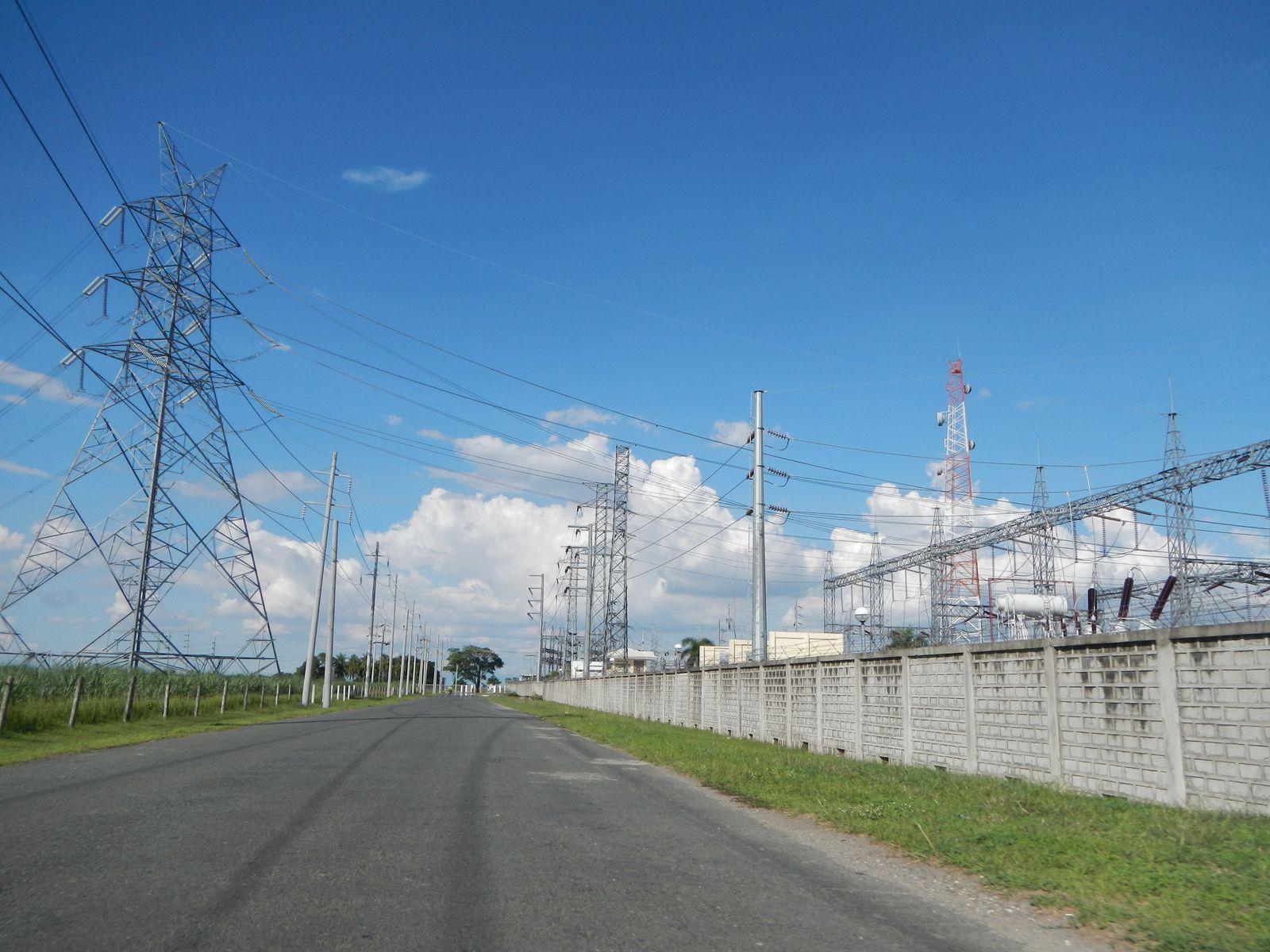
The Philippines has pledged US$34.4 billion to grow its data-centre capacity thirtyfold by 2033. The capital is the easy half. The harder half, firm electricity at a price hyperscalers will pay, is the test now facing a wave of ASEAN AI pitches.
KEY TAKEAWAYS
- ·The Philippines has committed US$34.4 billion to a thirtyfold expansion of data-centre capacity by 2033, from about 50 MW to 1.5 GW, but the binding constraint is not capital, it is finding 1.5 GW of firm power at a price hyperscalers accept in a market with Southeast Asia's second-highest industrial electricity costs.
- ·The same pitch, a large continuous block of electricity, is now being made across ASEAN, Laos on hydropower, Indonesia's cross-border Green Super Grid, Malaysia's AI-only carve-out after Johor filled up, while independent forecasters such as Wood Mackenzie and Ember expect supply to lag the targets.
- ·The real test is whether any unnamed hyperscaler signs both a power purchase agreement and a grid-connection deal in the Philippines within 12 to 18 months, because a PPA fixes the price without fixing the wires, and the interim 2030 goal of 400 MW is far more modest than the headline gigawatt.
The Philippine government on 8 September committed to a thirtyfold expansion of its data-centre capacity by 2033, from about 50 megawatts today to 1.5 gigawatts, under an eight-year artificial intelligence infrastructure plan costing an estimated US$34.4 billion. The Department of Information and Communications Technology (DICT) expects about US$13.5 billion of that from the state and roughly US$21 billion from private investors. The capital is the easier half of the problem. The country also has to find 1.5 GW of firm electricity and sell it at a price hyperscalers will accept, in a market with the second-highest industrial power costs in Southeast Asia.
That is the pattern worth reading closely, and it runs wider than Manila. In the past year, several ASEAN economies outside Singapore and Johor have put data centres at the front of their investment pitches. Each is selling the same thing: a large, continuous block of electricity. On the evidence available, the power is not yet in place in the quantity or at the price those targets assume.
How the Philippine plan is supposed to work
The Philippine AI Infrastructure Masterplan rests on six pillars: connectivity, compute and data centres, energy and water, workforce, regulation, and demand. About US$14.6 billion is earmarked for compute and data centres, according to TechRepublic's account of the plan.
DICT Secretary Henry Aguda said at the launch that electricity is “the most critical requirement for hyperscalers”. The Department of Energy has identified the need to power the equivalent of about 152,000 graphics processors without cutting into household supply, and the plan aims for 40 per cent renewable power (mainly solar and geothermal) by 2033, with nuclear as a longer-term option.

On the demand side, two unnamed US companies are evaluating sites in Luzon, each for roughly 200 MW over five years, in the Bataan to Clark and Batangas to Aurora corridors. The companies have not been identified, and no investment decision has been announced.
Other governments are making the same pitch
The Philippines is not alone. On 18 August, Lao Deputy Finance Minister Phonevanh Outhavong listed data centres, AI and fintech among the priority sectors for 2026 to 2030, arguing that the country's hydropower, backed by new solar and wind, could supply energy-intensive digital infrastructure, as reported by The Star. The pitch came days after Laos reported approvals for 34 concession projects worth US$8.5 billion in the first seven months of 2026, up 68 per cent year-on-year, while actual capital inflows over the same period were about US$1.06 billion.
Indonesia has taken a cross-border route. In November 2025, Coordinating Economic Affairs Minister Airlangga Hartarto said Jakarta was discussing a renewable-powered data-centre network with Singapore and Malaysia, tied to a “Green Super Grid” running from Sumatra to Nusa Tenggara and serving data centres in Batam, according to VietnamPlus. The grid alone is estimated to need about US$25 billion.
The logic in each case is the same. Singapore is short of land and power, and Malaysia has started to ration. Each government is offering itself as the next place the capacity can go.
Why the region is looking beyond Johor
The opening exists because the first overflow market filled up quickly. Malaysian data-centre capacity rose from about 10 MW in 2021 to roughly 1.3 GW by 2024, much of it in Johor, according to figures compiled by Techwire Asia. On 24 February 2026, during Ministers' Question Time in the Dewan Rakyat, Prime Minister Anwar Ibrahim said the government had “restricted the entry of new data centres that have nothing to do with AI” for close to two years, to ease pressure on power and water supply, as reported by the national news agency Bernama. Approvals remain easier for AI facilities. Anwar told Parliament that projections still show sufficient capacity, and pointed to the ASEAN Power Grid and an energy corridor from Sarawak to Peninsular Malaysia and Singapore as the longer-term answer.
Forecasts show why governments are nervous. The energy think tank Ember estimated in April 2026 that data-centre electricity use in Malaysia could rise from 8.5 terawatt-hours in 2024 to 68 TWh by 2030, about 30 per cent of national demand. For the Philippines, Ember's projection runs from 1.1 TWh to 20 TWh over the same period. Ember puts the solar and wind investment needed to serve regional data centres cleanly at US$45 billion to US$75 billion by 2030 across the five largest markets.

Those figures describe demand looking for a home. They say nothing about whether the next host can supply it.
The complication: power is scarce and expensive
In the Philippines, the problem is cost and reliability together. Industrial electricity averaged about US$154 per megawatt-hour in 2025, against Singapore's US$178 and well above Vietnam and Indonesia, according to comparative tariff data cited by Eco-Business in January. Eco-Business does not name the dataset behind those figures, and tariff comparisons vary with what they include, so the level should be read as indicative. The ranking is better established: the Philippines has sat second only to Singapore on industrial power costs in Southeast Asia across several years of comparisons, a position the Philippine Center for Investigative Journalism documented in 2023 and industry analysis still described in July 2026.
“Instead, it should be seen as a prompt for what needs to improve in the power and regulatory landscape,” said Alnie Demoral, an energy analyst at Ember, speaking about the country's data-centre ambitions. Vic Barrios of Digital Edge Philippines put the same point more bluntly: “Execution will determine whether the Philippines can compete.”
The grid is thin. The Institute for Climate and Sustainable Cities said in March that supply for the second quarter of 2026 was sufficient but that reserves left the system exposed, with yellow alerts expected in the Visayas in May. “Power supply challenges are not solely driven by high summer demand but are fundamentally linked to chronic forced outages,” said Charles Jason Diaz, a senior data analyst at the institute.
One of the country's largest conglomerates has already drawn its conclusion. In August 2025, SM Investments said it would sell its 18.1 per cent stake in YCO Cloud Centers. “Right now, we are not really focused on data centers because from our perspective, the power cost is very expensive,” said Frederic DyBuncio, the group's president and chief executive, as reported by DatacenterDynamics.
Independent forecasters are also more cautious than the plan. Wood Mackenzie, cited by Eco-Business, expects Philippine capacity to stay below 1 GW by 2035. The government is aiming for 1.5 GW two years earlier.
Laos has the opposite profile: surplus hydropower, but a small economy with a wide gap between what it approves and what arrives. The US$8.5 billion approved this year compares with just over US$1 billion actually disbursed.
Why that may not matter much
There are three reasons to be less sceptical.
1. Capacity has moved fast before. Johor went from almost nothing to more than a gigawatt in about three years. Its constraint turned out to be grid connection, with delays of up to 18 months, more than generation. Where a government can fast-track connections, capacity can follow capital quickly.
2. Renewable supply is growing, and large buyers can contract around the average tariff. Terra Solar's first phase, at 1,785.7 MW, is among the capacity additions the institute counted for 2026, and it estimated more than 3,000 MW of rooftop solar already operating. Philippine rules have also opened up: the Energy Regulatory Commission lowered the contestability threshold to 100 kW under a 2025 resolution, so large users can contract supply directly with generators rather than pay the retail average.
A direct contract still has to be delivered. Most Philippine data centres under 50 MW connect at distribution voltage, which leaves them exposed to local outages, and there is no published transmission-class interconnection product at 69 kV or above that a hyperscale campus could simply buy. Until that exists, a power purchase agreement fixes the price without fixing the wires.
3. The interim target is modest. The plan's 2030 goal is 400 MW, which two 200 MW hyperscale campuses would almost cover on their own. The gigawatt figure is a later ambition.
The real test is whether any of the unnamed hyperscalers signs a power purchase agreement and a grid connection deal in the Philippines within the next 12 to 18 months. A site evaluation costs little; a signed power contract commits capital. Nobody outside the companies can yet say whether that will happen, and the plan does not say what happens to the private US$21 billion if it does not.
What to watch
On the evidence so far, the region's second wave of data-centre ambitions will be decided by utilities and energy regulators more than by investment agencies. A government can offer land and incentives. It is much harder to guarantee firm, competitively priced power at hundreds of megawatts.
Three things will settle it. First, whether the Philippine Department of Energy publishes a power supply plan that allocates capacity to the masterplan's corridors. Second, whether Laos reports higher actual disbursements for technology projects, as distinct from approvals, in its full-year 2026 figures. Third, whether Malaysia keeps its pause on non-AI data centres in place through 2027, which would keep pushing overflow demand towards the rest of the region.
About the reporting
This article was researched from published reporting and primary documents. The Philippine masterplan figures come from the Department of Information and Communications Technology launch on 8 September 2026, as carried by The Manila Times, The Star and TechRepublic. The Laos and Malaysia material draws on The Star, the Laotian Times and Bernama’s report of the Dewan Rakyat session; the Indonesia proposal on VietnamPlus. Power data and analysis come from Ember, the Institute for Climate and Sustainable Cities, Eco-Business, the Philippine Center for Investigative Journalism and DatacenterDynamics. Full links are held on file at BriefAsia.
RELATED STORIES

Philippines Central Bank Uses AI and Job Boards to Track Unemployment in Real Time
Priyanka V. Rao · 4 min

Southeast Asian Firms Overlook Digital Pact Worth USD 2 Trillion
Lim Hui Ying · 4 min

When Paper Wealth Outpaces Real Revenue: The Villar Land Valuation Puzzle
Anand Sundaram · 7 min

Southeast Asia's Data Centre Rush Faces Power Grid Reality
Mariel D. Santos · 4 min
Spot something wrong? Email editor@briefasia.com. We log every correction publicly.