Finance · Banking
Philippine Banks See Bad Loan Ratio Tick Up to 3.35% in July
Non-performing loans edge higher as borrowers navigate elevated interest rates and inflation pressures, though industry metrics remain within manageable bounds
KEY TAKEAWAYS
- ·Philippine banks' non-performing loan ratio rose to 3.35 per cent in July from 3.29 per cent in June, driven by a contraction in total loans whilst bad debt held steady at ₱585 billion.
- ·Gross bad loans increased 9.3 per cent year-on-year to ₱585.08 billion, though total loan portfolio growth of 10.6 per cent kept the NPL ratio below the 3.4 per cent recorded in July 2025.
- ·The NPL coverage ratio stood at 92.45 per cent in July, with banks maintaining adequate capital and provisioning buffers as monetary easing and economic growth support borrower repayment capacity.
Asset Quality Under Pressure
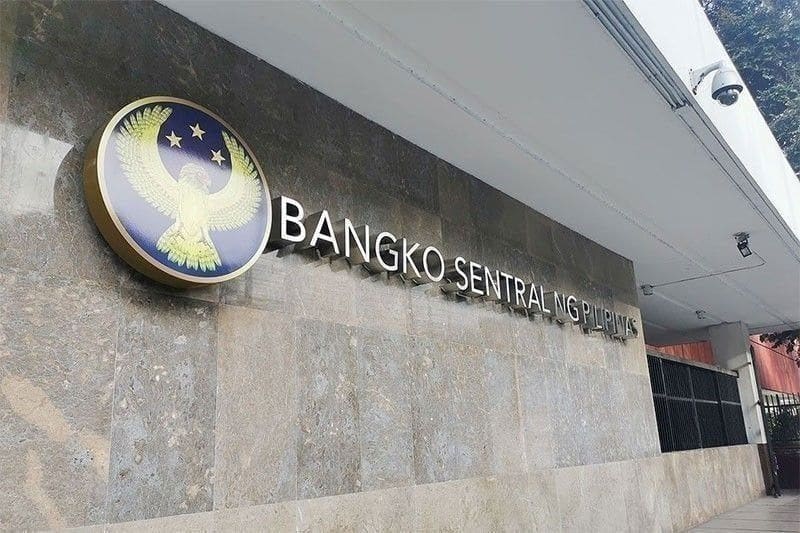
The Philippine banking sector's non-performing loan ratio climbed to 3.35 per cent in July, marking a two-month high and reflecting persistent repayment stress among certain borrower segments. The Bangko Sentral ng Pilipinas released preliminary figures showing the increase from June's 3.29 per cent, though the metric remained below the 3.4 per cent recorded in July 2025.
Gross bad loans expanded 9.3 per cent year-on-year to ₱585.08 billion in July from ₱535.45 billion twelve months earlier. Non-performing loans are classified as obligations with principal or interest payments overdue by at least 90 days. The absolute increase in soured debt came even as the industry's total loan portfolio grew at a faster clip of 10.6 per cent, reaching ₱17.45 trillion compared with ₱15.77 trillion in July 2025.
The month-on-month dynamic told a different story. Total gross loans contracted 1.9 per cent from June's ₱17.78 trillion, whilst non-performing loans held steady at approximately ₱585 billion. With a smaller denominator, the bad loan share of the portfolio edged upward despite flat nominal levels.
Credit Cycle Dynamics
Jonathan Ravelas, senior adviser at Reyes Tacandong & Co., attributed the uptick to lingering financial pressure on borrowers following an extended period of elevated interest rates and inflation. Not all economic segments are recovering uniformly, he noted, and repayment capacity varies across industries and household income brackets.
"As bank lending expands, a modest rise in NPLs is a normal part of the credit cycle," Ravelas said. The observation underscores that credit growth inherently brings incremental risk, particularly when economic conditions remain uneven.
Past due loans, which have missed payments but not yet crossed the 90-day threshold for non-performing classification, rose 7.4 per cent year-on-year to ₱738.77 billion from ₱687.59 billion. The past due loan ratio improved to 4.23 per cent from 4.36 per cent a year earlier, aided by the larger loan base.
Restructured loans, where payment terms have been modified to assist borrowers, increased 3.7 per cent to ₱341.95 billion from ₱329.64 billion. The restructured loan ratio stood at 1.96 per cent, down from 2.09 per cent in July 2025.
Provisioning and Coverage
Banks maintained buffers against potential losses, with allowances for credit losses rising 5.6 per cent year-on-year to ₱540.9 billion from ₱512.06 billion. The non-performing loan coverage ratio, which measures the proportion of bad loans backed by reserves, stood at 92.45 per cent in July. This compared with 95.63 per cent a year earlier and 92.52 per cent in June, indicating a slight erosion in cushion relative to the stock of problem assets.
The coverage ratio remains well above regulatory minimums, and banks in the Philippines continue to operate with capital levels comfortably exceeding Basel III requirements. Ravelas emphasised that the latest figures do not signal systemic distress, noting that banks remain well-capitalised and adequately provisioned by historical standards.
Outlook Tied to Macro Trajectory
The trajectory of asset quality will hinge on macroeconomic conditions over the coming quarters. Inflation has moderated from peaks reached in 2023 and early 2024, and the central bank has begun easing its policy stance after a prolonged tightening cycle. Lower interest rates should gradually reduce debt-servicing burdens for both corporate and retail borrowers.
Economic growth continues, though unevenly distributed across sectors. Export-oriented manufacturing and business process outsourcing remain robust, whilst segments tied to domestic consumption and construction face headwinds from elevated input costs and tighter credit conditions.
Ravelas pointed to continued economic expansion, easing inflation, lower interest rates, and prudent credit risk management as key factors that will support borrowers' debt-servicing capacity going forward. The interplay of these variables will determine whether the July uptick represents a temporary blip or the beginning of a more sustained deterioration in loan quality.
For now, the banking system's asset quality metrics remain within manageable ranges, and regulatory oversight continues to ensure that lenders maintain adequate buffers against potential shocks.
RELATED STORIES
Philippines Central Bank Raises Rate to 5% Despite Economic Slowdown
Priyanka V. Rao · 3 min

Philippine National Bank Finances $109 Million Solar-Storage Plant in Iloilo
Priyanka V. Rao · 4 min

PhilWeb Commits P4.23 Billion to JKS Tech in Cross-Investment Deal
Tran Quoc Bao · 4 min

PhilWeb Trading Halted After P4.2 Billion JKS Tech Bet
Tran Quoc Bao · 3 min
Spot something wrong? Email editor@briefasia.com. We log every correction publicly.