Asia · Business
Petrolimex Revenue Reaches $9 Billion in First Half
Vietnam's state-owned fuel distributor outpaces Vingroup and other major conglomerates in H1 2026 revenue rankings
KEY TAKEAWAYS
- ·Petrolimex recorded nearly $9 billion in first-half 2026 revenue, exceeding Vingroup and other major Vietnamese listed companies.
- ·The state-owned fuel distributor benefits from Vietnam's largest retail fuel network and rising domestic energy consumption.
- ·Petrolimex's dominance highlights the continued market power of state-controlled energy firms in Vietnam's economy.
Vietnam's Fuel Giant Leads Revenue Charts
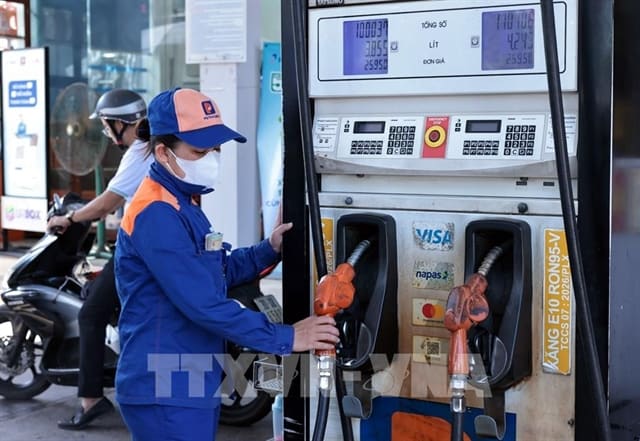
Petrolimex, Vietnam's state-owned petroleum distribution leader, generated nearly $9 billion in revenue during the first six months of 2026, positioning the company at the top of the country's listed corporate hierarchy by sales volume.
The fuel distributor's first-half revenue exceeded that of Vingroup, the diversified conglomerate that recorded VND 222.5 trillion in the same period. Petrolimex maintained a comfortable lead over a roster of Vietnam's largest publicly traded enterprises, including PV Oil, property developer Vinhomes, steelmaker Hoa Phat Group, and refiner PetroVietnam Refining and Petrochemical.
The performance underscores Petrolimex's dominance in Vietnam's retail fuel sector, where the company operates the country's most extensive distribution network. With thousands of service stations spanning urban centers and rural provinces, Petrolimex captures a significant share of domestic gasoline and diesel consumption, a market that continues to expand alongside Vietnam's rising vehicle ownership and industrial activity.
State-Owned Energy Players Retain Market Power
Petrolimex's revenue scale reflects the continued influence of state-controlled energy enterprises in Vietnam's economy. The company competes with PV Oil and PV GAS, both subsidiaries of the state oil and gas group PetroVietnam, in a sector where government-linked firms hold structural advantages in infrastructure, supply contracts, and regulatory access.
The revenue comparison also highlights the divergent paths of Vietnam's largest conglomerates. While Vingroup has diversified into real estate, automotive manufacturing, technology, and healthcare, its revenue base remains fragmented across multiple business lines. Petrolimex, by contrast, concentrates on a single high-volume, low-margin sector where scale translates directly into top-line growth.
Hoa Phat Group, the country's leading steel producer, and Mobile World Investment Corporation, operator of consumer electronics chains, ranked further down the list. Both companies face cyclical demand patterns tied to construction activity and consumer spending, respectively.
Regional Context and Competitive Dynamics
Vietnam's fuel distribution landscape is shaped by import dependence and price regulation. The government adjusts retail fuel prices periodically to reflect international oil markets while managing inflation and social stability. Petrolimex navigates this environment by leveraging its nationwide footprint and supply chain infrastructure, built over decades of state investment.
The company's revenue trajectory also mirrors broader trends in Southeast Asian energy consumption. As Vietnam's GDP growth remains robust and urbanization accelerates, demand for transportation fuels and industrial energy inputs continues to climb. Petrolimex benefits from this structural tailwind, even as the company faces long-term questions about the energy transition and electric vehicle adoption.
Vietnam Airlines and Masan Group, both prominent in their respective sectors of aviation and consumer goods, rounded out the revenue rankings. The airline's performance reflects the recovery in domestic and international travel, while Masan's diversified portfolio spans processed foods, beverages, and financial services.
Petrolimex's first-half results set a benchmark for the second half of 2026, as fuel demand typically peaks during the summer months and year-end holiday travel. The company's ability to sustain revenue leadership will depend on oil price stability, regulatory conditions, and the pace of economic activity across Vietnam's industrial and consumer sectors.
RELATED STORIES
Vietnam Draws $7.5 Billion From Singapore in Seven Months
Priyanka V. Rao · 3 min
Vietnam Ships 1.7 Million Tonnes of Coffee as Brazil Delays and EU Rules Reshape Trade
Tran Quoc Bao · 3 min
Vietnam's Trade Turnover Hits $770 Billion as Imports Surge Past Exports
Jun-ho Seo · 2 min
Samsung's Vietnam Operations Post 23% Profit Jump to $2.3 Billion
Tran Quoc Bao · 3 min
Spot something wrong? Email editor@briefasia.com. We log every correction publicly.