Technology · Policy
Pentagon's China Military List Now Targets Tech Giants Despite Minimal Legal Bite
Washington added 64 firms to its defense blacklist in June, but the real impact lies in market signals and future regulatory groundwork, not immediate sanctions.
KEY TAKEAWAYS
- ·The Pentagon expanded its Chinese Military Companies list to 188 entities in June, adding 64 firms including Tencent, Alibaba, DJI, and Unitree, though the designation carries no direct transaction bans or asset freezes.
- ·The list serves as a classification framework for Military-Civil Fusion risks, enabling future regulations like the BIOSECURE Act and lobbying restrictions to reference the same baseline without imposing immediate legal consequences.
- ·WuXi AppTec reported customers halting projects within ten days of its designation, illustrating how market actors de-risk preemptively even before formal sanctions take effect.
A Blacklist Without Teeth
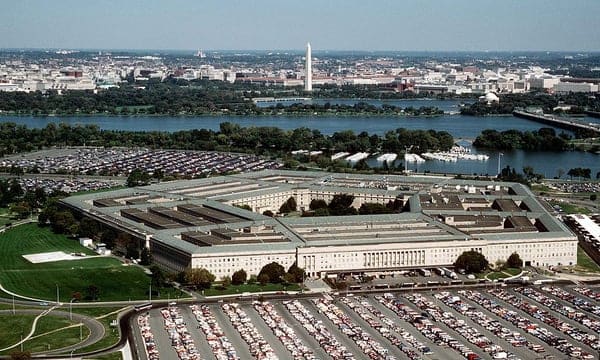
When the Pentagon published an updated roster of Chinese Military Companies on June 8, it added 64 names in a single sweep, bringing the total to 188. Among the newcomers: Tencent, Alibaba, DJI, and Unitree, all household names in consumer technology and e-commerce. Yet unlike export-control blacklists or Treasury sanctions, this designation imposes no ban on transactions, no freeze on assets, and no outright prohibition on doing business in the United States.
So why does Washington keep expanding it?
The answer lies not in what the list forbids today, but in what it prepares the ground for tomorrow. The roster functions as a classification engine, sorting Chinese enterprises through a national-security filter and building a shared reference point for agencies, investors, and lawmakers who want a common vocabulary for risk.
Redefining the Perimeter of Risk
Section 1260H of the 2021 National Defense Authorization Act tasks the Pentagon with identifying entities that support China's Military-Civil Fusion doctrine, a policy framework designed to channel civilian innovation into defense applications. As artificial intelligence, robotics, and cloud infrastructure acquire dual-use characteristics, the boundary between commercial product and military enabler has grown fuzzier.
Analysts at the Foundation for Defense of Democracies describe the June update as an acknowledgment that traditional defense contractors no longer capture the full scope of firms contributing to military modernization. The Georgetown Center for Security and Emerging Technology notes that Military-Civil Fusion has spawned collaboration models that fall outside the classic procurement relationship, making it harder to draw a bright line between purely private ventures and those indirectly bolstering the People's Liberation Army.
Rather than impose immediate curbs, the Section 1260H list codifies which firms warrant scrutiny. It offers a standardized framework that reduces the need for each agency to develop its own criteria from scratch, cutting coordination costs and enabling different branches of government to work from a common baseline.
Laying Pipe for Future Rules
Classification becomes infrastructure when successive policies attach legal consequences to the same designation. The BIOSECURE Act, which targets biotechnology supply chains, is expected to prioritize Section 1260H entities when identifying "Biotechnology Companies of Concern," according to legal analysts at Goodwin. Similarly, recent defense authorization acts have tacked on procurement restrictions, lobbying curbs, and technology-acquisition limits tied directly to the list.
The lobbying provision illustrates how a seemingly administrative designation ripples outward. Firms representing clients on the Section 1260H roster now risk losing Department of Defense contracts, prompting major Washington shops to sever ties. Brownstein Hyatt Farber Schreck and Mercury Public Affairs reportedly dropped Alibaba and Tencent after the rule took effect, shrinking the pool of advocates willing to work for listed companies.
Once a classification migrates into multiple statutes, it generates spillover effects that outpace the original legal mandate. Supply-chain managers hedge against future restrictions, investors reprice exposure, and compliance teams expand due diligence, all before Congress or regulators issue a formal prohibition.
Market Chill Before the Freeze
Expectations move faster than legislation. Within ten days of WuXi AppTec's appearance on the list, customers began raising concerns, declining new projects, suspending clinical collaborations, and, in one case, halting shipments with explicit reference to the Pentagon designation, according to the company's federal lawsuit. Alibaba's complaint similarly describes reputational damage, investor anxiety, and partners reassessing commercial ties.
This dynamic, often called a chilling effect, allows classification to function as de facto policy even when no statute compels action. Private actors de-risk preemptively, anticipating compliance burdens, reputational costs, or future regulatory tightening. The result is a market-driven decoupling that operates independently of enforceable law.
Litigation as a Speed Bump
Chinese companies can challenge their designation in court. On July 5, a federal judge temporarily blocked enforcement of the lobbying restrictions against Alibaba while its lawsuit proceeds, though the ruling leaves the underlying designation intact. Xiaomi successfully overturned a similar military-related label in 2021, demonstrating that judicial review can offer relief.
Yet the relief is often narrow and short-lived. Hesai, a lidar manufacturer, secured removal from an earlier list only to find itself redesignated later. Angela Zhang, a professor at USC Gould School of Law, argues that U.S. measures increasingly resemble an interconnected regulatory architecture rather than isolated instruments, making any single legal victory incomplete.
House Select Committee Chairman John Moolenaar and Representative Elise Stefanik have pressed the Pentagon to enforce the lobbying ban strictly, framing it as essential to prevent contractors from simultaneously serving firms that "execute the military ambitions of the Chinese Communist Party."
What Comes Next
President Xi Jinping and President Donald Trump met in Beijing in May and committed to a "constructive relationship of strategic stability," with further high-level talks planned for September in Washington and possibly November at the APEC summit. Those engagements may preserve diplomatic channels and manage flashpoints, but they are unlikely to reverse the trajectory encoded in tools like the Section 1260H list.
The roster's power lies not in the sanctions it imposes but in the categories it creates. It translates strategic competition into a sortable, reusable taxonomy that agencies can invoke, markets can price, and Congress can build upon. As dual-use technology deepens and Military-Civil Fusion matures, the list will likely continue to grow, not because individual designations become easier to justify, but because the definition of risk itself keeps expanding.
For Chinese firms caught in that expanding net, the challenge is less about contesting a single designation than navigating an emerging regulatory ecosystem in which classification, not prohibition, has become the primary instrument of strategic competition.
RELATED STORIES
China's Chip Makers Split Three Ways Beneath the Revenue Growth
Tran Quoc Bao · 3 min
Hong Kong Debuts Robot-Run Convenience Store in Commercial Automation Push
Cheng Wei-Lun · 3 min

China Scrubs 5.6 Million AI-Generated Posts in Platform Cleanup
Cheng Wei-Lun · 3 min
Chinese Automakers Target Hybrid Market After EV Dominance
Cheng Wei-Lun · 3 min
Spot something wrong? Email editor@briefasia.com. We log every correction publicly.