Technology · Products
Pegatron Rolls Out AMD EPYC Server Platform for Enterprise AI Workloads
Taiwan's contract manufacturer targets agentic AI, HPC, and cloud computing with sixth-generation EPYC-powered infrastructure unveiled at AMD's 2026 event
KEY TAKEAWAYS
- ·Pegatron introduced a server platform using AMD's sixth-generation EPYC processors at AMD Advancing AI 2026, targeting enterprise AI, agentic AI, HPC, and cloud workloads.
- ·Taiwan's server ODM sector generated approximately USD 28 billion in 2025, with AI and HPC configurations driving growth toward an expected USD 35 billion in 2026.
- ·Volume shipments of AMD's sixth-generation EPYC processors are expected in the third quarter of 2026, with Pegatron competing against Wistron, Inventec, and Supermicro in the AI server market.
Taiwan Server Play Targets AI Compute Demand
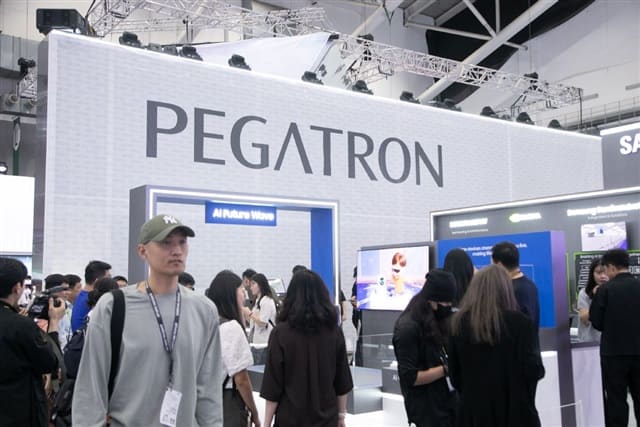
Pegatron introduced a server platform built around AMD's sixth-generation EPYC processors at AMD Advancing AI 2026, positioning the infrastructure for enterprise artificial intelligence, agentic AI, high-performance computing, cloud computing, and data-intensive workloads, according to Pegatron.
The announcement marks Pegatron's latest move into the enterprise server market as Asia-Pacific manufacturers expand beyond traditional contract electronics assembly into higher-margin infrastructure products. Taiwan's server ODM sector has been racing to capture share in AI-optimized hardware as hyperscalers and enterprises accelerate data center buildouts across the region.
AMD's sixth-generation EPYC processors, code-named Turin, feature Zen 5 architecture cores and are designed to handle parallel processing tasks required by large language models, inference engines, and HPC simulations. Pegatron's platform integrates these chips into a rack-mount configuration tailored for enterprise customers seeking alternatives to incumbent x86 and accelerator-only architectures.
Agentic AI and Cloud Computing in Focus
The platform specifically addresses agentic AI applications, a category that involves autonomous software agents capable of multi-step reasoning and task execution without continuous human oversight. These workloads require sustained CPU performance, memory bandwidth, and low-latency interconnects, specifications that AMD has emphasized in its EPYC roadmap.
Pegatron's entry into this segment reflects broader trends among Taiwanese ODMs. Wistron, Inventec, and Quanta have all launched AI-focused server lines over the past eighteen months, competing for orders from cloud service providers in Singapore, Tokyo, and North American markets. Pegatron has historically focused on consumer electronics and communications hardware but has been building out its data center infrastructure division since early 2025.
Cloud computing workloads remain a core target for the new platform. Enterprises in Southeast Asia and India are increasing investments in private and hybrid cloud infrastructure, driven by data residency regulations and latency requirements for real-time applications. Pegatron's AMD-based servers offer an alternative to incumbent Intel Xeon-based systems, particularly for customers seeking competitive pricing and performance per watt in multi-tenant environments.
Regional Manufacturing and Supply Chain Dynamics
Pegatron manufactures servers at facilities in Taiwan and mainland China, though the company has been expanding capacity in Vietnam and Indonesia to diversify production amid ongoing trade tensions. The AMD partnership allows Pegatron to tap into a growing ecosystem of software vendors and system integrators that have optimized their stacks for EPYC-based infrastructure.
AMD has been gaining ground in the data center processor market, particularly in Asia, where price-sensitive customers and government-backed cloud initiatives have driven adoption of non-Intel architectures. The company reported double-digit growth in EPYC shipments during the first half of 2026, though it has not disclosed regional breakdowns.
Taiwan's server ODM sector generated approximately USD 28 billion in revenue in 2025, with AI and HPC configurations accounting for a growing share of shipments. Analysts expect that figure to exceed USD 35 billion in 2026 as hyperscalers refresh infrastructure and enterprises deploy on-premises AI clusters.
HPC and Data-Intensive Applications
High-performance computing remains a strategic vertical for Pegatron's server business. Research institutions, financial services firms, and energy companies in Asia are expanding HPC clusters for computational fluid dynamics, molecular modeling, and risk simulation. AMD's EPYC processors have been adopted by several national supercomputing centers in the region, providing a reference point for Pegatron's sales efforts.
Data-intensive workloads, including real-time analytics, genomics, and video processing, also benefit from the memory and I/O capabilities of the sixth-generation EPYC architecture. Pegatron has integrated support for PCIe Gen 5, CXL memory expansion, and high-speed networking to accommodate these use cases.
The AMD Advancing AI 2026 event, held in Taipei, served as a showcase for AMD's ecosystem partners in the region. Pegatron's platform was among several server and accelerator announcements aimed at demonstrating the breadth of AMD's data center offerings beyond GPU-based AI training systems.
What Comes Next
Pegatron has not disclosed pricing, availability, or initial customer commitments for the new platform. The company typically works with ODM customers under confidential supply agreements, making it difficult to assess near-term revenue impact. However, industry observers note that Pegatron's timing aligns with a wave of server refreshes expected in the second half of 2026 as enterprises upgrade infrastructure to support generative AI applications.
AMD's sixth-generation EPYC processors are sampling to customers now, with volume shipments expected in the third quarter of 2026. Pegatron's platform will compete against similar offerings from Wistron, Inventec, and Supermicro, all of which have announced AMD-based servers in recent months.
The broader question for Taiwan's server ODM sector is whether the current AI infrastructure boom will sustain margins as competition intensifies and hyperscalers negotiate more aggressively on price. Pegatron's strategy appears to center on portfolio diversification, betting that a mix of AI, HPC, and cloud customers will provide more stable demand than reliance on any single segment.
RELATED STORIES
AI Demand Tightens Memory Markets as HBM4 Production Strains Supply
Cheng Wei-Lun · 3 min

Taiwan's AI Supply Chain Posts Record $89.7 Billion in August Revenue
Jun-ho Seo · 2 min
Hon Hai Posts Record August Revenue on AI Server Demand
Jun-ho Seo · 3 min
Integrated Systems Will Drive Next Wave of AI Growth, Says TSMC
Cheng Wei-Lun · 4 min
Spot something wrong? Email editor@briefasia.com. We log every correction publicly.