Lifestyle · Culture
Olive Young's $2 Tote Becomes Korea's Newest Tourist Staple
A reusable shopping bag from the K-beauty retailer has sold 1.78 million units as foreign visitors seek everyday Korean retail mementos alongside cosmetics
KEY TAKEAWAYS
- ·CJ Olive Young's 3,000-won tarpaulin tote has sold 1.78 million units since launching eighteen months ago, stocked at roughly 150 stores in tourist-heavy areas.
- ·The bag's popularity reflects how K-beauty's global momentum now extends beyond cosmetics to everyday Korean retail experiences and branded merchandise.
- ·Limited distribution and low pricing position the tote as both a functional purchase and a cultural token tied to Korea's beauty retail dominance.
A Tote With Unexpected Appeal
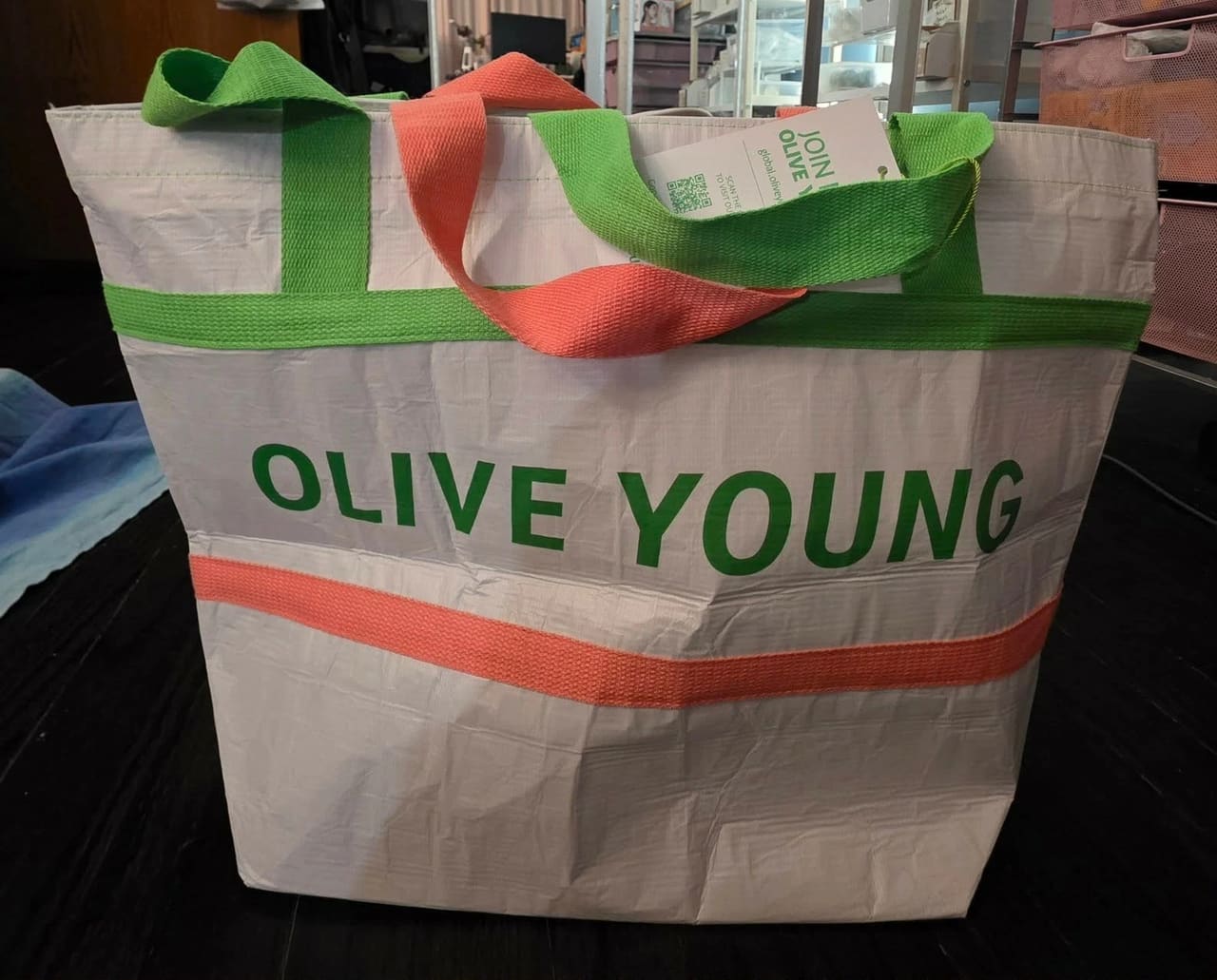
A 3,000-won reusable shopping bag has quietly become one of South Korea's most popular tourist purchases. The tarpaulin tote, sold at CJ Olive Young locations, has moved 1.78 million units since its debut roughly eighteen months ago, according to CJ.
The bag is currently stocked at approximately 150 Olive Young stores, with heavy concentration in tourist districts. What began as a simple checkout-lane accessory has turned into a sought-after memento for visitors riding the broader K-beauty wave into Korean retail culture.
From Beauty Haul to Cultural Token
Olive Young operates as South Korea's leading health and beauty retailer, a fixture in neighborhoods from Myeongdong to Gangnam. Foreign tourists already flock to its aisles for sheet masks, cushion compacts, and serums from brands like Innisfree, Laneige, and COSRX. The tote's rise suggests that shoppers now view the store itself, and the everyday objects associated with it, as part of the Korean experience they want to take home.
The bag's design is utilitarian: durable tarpaulin material, simple branding, and a price point low enough to be an impulse buy. Yet its ubiquity in Seoul streetscapes gives it a kind of insider credibility. Carrying an Olive Young tote signals familiarity with local shopping rhythms, a small but visible marker of having navigated Korea beyond the standard tourist checklist.
Retail as Destination
The tote's success fits into a broader pattern across Asia, where retail experiences increasingly double as cultural attractions. Duty-free shopping in Seoul and Busan has long been a draw, but the current wave goes deeper. Visitors want to shop where locals shop, using the same checkout bags and loyalty apps.
Olive Young has capitalized on this shift. Store layouts emphasize discovery and self-service, mirroring the browsing culture that defines Korean beauty retail. Product testers line the shelves, and promotional displays rotate frequently, creating a sense of novelty that encourages repeat visits even within a short trip.
For travelers, the tote becomes both practical and symbolic. It carries the day's purchases, then folds into a suitcase as a compact reminder of hours spent comparing sunscreen formulas or hunting down a specific lip tint shade.
The K-Beauty Spillover
South Korea's beauty industry has spent the past decade building global distribution and brand recognition. K-beauty exports reached record levels in recent years, driven by innovation in formulations, packaging, and digital marketing. That commercial success has generated cultural curiosity.
Tourists arrive with shopping lists compiled from YouTube hauls and Reddit threads. They know specific product names, store layouts, and even the best times to visit for new-release drops. In this context, the Olive Young tote becomes a logical extension: a low-cost, high-recognition item that enhances the sense of participation in Korean consumer culture.
CJ's distribution strategy supports this dynamic. By limiting the tote to around 150 locations rather than rolling it out chain-wide, the company maintains a degree of scarcity without making the product inaccessible. Tourist-heavy areas get priority, ensuring that the bag reaches the audience most likely to value it as a souvenir.
Everyday Objects, Elevated
The phenomenon echoes similar trends in other markets where mundane retail items gain traction as cultural exports. Japan's konbini tote bags, Taiwan's bookstore merchandise, and Thailand's 7-Eleven collaborations all tap into the same impulse: the desire to own a piece of everyday life from a place that feels distinct.
What sets the Olive Young tote apart is its timing. It arrives at a moment when Korean soft power, from music to film to beauty, enjoys unprecedented global reach. The bag benefits from that halo effect without needing to do much beyond existing.
For CJ, the sales figures represent both revenue and marketing. Every tote carried through an airport or spotted on a subway in Tokyo, Bangkok, or Los Angeles functions as a walking advertisement for the brand. The bag's design is simple enough to avoid dating quickly, which extends its useful life and, by extension, its promotional value.
What Comes Next
The tote's popularity raises questions about how far retailers can push the souvenir-ification of everyday merchandise. Other Korean chains may experiment with similar items, testing whether the model works beyond the beauty sector. Convenience stores, bookshops, and even transit systems could explore branded reusables that double as keepsakes.
For now, the Olive Young tote occupies a specific niche: affordable, functional, and tied to a retail experience that already holds cultural cachet. Its 1.78 million units sold suggest that tourists are willing to pay for the smallest tokens of participation in Korean daily life, especially when those tokens cost less than a subway pass and last far longer.
RELATED STORIES

KT&G Posts Fourth Consecutive Quarter of Double-Digit Profit Growth
Cheng Wei-Lun · 3 min
South Korea Builds New Retail Bridge for Fashion Export Push
Jun-ho Seo · 3 min
South Korea's Beauty Export Success Built on Contract Manufacturing Model
Cheng Wei-Lun · 3 min
Homeplus Secures Funding and Resumes Operations as Court Deadline Looms
Jun-ho Seo · 4 min
Spot something wrong? Email editor@briefasia.com. We log every correction publicly.