Technology · AI
Nvidia Targets Chinese Telecom Firms for 6G Base Station Push
The chipmaker is looking to embed GPU computing into next-generation wireless infrastructure as it expands beyond the data center
KEY TAKEAWAYS
- ·Nvidia is seeking Chinese telecom equipment partners to co-develop 6G AI radio access network base stations for deployment in overseas markets.
- ·The partnership would extend Nvidia's GPU computing platform into wireless infrastructure, targeting regions where Chinese vendors retain strong market positions.
- ·The strategy faces regulatory scrutiny under US export controls and geopolitical tensions over technology collaboration with Chinese firms.
Computing at the Edge of the Network
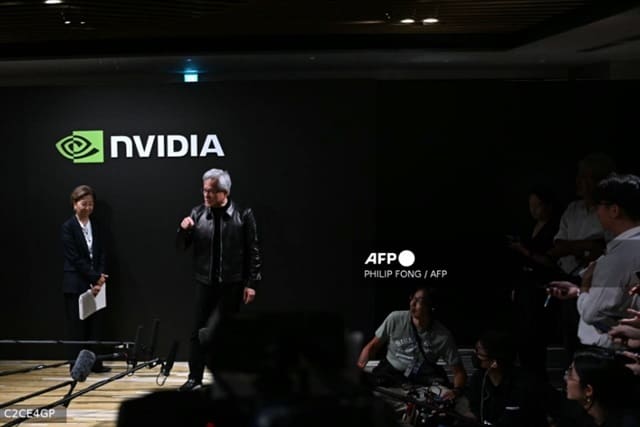
Nvidia is pursuing partnerships with Chinese telecom equipment makers to build 6G base stations that integrate artificial intelligence and GPU computing directly into radio access networks, a move that would position the chipmaker at the foundation of next-generation wireless infrastructure rather than solely in the data center.
The company is targeting Chinese manufacturers for collaboration on AI-RAN base stations designed for deployment in overseas markets, Nvidia confirmed. AI-RAN, short for AI radio access network, represents a shift in wireless architecture where machine learning workloads run on the base station itself, enabling real-time processing at the network edge rather than routing data back to centralized servers.
The approach reflects Nvidia's broader strategy to embed its computing platforms wherever data is generated and processed. While the company has dominated AI training and inference in hyperscale data centers, wireless networks represent a vast, distributed compute layer that has historically run on specialized telecom silicon from vendors such as Ericsson, Nokia, and Huawei.
Why Chinese Partners
Nvidia's outreach to Chinese equipment makers comes at a moment when the global telecom supply chain is fragmenting along geopolitical lines. Western carriers have largely excluded Chinese vendors from 5G rollouts under security concerns, but those same manufacturers retain strong positions in emerging markets across Southeast Asia, the Middle East, Africa, and Latin America.
By co-developing 6G platforms with Chinese partners, Nvidia gains access to manufacturing scale and distribution channels in regions where Chinese telecom gear remains competitive. Chinese equipment makers, in turn, gain access to Nvidia's GPU architecture and software ecosystem, which have become the de facto standard for AI workloads.
The partnership structure also allows Nvidia to navigate export controls that restrict shipments of its most advanced chips to China. Co-developed base stations intended for third markets could potentially use GPUs that fall below restricted performance thresholds, or be manufactured and assembled outside Chinese territory.
The 6G Compute Layer
6G networks, expected to begin commercial deployment around 2030, are being designed with native AI capabilities. Unlike 5G, which bolted machine learning onto existing architectures, 6G standards bodies are embedding intelligence into the radio layer itself. This includes AI-driven beamforming, spectrum management, traffic prediction, and real-time network optimization.
Running these workloads requires substantial compute power at the base station. Traditional baseband processors, optimized for signal processing and protocol handling, lack the parallel processing architecture needed for neural network inference. GPUs, by contrast, excel at the matrix math underlying AI models.
Nvidia has been positioning its Grace CPU and Hopper GPU platforms for telecom applications, arguing that a single unified architecture can handle both traditional baseband functions and AI workloads. The company has also developed software frameworks that allow telecom operators to run virtualized network functions and AI models on the same hardware.
Several global operators, including Softbank in Japan and Deutsche Telekom in Europe, have already announced trials of Nvidia-based AI-RAN systems in 5G networks. The Chinese partnership push suggests Nvidia sees 6G as an opportunity to establish its architecture as the compute standard for wireless infrastructure in markets beyond the US and Europe.
Market and Policy Headwinds
The strategy faces significant obstacles. US export controls on advanced semiconductors to China have tightened repeatedly over the past three years, and any technology collaboration between Nvidia and Chinese firms will draw scrutiny from regulators in Washington. The Commerce Department has broad authority to restrict not only chip sales but also technical assistance and joint development programs that could enhance Chinese capabilities in strategic technologies.
Chinese telecom equipment makers also face their own constraints. Huawei and ZTE remain on the US Entity List, limiting their access to American technology and markets. While both companies have invested heavily in developing indigenous chip design and manufacturing capabilities, they lag Nvidia in GPU performance and software maturity for AI workloads.
For Nvidia, the calculus is whether the potential revenue from 6G base stations in emerging markets justifies the regulatory and reputational risks of deeper collaboration with Chinese partners. The company has not disclosed which Chinese manufacturers it is in discussions with, nor the structure or timeline of any potential partnership.
The telecom infrastructure market is enormous. Analysts estimate that global spending on 5G and 6G radio access network equipment will exceed USD 50 billion annually by the end of the decade. If Nvidia can capture even a fraction of that with its compute platforms, it would open a significant new revenue stream outside the data center.
But the outcome will depend as much on policy as technology. Trade restrictions, security reviews, and geopolitical tensions will shape which partnerships are viable and which markets remain accessible. For now, Nvidia is making its move, betting that the economics of AI-native wireless infrastructure will create openings even in a fractured global supply chain.
RELATED STORIES

Beijing's AI Bar Offers Free DeepSeek Access as Price Wars Reshape Global Market
Cheng Wei-Lun · 3 min

ByteDance Founder Rules Out AI Distillation Amid US Scrutiny
Cheng Wei-Lun · 4 min
Huawei Unveils Sub-800-Gram Laptop Running Homegrown Kirin Chip
Cheng Wei-Lun · 3 min

DeepSeek Backs Unitree With $20.8 Million Stake in Shanghai IPO
Cheng Wei-Lun · 3 min
Spot something wrong? Email editor@briefasia.com. We log every correction publicly.