Technology · AI
ByteDance Founder Rules Out AI Distillation Amid US Scrutiny
Zhang Yiming says the company will avoid the controversial training method as Chinese AI progress draws Washington's attention
KEY TAKEAWAYS
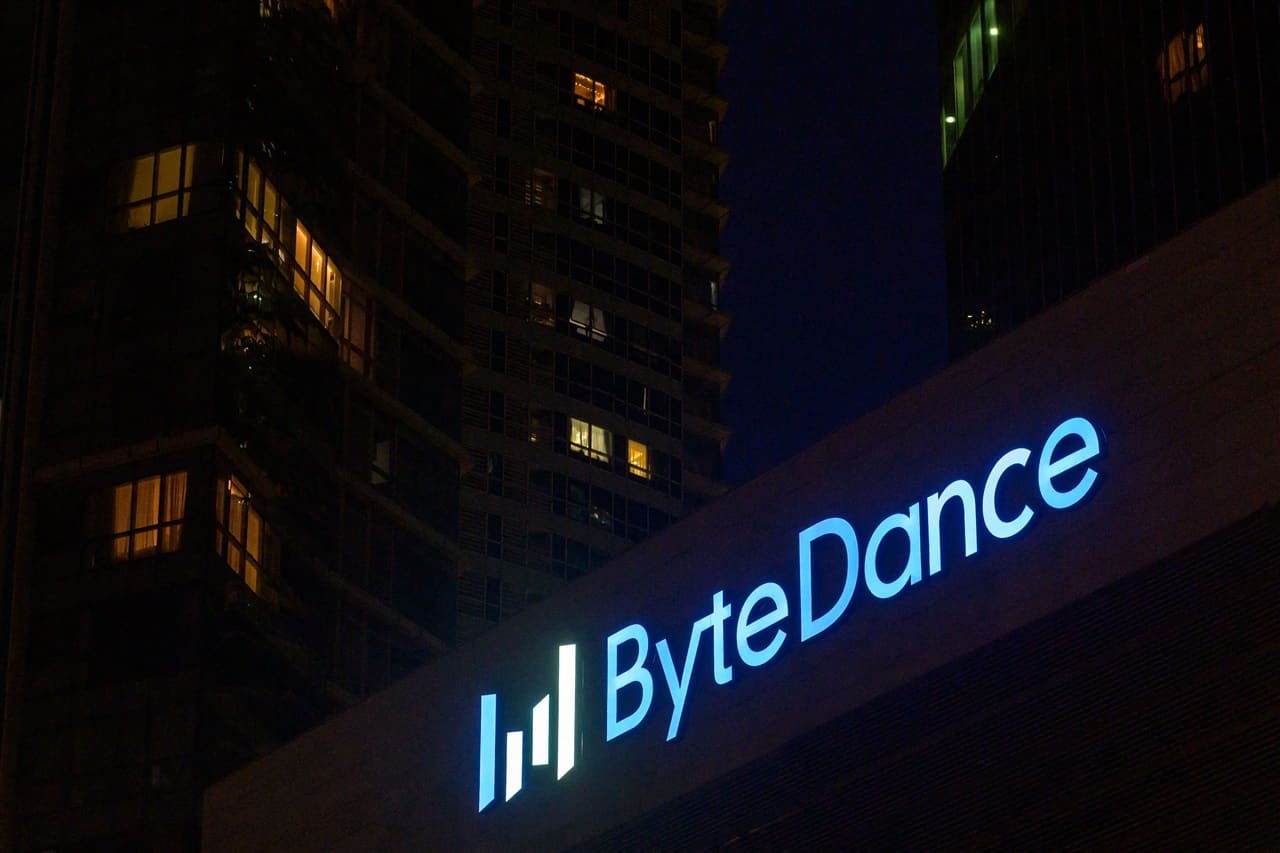
- ·ByteDance founder Zhang Yiming stated the company will not use distillation to train AI models, even if competitors in China pull ahead.
- ·The decision comes as US officials allege some Chinese developers train models using outputs from American systems, raising intellectual property and export control concerns.
- ·ByteDance's rejection of distillation may slow its AI progress but reduces regulatory risk, especially given ongoing US scrutiny of TikTok and the company's global operations.
A Public Stance on Training Methods
Zhang Yiming has drawn a line in the sand. The ByteDance founder recently stated his company will not use distillation techniques to train artificial intelligence models, regardless of whether rivals in China's crowded AI market surge ahead. The declaration arrives at a moment when Beijing's AI sector is moving faster than many anticipated, and Washington is watching closely.
Distillation refers to a training approach in which a smaller, more efficient model learns by mimicking the outputs of a larger, more capable system. The method has become a flashpoint in the US-China technology rivalry. American officials and researchers have raised concerns that Chinese developers are training their systems by feeding them outputs generated by frontier models built in the United States, effectively sidestepping the costly and time-intensive work of building foundational capabilities from scratch.
The Geopolitical Backdrop
China's AI developers have made notable strides in recent months, rolling out models that compete on benchmarks with those from OpenAI, Anthropic, and Google. The pace has surprised some observers in Silicon Valley and prompted questions in Washington about how Chinese firms closed the gap so quickly, especially given US export controls on advanced semiconductors and chipmaking equipment.
ByteDance operates in a particularly delicate position. The company's TikTok platform remains under intense scrutiny in the United States, where lawmakers have debated forced divestiture and outright bans. Any perception that ByteDance's AI work relies on intellectual property or outputs from American systems could invite fresh regulatory pressure or complicate ongoing negotiations over the social media app's future.
Zhang's comments suggest an awareness of that risk. By publicly rejecting distillation, he signals that ByteDance intends to pursue a training path less vulnerable to accusations of free-riding on US innovation, even if that path proves slower or more expensive.
Competitive Implications
The statement also carries implications for ByteDance's standing within China. Alibaba, Baidu, and a cohort of well-funded startups are racing to deploy large language models and generative AI tools across commerce, search, and enterprise software. If ByteDance forgoes distillation while competitors embrace it, the company risks falling behind in a market where speed to deployment often determines which platforms capture user attention and developer ecosystems.
Yet the calculus may be different for ByteDance than for purely domestic players. Firms with limited exposure to US markets or supply chains face less immediate consequence if Washington alleges improper training methods. ByteDance, by contrast, has global ambitions and a product portfolio that depends on access to international advertising revenue, cloud infrastructure, and talent. A training methodology that draws US sanctions or export restrictions could prove far more costly in the long run than a temporary lag in model performance.
What Distillation Offers and Costs
Distillation has become popular in AI development because it allows teams to compress the knowledge of a massive model into a smaller one that runs faster and costs less to operate. The technique is widely used in industry and is not inherently controversial. Problems arise when the teacher model belongs to a competitor or a geopolitical rival, and the student model's creators do not have rights to the underlying data or architecture.
US officials have suggested that some Chinese labs may be training models by querying American systems at scale, then using those responses as training data. If true, the practice would allow Chinese developers to leapfrog years of foundational research without incurring the associated costs. It would also raise intellectual property questions and complicate efforts to enforce export controls designed to limit China's access to cutting-edge AI capabilities.
Zhang's stance implies ByteDance will build its models through more traditional means, relying on proprietary datasets, in-house research, and compute resources that comply with US and international trade rules. That approach may take longer, but it offers clearer legal footing and reduces the risk of reputational damage or regulatory blowback.
The Road Ahead
ByteDance has not detailed what alternative training methods it plans to use, nor has it disclosed timelines for releasing competitive AI products. The company's Douyin platform in China and TikTok internationally already employ recommendation algorithms that rank among the most sophisticated in social media, so ByteDance possesses significant machine learning expertise. Translating that into frontier generative AI, however, requires different infrastructure and datasets.
Zhang's decision to speak publicly on training methods is itself notable. Founders of major Chinese technology firms often avoid granular technical commentary, especially on issues that touch on US-China friction. The fact that he chose to address distillation suggests the topic has become salient enough within industry and policy circles that silence carried its own risks.
For now, ByteDance's path appears set. The company will pursue AI development without the shortcut that distillation might offer, betting that a cleaner methodology will prove more durable as geopolitical tensions shape the rules of the road for artificial intelligence.
RELATED STORIES

ByteDance Deploys First Audio-Visual Full-Duplex AI Model at Scale
Cheng Wei-Lun · 4 min
Beijing's AI Bar Offers Free DeepSeek Access as Price Wars Reshape Global Market
Cheng Wei-Lun · 3 min
DeepSeek Backs Unitree With $20.8 Million Stake in Shanghai IPO
Cheng Wei-Lun · 3 min
Huawei Unveils Sub-800-Gram Laptop Running Homegrown Kirin Chip
Cheng Wei-Lun · 3 min
Spot something wrong? Email editor@briefasia.com. We log every correction publicly.