Technology · AI
NTT Data Plans $10 Billion Data Center Expansion to Capture AI Demand
The Japanese IT services giant will add 750 megawatts of capacity across domestic facilities through 2033 as enterprises race to deploy artificial intelligence workloads.
KEY TAKEAWAYS
- ·NTT Data plans to invest approximately ¥1.5 trillion to add 750 megawatts of data center capacity in Japan by 2033.
- ·The expansion targets enterprises racing to deploy AI workloads amid a persistent compute infrastructure shortage in Japan.
- ·The seven-year timeline reflects expectations of sustained demand despite potential efficiency gains in future chip generations.
A Bet on Japan's AI Infrastructure Gap
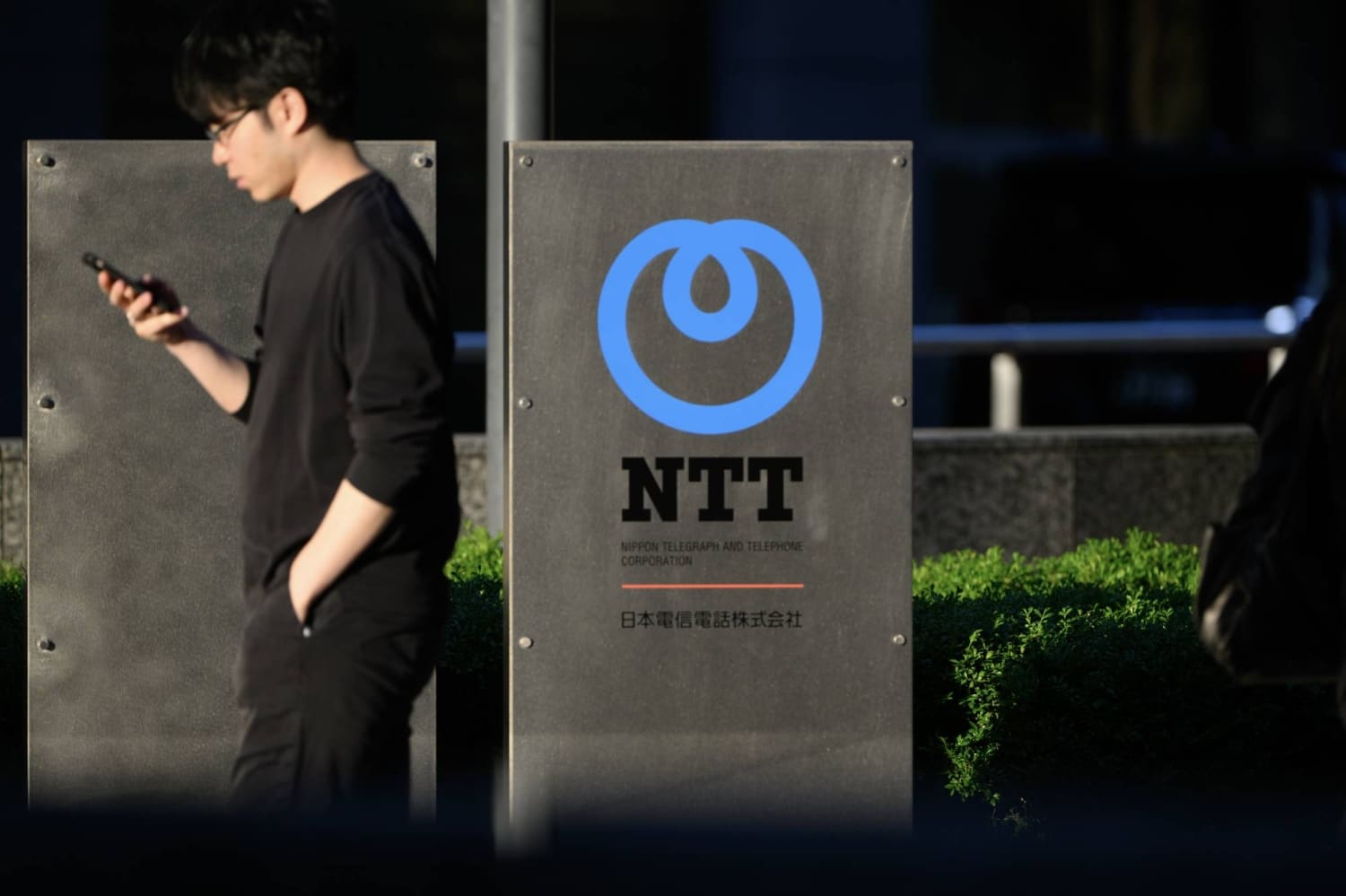
NTT Data is preparing to commit approximately ¥1.5 trillion to expand its data center operations across Japan, a move that underscores the widening gap between available compute infrastructure and the demands of artificial intelligence adoption.
The IT services provider intends to deploy roughly 750 megawatts of additional capacity over the next seven years, according to company plans. That scale of investment places NTT Data among the most aggressive infrastructure builders in Asia, at a moment when enterprises across the region are scrambling to secure the compute power needed for machine learning training and inference workloads.
The timeline through 2033 suggests NTT Data expects sustained, not transient, demand. Corporate Japan has lagged peers in the United States and parts of Europe in deploying generative AI tools at scale, but procurement activity has accelerated sharply in recent quarters. Financial services firms, manufacturers, and logistics operators are all racing to integrate large language models into customer-facing applications and back-office processes.
Why Japan's Capacity Crunch Matters
Japan's data center market has historically been constrained by land costs, energy prices, and seismic engineering requirements that push construction budgets well above those in other developed markets. The result is a persistent shortage of colocation and hyperscale capacity, particularly in the Tokyo metropolitan area where most Japanese enterprises prefer to house mission-critical systems.
NTT Data's expansion addresses that bottleneck directly. The 750-megawatt target would more than double the company's current footprint, creating headroom for clients who need low-latency access to GPU clusters and high-bandwidth networking. It also positions NTT Data to compete with hyperscalers like Amazon Web Services and Microsoft Azure, both of which have announced their own capacity additions in Japan but remain focused on public cloud rather than managed private infrastructure.
The investment figure of ¥1.5 trillion, equivalent to roughly $10 billion at current exchange rates, reflects not just construction costs but the capital-intensive nature of AI-ready facilities. Modern data centers designed for machine learning require denser power distribution, advanced cooling systems, and redundant networking to handle the heat output and bandwidth needs of GPU servers. Those specifications drive up both initial outlay and ongoing operational expense.
Regional Implications
NTT Data's move arrives as governments across Asia push to build sovereign AI capabilities. Japan's Ministry of Economy, Trade and Industry has earmarked subsidies for domestic semiconductor and cloud infrastructure projects, part of a broader strategy to reduce dependence on U.S. and Chinese technology stacks. South Korea, Singapore, and India are pursuing similar policies, creating a regional arms race in compute capacity.
For enterprises weighing where to deploy AI workloads, the calculus increasingly hinges on data residency rules, latency, and cost. NTT Data's domestic build-out gives Japanese firms a path to keep sensitive data on-shore while accessing the performance needed for real-time inference. That matters particularly in regulated industries like banking and healthcare, where cross-border data flows face legal and compliance hurdles.
The seven-year horizon also signals confidence that AI compute will remain economically viable even as chip performance improves. Some analysts have questioned whether the current wave of data center construction will face stranded-asset risk if future generations of accelerators deliver order-of-magnitude efficiency gains. NTT Data's willingness to commit capital through 2033 suggests management believes workload growth will outpace hardware efficiency for the foreseeable future.
What Comes Next
Execution risk looms large. Japan's construction sector is already stretched thin, with labor shortages and rising material costs delaying projects across infrastructure categories. NTT Data will need to lock in engineering partners, secure power purchase agreements, and navigate local permitting processes in multiple prefectures. Any slippage in the timeline could open the door for competitors or dampen client confidence.
The investment also tests NTT Data's ability to monetize AI infrastructure at margins that justify the outlay. Colocation pricing in Japan has been under pressure as hyperscalers expand, and enterprises have grown more sophisticated in negotiating power and cooling rates. NTT Data will need to differentiate on service quality, network performance, or vertical-specific solutions to avoid competing purely on price.
For the broader Japanese economy, the build-out represents a tangible bet that AI adoption will drive productivity gains large enough to offset the capital intensity. If that thesis proves correct, NTT Data's expansion could anchor a new wave of technology investment across the archipelago. If demand falters, the industry will face a reckoning over whether it overbuilt.
RELATED STORIES
Fujifilm Commits $83 Million to Semiconductor Materials Plant in India
Siti Nuraini · 3 min
Japan's Property Firms Pivot to Data Centre Build-Out
Aiko Nakamura · 3 min

Fujitsu to Exit Commodity Hardware as AI Shifts Production Strategy
Aiko Nakamura · 4 min

Minebea Mitsumi Halts Acquisitions to Prioritise AI Component Demand
Cheng Wei-Lun · 3 min
Spot something wrong? Email editor@briefasia.com. We log every correction publicly.