Technology · AI
Musk's Starlink, Tesla, and SpaceX Push Expands Strategic Pressure on Beijing
Overlapping advances in satellites, AI infrastructure, and electric vehicle manufacturing create a multifaceted technology challenge for China's industrial policy
KEY TAKEAWAYS
- ·SpaceX's Starlink constellation exceeds 6,000 active satellites, delivering broadband to over 100 countries and bypassing terrestrial infrastructure China has built across multiple regions.
- ·Tesla's Shanghai Gigafactory has produced more than 2.5 million vehicles and remains deeply embedded in China's electric vehicle supply chain despite geopolitical tensions.
- ·China has approved the Guowang constellation targeting 13,000 satellites but has deployed fewer than 500 broadband satellites as of mid-2026, trailing SpaceX's deployment pace significantly.
A Multi-Domain Challenge
The expansion of Elon Musk's corporate holdings into satellite communications, artificial intelligence infrastructure, and electric vehicle production has created a cross-sector technology footprint that overlaps with several areas Beijing has designated as strategic priorities. SpaceX's Starlink constellation now numbers more than 6,000 active satellites, delivering broadband connectivity to over 100 countries and territories. The network's global reach and rapid deployment capability present an alternative to terrestrial infrastructure that China has spent decades building across Asia, Africa, and Latin America through state-backed initiatives.
Starlink's orbital architecture operates independently of ground-based chokepoints, a feature that complicates efforts by governments to control information flows or regulate access. For Beijing, which maintains strict oversight of internet services within its borders, the proliferation of satellite-based connectivity represents a technology vector that bypasses conventional regulatory frameworks. The service has already been activated in neighboring markets including the Philippines, Japan, and parts of Southeast Asia, regions where China has invested heavily in fiber-optic cables and 5G deployments.
AI and Data Infrastructure
SpaceX's AI operations have grown rapidly over the past 18 months, driven by the computational demands of satellite constellation management, autonomous rocket landing systems, and Starship development. The company has deployed custom-designed data centers optimized for machine learning workloads, with a focus on real-time processing of telemetry data and orbital traffic coordination. These facilities support both internal engineering needs and, increasingly, third-party contracts for high-performance computing services.
China has positioned AI as a cornerstone of its Made in China 2025 industrial strategy, channeling state funding into semiconductor design, algorithm development, and data center construction. Domestic champions including Baidu, Alibaba, and Huawei have received government backing to build large-scale AI platforms intended to reduce reliance on foreign cloud providers. The emergence of SpaceX as a significant player in AI infrastructure adds another competitor to a field where Beijing has sought to cultivate national leaders.
The integration of AI capabilities with satellite operations also enables new applications in logistics, precision agriculture, and environmental monitoring. SpaceX has begun offering data analytics services that combine Starlink connectivity with machine learning models trained on satellite imagery and sensor data. These services compete directly with offerings from Chinese firms such as Geely's Geespace and state-owned aerospace entities developing their own low-Earth-orbit constellations.
Manufacturing Scale and Supply Chains
Tesla's production footprint in China remains substantial despite recent geopolitical friction. The Shanghai Gigafactory, which began operations in late 2019, has produced more than 2.5 million vehicles and serves as a key export hub for European and Asian markets. The facility sources batteries, motors, and electronic components from an extensive network of Chinese suppliers, embedding Tesla deeply within the country's electric vehicle supply chain.
Beijing's push for dominance in electric vehicles has centered on companies including BYD, NIO, and Xpeng, all of which have received policy support ranging from subsidies to favorable regulatory treatment. Tesla's presence in the market has spurred competition and accelerated product development, but it also represents a foreign-controlled operation at the heart of an industry China views as essential to its economic future. The dual role of Tesla as both a partner in China's EV ecosystem and a competitor to domestic champions creates a complex dynamic for policymakers in Beijing.
Musk's companies now touch multiple layers of the technology stack that China has targeted for indigenous development: space infrastructure, AI computing, battery chemistry, autonomous systems, and advanced manufacturing. The convergence of these capabilities within a single corporate network controlled by a private entrepreneur operating outside Chinese jurisdiction presents a strategic puzzle that differs from traditional state-to-state competition.
Orbital and Terrestrial Overlap
China has accelerated its own satellite internet projects in response to Starlink's growth. The Guowang constellation, approved in 2020, aims to deploy nearly 13,000 satellites over the next decade. Additional initiatives from state-owned aerospace contractors and private ventures such as GalaxySpace are adding capacity, though deployment timelines have lagged behind SpaceX's pace. As of mid-2026, Chinese operators have launched fewer than 500 satellites dedicated to broadband services, a fraction of Starlink's active fleet.
The competition extends beyond hardware. Control of orbital slots, radio frequency allocations, and space traffic management protocols are increasingly contested at international forums including the International Telecommunication Union. The United States and China have submitted competing proposals for satellite licensing frameworks, reflecting broader tensions over who sets the rules for space-based commerce and communication.
For Beijing, the challenge is not simply matching Starlink's satellite count or replicating Tesla's manufacturing efficiency. It is the integration of these capabilities across domains, the speed of iteration, and the global market access that Musk's companies have achieved. China's industrial policy has traditionally relied on mobilizing state resources to support national champions within defined sectors. Musk's model, blending private capital, vertical integration, and cross-industry synergies, operates according to a different logic that complicates Beijing's strategic calculus.
The trajectory of Musk's empire will depend on regulatory decisions in multiple jurisdictions, the pace of Chinese technological catch-up, and the geopolitical environment shaping access to markets and supply chains. What is clear is that the competition now spans orbit, factory floor, and data center, with implications that reach beyond any single industry.
RELATED STORIES
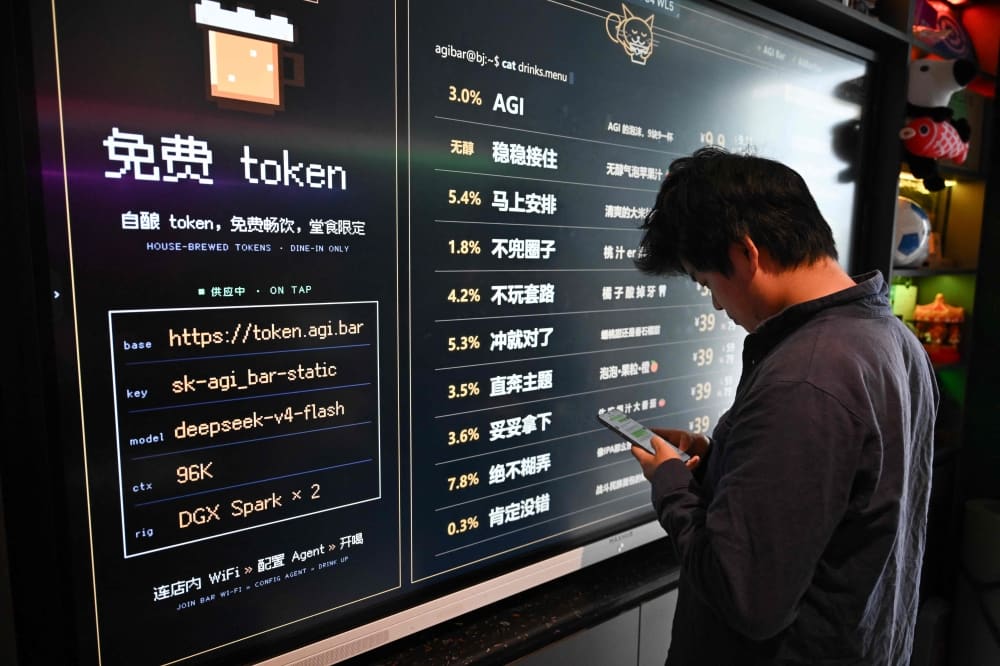
Beijing's AI Bar Offers Free DeepSeek Access as Price Wars Reshape Global Market
Cheng Wei-Lun · 3 min
ByteDance Founder Rules Out AI Distillation Amid US Scrutiny
Cheng Wei-Lun · 4 min
Huawei Unveils Sub-800-Gram Laptop Running Homegrown Kirin Chip
Cheng Wei-Lun · 3 min
DeepSeek Backs Unitree With $20.8 Million Stake in Shanghai IPO
Cheng Wei-Lun · 3 min
Spot something wrong? Email editor@briefasia.com. We log every correction publicly.