Finance · Markets
Moutai's Price Bump Fails to Lift Baijiu Stocks Out of Decline
China's liquor sector saw only fleeting optimism after the premium brand raised prices, with the broader baijiu index closing lower
KEY TAKEAWAYS
- ·Kweichow Moutai shares closed at RMB 1,308 on July 21 while the Wind Baijiu Index fell 1.47% to 2,926.9 points.
- ·The price increase by China's leading baijiu brand failed to reverse persistent weakness in the broader liquor sector.
- ·Investors await clearer demand recovery signals as consumption trends and corporate spending remain subdued across the category.
Short-Lived Optimism
A price adjustment by Kweichow Moutai, China's most valuable liquor producer, failed to reverse the prolonged weakness gripping the country's baijiu sector. By the close of trading on July 21, Kweichow Moutai shares had retreated to RMB 1,308 per share, equivalent to around USD 193. The Wind Baijiu Index, a benchmark tracking the traditional grain spirit category, slipped 1.47% to settle at 2,926.9 points.
The move underscores persistent headwinds facing China's premium alcohol industry despite attempts by marquee brands to signal strength through pricing power. Baijiu producers have struggled with sluggish consumption and cautious corporate spending, trends that have weighed on both volume and sentiment across the sector.
Premium Brand, Limited Spillover
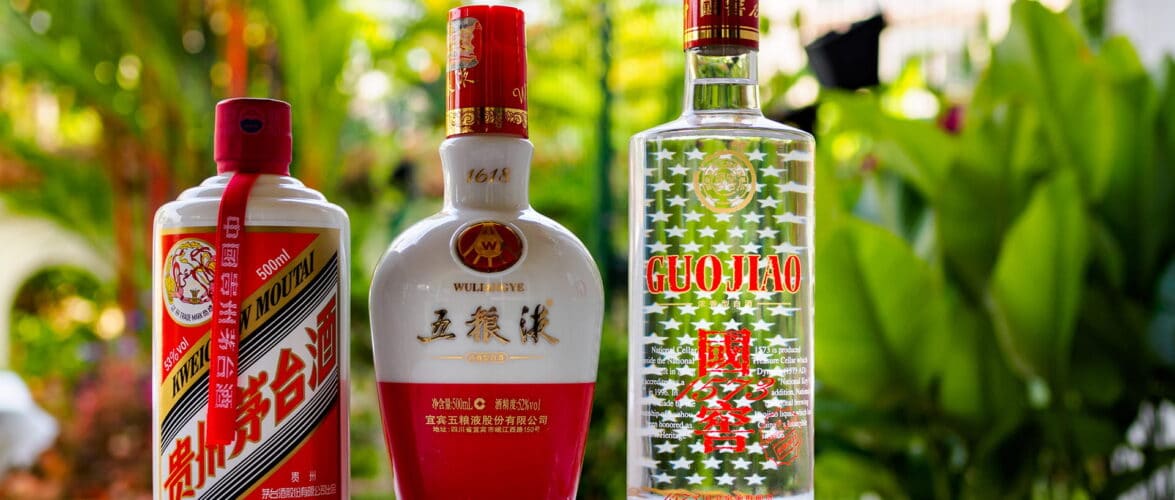
Kweichow Moutai occupies a unique position in China's spirits landscape. Its flagship Feitian Moutai is often considered a status symbol and gift of choice in business and official circles. The company's decision to raise prices typically sends a signal about demand conditions and can influence pricing strategies across the industry.
However, the broader market response suggests investors remain unconvinced that premium positioning alone can offset weaker underlying fundamentals. While Moutai's brand cachet insulates it from some downward pressure, secondary and tertiary baijiu producers face steeper challenges. Many lack the pricing flexibility or brand equity to pass costs onto distributors and consumers, leaving them more exposed to margin compression.
Consumption Patterns Shift
The baijiu sector has faced a structural recalibration over the past year. Corporate gifting, once a reliable driver of high-end liquor sales, has moderated as businesses tighten discretionary spending. Consumer preferences are also evolving, with younger cohorts showing less attachment to traditional spirits and more interest in imported wine, craft beer, and cocktails.
These shifts have been particularly pronounced in tier-one and tier-two cities, where lifestyle diversification is most visible. Baijiu's association with formal banquets and toasting rituals has become less aligned with the social habits of millennial and Gen Z consumers, who gravitate toward more casual drinking occasions.
Regional and Regulatory Context
China's regulatory environment has also played a role in shaping liquor consumption. Anti-corruption campaigns launched in previous years curtailed extravagant government banquets and gift-giving, a change that disproportionately affected premium baijiu sales. Although enforcement intensity has varied, the cultural reset has proven durable.
Meanwhile, regional competition has intensified. Provincial baijiu brands are investing in marketing and distribution to defend local market share, while national players like Moutai and Wuliangye push into lower-tier cities. The result is a more fragmented competitive landscape with thinner margins across much of the value chain.
Investor Caution Persists
Equity markets reflect this uncertainty. Despite Moutai's continued profitability and cash generation, investors have been reluctant to re-rate baijiu stocks in the absence of clearer demand recovery signals. The sector's valuation multiples have compressed, and trading volumes suggest institutional money is rotating toward other consumer categories with stronger growth visibility.
Analysts note that while Moutai's price increase demonstrates confidence in its own brand moat, it does not address systemic challenges facing the broader category. Volume growth remains elusive, and inventory levels at distributors have been slow to normalize. Until consumption trends stabilize or accelerate, the sector is likely to trade in a narrow range, punctuated by short-lived rallies on company-specific news.
What Comes Next
The trajectory of China's baijiu industry will hinge on several factors. Economic growth, consumer confidence, and corporate spending patterns will all influence near-term demand. Regulatory signals around alcohol marketing and taxation could also reshape the competitive environment.
For now, the sector remains in a holding pattern. Moutai's pricing decision may have provided a momentary lift, but sustained recovery will require more than symbolic gestures from a single brand. Investors are watching for signs of stabilization in channel inventory, improvement in distributor sentiment, and any uptick in consumption data from key regions. Until those indicators turn positive, baijiu stocks are likely to remain under pressure.
RELATED STORIES

China's Social Security Fund Doubles Offshore Holdings to $86 Billion
Jun-ho Seo · 3 min
From Tourism Graduate to Indonesia Electronics Distributor: Wook Eyes IPO
Cheng Wei-Lun · 3 min
China Approves $6.84 Billion in New Overseas Investment Quotas
Cheng Wei-Lun · 3 min
Shein Drops 4% in Hong Kong Debut as Tariff Pressure Weighs on Valuation
Priyanka V. Rao · 4 min
Spot something wrong? Email editor@briefasia.com. We log every correction publicly.