Real Estate · Land
Mori Building Enters US Redevelopment With $628 Million New York Tower
Japanese developer's first American redevelopment project marks strategic pivot as firm seeks growth beyond Asia's slowing markets
KEY TAKEAWAYS
- ·Mori Building has entered a New York City office redevelopment project valued above $628 million, marking its first repositioning venture in the United States with a 2031 completion target.
- ·The investment reflects a strategic shift to counter headwinds in Asian markets where vacancy has risen and yields have compressed over the past eighteen months.
- ·Manhattan's supply-constrained office market and Japanese capital flows into US real estate support the long-cycle investment despite execution risks and uncertain tenant demand patterns through 2031.
First US Redevelopment Play
Mori Building has committed to its first redevelopment venture in the United States, entering a New York City office tower project valued north of 100 billion yen ($628 million). The Tokyo-based developer announced the investment as part of a broader strategy to expand its international footprint and counter slower growth trajectories across its Asian portfolio.
The office tower is slated for completion in 2031, according to Mori Building. The project represents a significant geographic expansion for a firm historically concentrated in Tokyo's premium office and mixed-use developments, including the landmark Roppongi Hills and Toranomon Hills complexes.
Strategic Pivot Beyond Asia
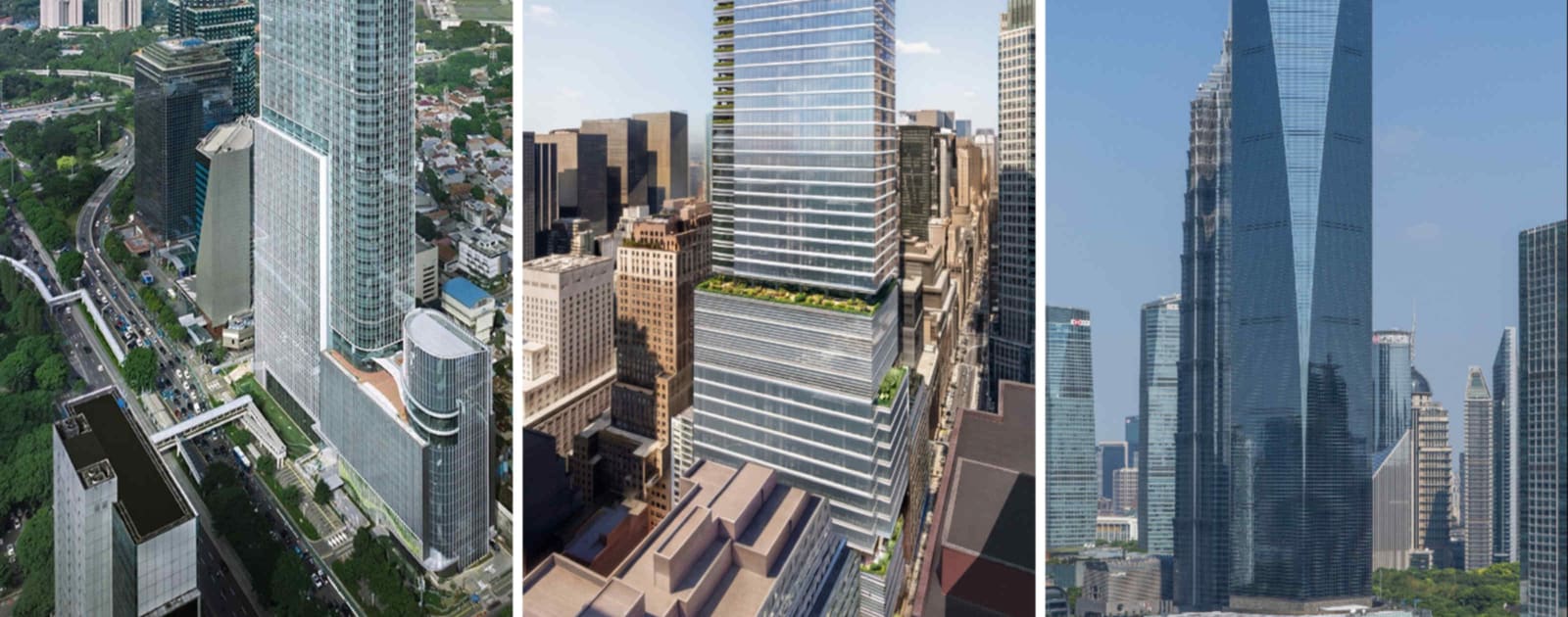
The New York commitment signals a deliberate shift in Mori Building's international strategy. While the company maintains projects in Jakarta and Shanghai alongside its new Manhattan presence, the decision to pursue redevelopment rather than ground-up construction in the US market reflects a calculated approach to risk and return in unfamiliar regulatory and capital environments.
Redevelopment projects typically offer shorter approval timelines and lower entitlement risk than new-build ventures, particularly in dense urban markets like New York where zoning complexity and community review processes can extend development schedules by years. By acquiring and repositioning an existing asset, Mori gains immediate exposure to the Manhattan office market without navigating the full ground-up development cycle.
The timing is notable. Commercial real estate fundamentals across several Asian gateway cities have softened over the past eighteen months, pressured by hybrid work adoption, slower economic expansion in China, and rising financing costs. Tokyo office vacancy rates have edged higher, and yields on premium assets have compressed as institutional capital chases scarce product. Diversifying revenue sources into North American markets offers a hedge against regional cyclicality.
Portfolio Geography and Capital Allocation
Mori Building's existing overseas holdings include mixed-use and office projects in Jakarta and Shanghai, both markets where the firm leveraged partnerships with local developers to navigate regulatory and market idiosyncrasies. The New York project extends that international presence into a third region, positioning the company across three of Asia-Pacific's and North America's most liquid real estate markets.
The $628 million project size places it firmly in the mid-market tier for Manhattan office redevelopments, a segment that has attracted renewed interest from foreign institutional investors seeking yield in stabilized, high-barrier-to-entry markets. While Mori has not disclosed its equity stake or partnership structure, the company's track record suggests a preference for control positions or significant influence over design and asset management decisions.
New York's office market has shown divergent performance across quality tiers. Class A towers in prime corridors have maintained occupancy and rental momentum, while older, less amenitized buildings have struggled to retain tenants. Redevelopment strategies that upgrade building systems, expand amenity programs, and improve sustainability credentials have proven effective in recapturing tenant demand and rental premiums.
Execution Risk and Market Conditions
Delivering a major office project in 2031 carries execution and market risk. Construction cost inflation, labor availability, and supply chain reliability remain variables that can erode margins or extend schedules. Additionally, tenant demand patterns six years out are inherently uncertain, particularly as corporations continue to refine space utilization strategies in response to hybrid work norms.
However, Manhattan's office fundamentals benefit from structural supply constraints. New ground-up office construction has slowed sharply due to high land costs, restrictive zoning, and elevated construction expenses. This supply discipline supports long-term rental growth for well-located, high-quality product, the segment Mori typically targets.
The project also arrives as Japanese institutional investors and developers have steadily increased allocations to US real estate, seeking yield pickup and currency diversification. Mori's move aligns with broader capital flows from Tokyo into gateway US cities, a trend underpinned by favorable interest rate differentials and the relative transparency of American property markets.
Implications for Japanese Developers
Mori Building's entry into US redevelopment may signal a template for other Japanese real estate firms weighing international expansion. Rather than replicating the large-scale, ground-up mixed-use projects that define their domestic portfolios, pursuing redevelopment or value-add strategies in established markets offers a lower-risk, faster-return pathway to geographic diversification.
The 2031 delivery timeline suggests Mori is taking a patient, long-cycle approach to the investment, consistent with the firm's reputation for holding assets through market cycles rather than flipping on completion. If successful, the New York project could anchor a larger US platform for the company, opening pathways to additional acquisitions or developments in other major metros.
For now, the focus remains on execution. Mori Building will need to navigate New York's complex permitting environment, manage contractor and design coordination across time zones, and position the asset competitively in a market where tenant expectations around technology, wellness, and sustainability continue to rise. The outcome will be closely watched by peers considering similar international plays.
RELATED STORIES

Japan's Core Inflation Edges Up to 1.8% Amid Energy Pressure
Aiko Nakamura · 2 min
Bank of Japan Eyes September Rate Increase and Faster Tightening Cycle
Aiko Nakamura · 3 min

Warren Presses Bessent for Explanation on US Yen Intervention
Priyanka V. Rao · 3 min
Japanese Corporations Double Commercial Paper Holdings to 17-Year High
Aiko Nakamura · 3 min
Spot something wrong? Email editor@briefasia.com. We log every correction publicly.