Technology · AI
Moonshot AI Challenges US Dominance With Kimi K3 Launch in Shanghai
Chinese startup showcases advanced model at World AI Conference, signaling shift in global competitive landscape
KEY TAKEAWAYS
- ·Moonshot AI showcased its Kimi K3 large language model at the World Artificial Intelligence Conference in Shanghai, highlighting China's progress in closing the AI capability gap with US firms.
- ·The Beijing startup emphasizes long-context processing and efficiency optimization, adapting to US semiconductor export controls by innovating in model training and deployment techniques.
- ·A bifurcated global AI ecosystem is emerging, with Chinese companies building independent technology stacks that serve Asia's massive market and data sovereignty requirements.
A New Contender Emerges
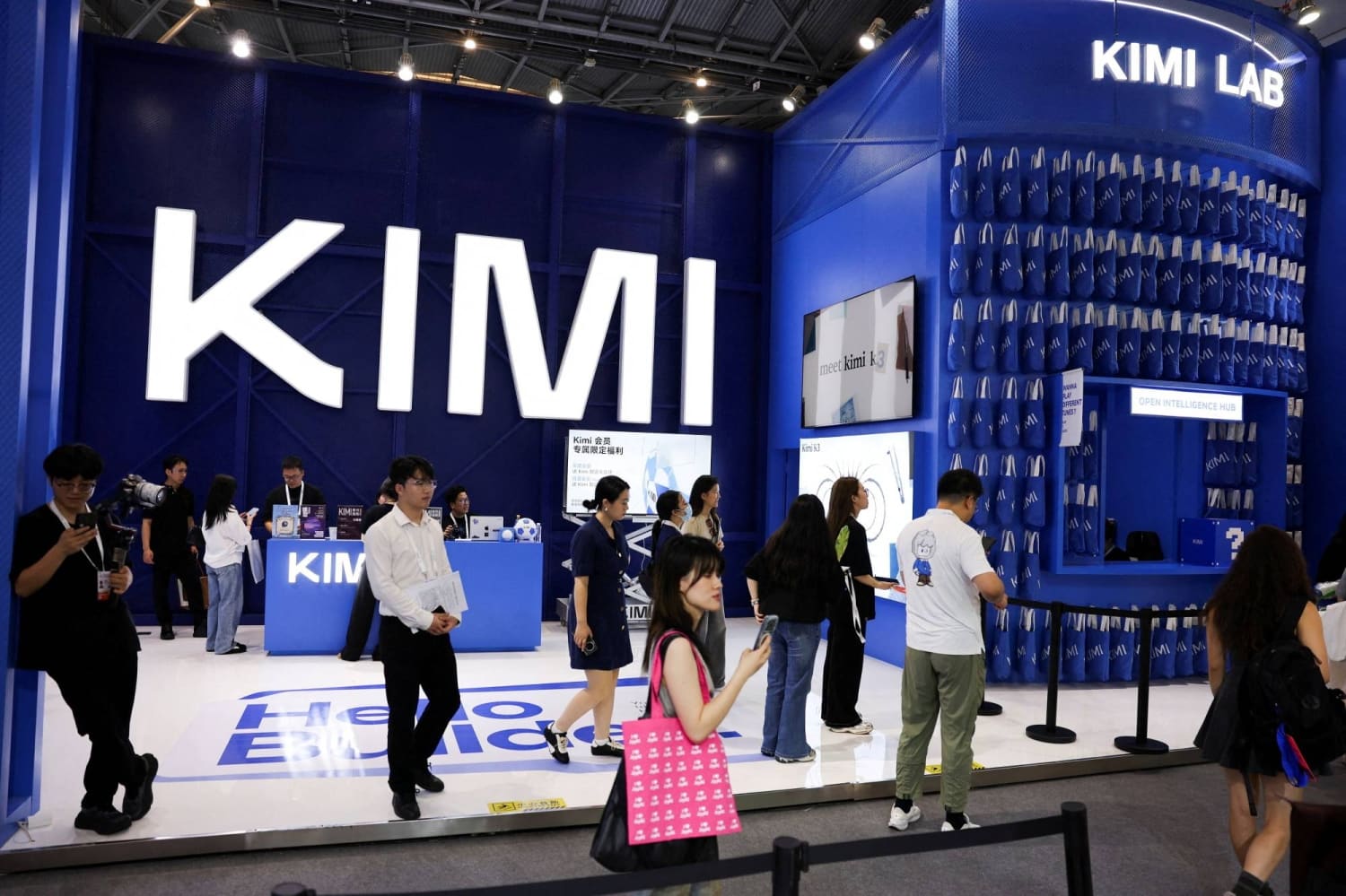
Moonshot AI drew attention at the World Artificial Intelligence Conference in Shanghai this week with its Kimi K3 model, the latest entry in China's accelerating push to match American capabilities in large language models. The Beijing-based startup's prominent booth presence underscored how quickly Chinese AI developers are moving from playing catch-up to staking claims as legitimate competitors.
The timing matters. While US firms have dominated global AI discourse since ChatGPT's debut, Chinese companies have quietly built infrastructure, talent pools, and model architectures that now rival Western offerings in specific use cases. Moonshot represents a newer wave of startups unburdened by legacy systems, able to design from the ground up with local computing resources and data.
The Kimi Advantage
Moonshot AI introduced Kimi with a focus on long-context processing, a technical capability that allows the model to handle substantially more input text than many competing systems. Earlier versions of Kimi gained traction among Chinese users for their ability to process entire documents, research papers, or lengthy conversations without losing coherence. The K3 iteration builds on that foundation with improvements in reasoning and multi-turn dialogue.
The company has not disclosed full technical specifications, but industry observers note that Chinese AI labs increasingly prioritize efficiency over raw parameter count. Running sophisticated models on domestic chip architecture, given US export controls on advanced semiconductors, has forced innovation in optimization and training techniques. That constraint may now be yielding unexpected benefits in deployment cost and speed.
Asia's AI Infrastructure Race
China's AI ambitions extend beyond individual models. The Shanghai conference itself reflected state backing for the sector, with municipal and national government officials emphasizing AI as a strategic priority. Cities across China are building compute clusters, offering subsidies for AI startups, and creating regulatory sandboxes to accelerate commercialization.
Moonshot's visibility at the event signals confidence in its technical roadmap and market positioning. The startup has raised significant venture funding from Chinese investors and counts several former researchers from leading US and Chinese institutions among its team. Its go-to-market strategy focuses on enterprise applications, particularly in finance, legal services, and customer support, where Chinese language fluency and data residency requirements give domestic players a structural advantage.
Implications for the Global Landscape
The Kimi K3 launch adds to a growing list of Chinese models that perform competitively on standard benchmarks. While US labs still lead in frontier research and model scale, the gap in practical applications has narrowed. Chinese firms benefit from a massive domestic market, fewer privacy restrictions on training data, and increasingly sophisticated engineering talent.
For multinational corporations operating in Asia, the emergence of credible Chinese alternatives to US models creates both opportunity and complexity. Enterprises must now evaluate trade-offs between cutting-edge capabilities, data sovereignty, regulatory compliance, and cost. A bifurcated AI ecosystem, with distinct technology stacks in different regions, appears increasingly likely.
Export controls and geopolitical tensions complicate collaboration, but they also drive localized innovation. Moonshot and its peers are building supply chains, talent networks, and product ecosystems that operate independently of US technology. That self-sufficiency, once achieved, reshapes competitive dynamics across the sector.
What Comes Next
Moonshot AI has indicated plans to expand Kimi's capabilities into multimodal processing, integrating image and video understanding alongside text. The company is also exploring partnerships with hardware manufacturers to optimize inference performance on domestic chip designs. Whether these efforts translate into sustained market share remains to be seen, but the trajectory is clear.
The World AI Conference served as a showcase not just for Moonshot but for China's broader ambitions in artificial intelligence. As compute power, talent, and capital continue to concentrate in the region, assumptions about a durable US lead are facing real-world tests. The Kimi K3 is one data point in a larger story, but it's a data point that executives and investors across Asia are watching closely.
RELATED STORIES

China Scrubs 5.6 Million AI-Generated Posts in Platform Cleanup
Cheng Wei-Lun · 3 min
Sharpa Secures $668 Million at $3.3 Billion Valuation in Tech Giant-Backed Round
Cheng Wei-Lun · 2 min
China's Chip Makers Split Three Ways Beneath the Revenue Growth
Tran Quoc Bao · 3 min
JCET Eyes $968 Million to Scale AI Packaging Lines
Tran Quoc Bao · 3 min
Spot something wrong? Email editor@briefasia.com. We log every correction publicly.