Real Estate · Land
Megaworld Pushes $437 Million Into Philippine REIT in Largest Asset Injection Yet
Andrew Tan's property giant adds office towers, retail space, and a 737-room hotel to MREIT, nearly hitting its one-million-square-meter target a year ahead of schedule.
KEY TAKEAWAYS
- ·Megaworld Corp. is transferring 27 billion pesos in office, retail, and hotel properties to MREIT, expanding the trust's portfolio to 950,000 square meters.
- ·The asset injection will shift MREIT's composition from 95 percent office to 77 percent office, 20 percent retail, and the remainder hospitality.
- ·Upon regulatory approval, MREIT's assets under management will reach 122 billion pesos, nearing its one-million-square-meter target set for 2027.
Record Property Transfer Reshapes Manila REIT
Megaworld Corp. is transferring 27 billion pesos in real estate assets to its listed investment trust, MREIT, in a deal that will nearly double the trust's footprint and bring it within reach of a key expansion milestone set for next year.
The property-for-share swap, valued at approximately $437 million, encompasses 303,900 square meters of space across office buildings, retail centers, and a full-service hotel, according to MREIT. Once finalized, the trust's total portfolio will reach 950,000 square meters, approaching the one-million-square-meter target MREIT had set for 2027.
The transaction represents the largest single asset injection into MREIT since its establishment, and marks a deliberate shift in the trust's composition. Office properties currently make up roughly 95 percent of MREIT's holdings. After the acquisition, that figure will drop to 77 percent, with retail assets rising to 20 percent and hospitality rounding out the remainder.
What's Changing Hands
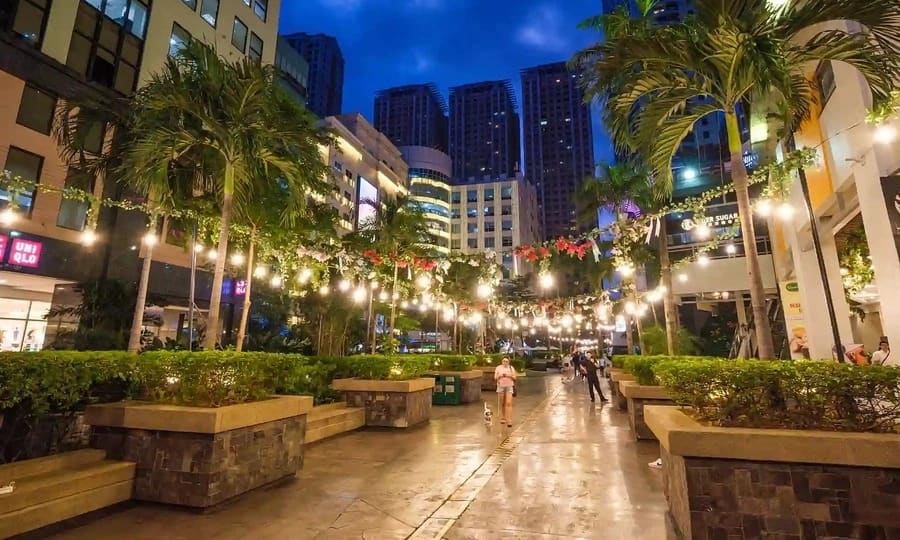
Among the properties included in the transfer is Eastwood Mall, a retail anchor within Megaworld's first township development in Quezon City. The mall sits in a mixed-use precinct that blends office towers, residential condominiums, and commercial amenities, a template Megaworld has replicated across Metro Manila and provincial cities.
Also part of the package is the 737-room Holiday Inn Express Manila Newport City, located adjacent to Ninoy Aquino International Airport. The hotel serves both business travelers and transit passengers, capitalizing on its proximity to the country's busiest air gateway.
The property-for-share swap will see Megaworld and two other companies controlled by Andrew Tan receive MREIT shares priced at 16.50 pesos each. That price represents an 18.6 percent premium over the trust's 30-day volume-weighted average, a detail disclosed in MREIT's filing to the Philippine Stock Exchange.
Assets Under Management Cross 122 Billion Pesos
Upon completion, MREIT's assets under management will climb to 122 billion pesos, subject to approval by the Securities and Exchange Commission. The regulatory green light is the final hurdle before the transaction closes.
The infusion gives MREIT a broader revenue base and reduces its reliance on office leasing, a segment that faced headwinds during the pandemic as remote work reshaped demand. Retail and hospitality assets offer different cash-flow profiles, with retail anchored by long-term anchor tenants and hospitality tied to travel volumes and corporate spending.
MREIT framed the move as its most significant diversification to date, a signal that the trust is positioning itself to weather sector-specific volatility while continuing to grow its asset base.
The Tan Empire's Property Arm
Megaworld is the property development arm of Alliance Global Group, the conglomerate controlled by Andrew Tan. Tan's net worth stands at approximately $1.8 billion, according to Forbes, placing him among the Philippines' wealthiest individuals.
Beyond real estate, Alliance Global holds stakes in Emperador, the world's largest brandy producer by volume, and Golden Arches Development Corp., the exclusive franchise operator of McDonald's restaurants in the Philippines. The group's diversified structure spans spirits, fast food, and property, with each division contributing to cash flow and shareholder returns.
Megaworld pioneered the township model in the Philippines, developing integrated communities that combine residential, office, retail, and leisure components on large land parcels. The company has replicated the format in cities including Manila, Iloilo, Cebu, and Boracay, targeting both domestic buyers and offshore investors.
REIT Growth Trajectory in Southeast Asia
The Philippines launched its REIT framework in 2020, later than neighbors such as Singapore, Malaysia, and Thailand. Since then, several property developers have spun off income-generating assets into publicly traded trusts, tapping institutional and retail investors seeking stable dividend yields.
MREIT's expansion mirrors a broader regional trend. Across Southeast Asia, developers are using REITs to recycle capital, monetize mature assets, and fund new projects. The structure allows sponsors to retain management control while accessing liquidity and diversifying funding sources.
For MREIT, reaching the one-million-square-meter mark would represent a symbolic threshold, underscoring the trust's scale relative to peers. The trust's ability to absorb large asset packages from its sponsor also highlights the depth of Megaworld's development pipeline and the sponsor's commitment to the REIT platform.
The transaction is expected to close in the coming months, pending regulatory approval. Once complete, MREIT will manage a portfolio spanning business districts, mixed-use townships, and transit-oriented developments across Metro Manila and key provincial markets.
RELATED STORIES

GCash Parent Mynt Clears Final Regulatory Hurdle for Manila IPO
Mariel D. Santos · 3 min

Philippine Capital Inflows Slide as Foreign Firms Curtail Local Lending
Tran Quoc Bao · 3 min

When Paper Wealth Outpaces Real Revenue: The Villar Land Valuation Puzzle
Anand Sundaram · 7 min

Jollibee Shifts IPO Plans to Hong Kong After US Listing Target
Cheng Wei-Lun · 3 min
Spot something wrong? Email editor@briefasia.com. We log every correction publicly.