Asia · Business
Manila Water Provider Completes $100 Million Pipeline to Shore Up Southern Supply
Maynilad's 9.12-kilometer infrastructure push targets pressure management and drought resilience as El Niño strengthens across the Pacific.
KEY TAKEAWAYS
- ·Maynilad Water Services has nearly completed a 5.8 billion peso pipeline spanning 9.12 kilometers across Muntinlupa and Las Piñas in southern Metro Manila.
- ·The infrastructure is designed to improve pressure management and water reliability as El Niño strengthens, with below-normal rainfall and drought forecast for coming months.
- ·The project supports a broader water-security program including Laguna Lake sourcing, expanded storage, modular treatment plants, and network loss reduction across the West Zone concession.
Infrastructure Push in Metro Manila's West Zone
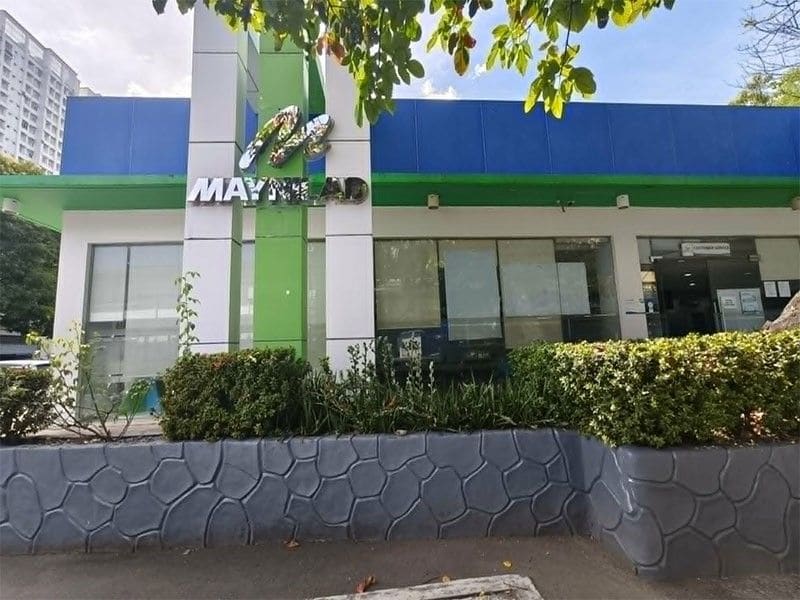
Maynilad Water Services has brought its 5.8 billion peso pipeline project close to completion, a move designed to strengthen water distribution across Muntinlupa and Las Piñas in southern Metro Manila. The infrastructure spans 9.12 kilometers and represents one of the utility's largest capital commitments this year, according to the company.
The primary distribution lines will improve pressure management and reliability once fully commissioned. Maynilad serves Metro Manila's West Zone, covering portions of Manila, Quezon City, Makati, Caloocan, Pasay, Parañaque, Las Piñas, Muntinlupa, Valenzuela, Navotas, Malabon, and several municipalities in Cavite.
Chief operating officer Christopher Jaime Lichauco framed the investment as preparation for tighter water conditions. "As climate conditions become more challenging, we need infrastructure that allows us to maximize available supply and manage constraints more effectively," he said.
Timing the El Niño Cycle
The project arrives as the Philippine Atmospheric, Geophysical and Astronomical Services Administration confirms El Niño has established itself in the tropical Pacific and is expected to intensify through the remainder of the year. Below-normal rainfall, dry spells, and localized drought are forecast for several regions.
For utilities managing dense urban populations, the combination of aging distribution networks and volatile rainfall cycles has elevated infrastructure risk. Maynilad's southern concession area has historically faced pressure fluctuations during peak demand, a constraint the new pipelines are intended to address.
The company emphasized that the work forms part of a broader water-security program that includes supplemental sourcing from Laguna Lake, expanded storage capacity, and modular treatment plants. Potable water reuse facilities and network loss reduction are also under development.
Regional Context and Capital Allocation
Metro Manila's dual-concession model splits water service between Maynilad in the west and Manila Water in the east. Both operators face similar pressures, balancing capital expenditure against regulated tariffs and rising operational costs tied to raw water scarcity.
The Philippines has seen heightened focus on water infrastructure resilience following prolonged dry seasons in recent years. Utilities across Southeast Asia are recalibrating investment plans to account for more frequent climate variability, with pipeline upgrades, leak detection technology, and alternative sourcing becoming standard line items in capital programs.
Maynilad's pipeline investment sits within a broader pattern of infrastructure renewal across the region's water sector. Jakarta, Bangkok, and Ho Chi Minh City have all announced multi-year pipeline replacement and expansion programs, driven by population growth and the need to reduce non-revenue water.
The company did not disclose a specific commissioning date but indicated the project is in its final stages. Once operational, the system is expected to serve as a backbone for future expansion in the southern corridor, where residential and commercial development continues to accelerate.
What Comes Next
Maynilad's strategy extends beyond pipelines. The utility is advancing plans to tap Laguna Lake as a supplemental source, a move that would diversify supply and reduce dependence on existing reservoirs. Modular treatment plants offer flexibility in deployment, allowing the company to bring capacity online faster in response to localized demand spikes.
Pressure management technology, which uses sensors and automated valves to optimize flow and reduce leakage, is also being rolled out across the network. The company has targeted water loss reduction as a key performance metric, aiming to bring non-revenue water down from current levels.
For Metro Manila's 13 million residents, the reliability of water service hinges on a combination of source diversification, distribution efficiency, and climate adaptation. Maynilad's 5.8 billion peso pipeline is one component of that equation, but the broader test will be whether the utility can sustain service levels through successive dry seasons without tariff shocks or supply interruptions.
The West Zone concession runs through 2037, giving Maynilad a 13-year horizon to recoup capital investments and meet regulatory benchmarks. How the company navigates the next El Niño cycle will offer early signals of whether its infrastructure strategy can withstand the climate pressures now embedded in regional water planning.
RELATED STORIES
Philippine Water Operator Earmarks $400 Million for Southeast Asia Expansion
Mariel D. Santos · 2 min

Philippines Energy Budget Climbs 26% as Electric Vehicle Funding Surges
Priyanka V. Rao · 3 min
Philippine Manufacturing Expands at Fastest Pace Since 2016
Priyanka V. Rao · 3 min
Five ASEAN Members Back Regional Oil Stockpile as Study Nears Completion
Tran Quoc Bao · 3 min
Spot something wrong? Email editor@briefasia.com. We log every correction publicly.