Sustainability · Energy
Manila Warns AI Hub Demand Could Crash Luzon Power Network
The Philippines' energy chief says the 3,000-megawatt Pax Silica project will need its own generation to avoid grid collapse

KEY TAKEAWAYS
- ·Pax Silica's projected 3,000-MW demand equals 19 percent of Luzon's 2026 peak load and risks triggering grid-wide blackouts if connected directly.
- ·Energy Secretary Sharon Garin says the project will need dedicated power plants once demand exceeds 200 MW to avoid destabilizing the national network.
- ·Current renewable and LNG proposals total 1,700 MW, leaving a 1,300-MW gap and raising questions about round-the-clock reliability for data centers.
Scale Meets Infrastructure Reality
The Philippines faces an infrastructure puzzle that could determine whether its flagship AI and semiconductor project takes off or collapses under its own weight. Pax Silica, the planned advanced manufacturing zone in New Clark City, will eventually consume 3,000 megawatts of electricity. That figure represents nearly one-fifth of Luzon's expected 2026 peak load and rivals the total capacity available to the entire Visayas region.
Energy Secretary Sharon Garin told reporters on July 24 that plugging such a concentration of demand directly into the national transmission system would create unacceptable risk. A sudden disconnection of a 3-GW industrial load would trigger automatic protective shutdowns across the Luzon grid, cutting power to millions of households and businesses.
The secretary's concern centers on volatility. Modern grids maintain stability by balancing generation and load in real time. When a single point of failure accounts for nearly a fifth of total demand, any operational hiccup at that site can cascade into systemic blackout.
Phased Approach to Avoid Overload
Garin outlined a strategy that relies on gradual scaling. Early-phase demand of 100 to 200 MW can likely be accommodated within existing grid capacity. Beyond that threshold, the project will need dedicated generation assets that operate independently of the broader Luzon network.
The Bases Conversion and Development Authority has signed an agreement with Saudi Arabia's ACWA Power to develop a 500-MW solar photovoltaic array with battery storage on a 500-hectare site inside New Clark City. That installation covers only one-sixth of Pax Silica's projected requirement.
A second proposal involves a 1,200-MW liquefied natural gas import terminal and power plant. The US International Development Finance Corporation has reportedly approved funding for a feasibility study. Even if both projects proceed on schedule, combined capacity would reach 1,700 MW, leaving a 1,300-MW shortfall.
Renewable Claims Clash With Baseload Needs
Data centers and semiconductor fabrication facilities demand uninterrupted, high-quality electricity. Solar installations produce power only during daylight hours, and output fluctuates with cloud cover. A nameplate 500-MW solar farm does not deliver 500 MW around the clock.
Battery storage can smooth intraday variability, but multi-day weather events or maintenance windows require either grid support or fossil backup. The proposed LNG plant would supply 40 percent of Pax Silica's total load, complicating the project's positioning as a renewable-powered hub.
LNG also introduces logistical complexity. Clark is an inland site built around an airport, not a deepwater port. Fuel shipments would need to dock at a coastal terminal, then move inland through pipeline infrastructure that does not yet exist. Subic Bay is the most plausible entry point, but no pipeline connection is under construction.
Garin emphasized that power quality matters as much as quantity. Data centers cannot tolerate grid alerts or voltage fluctuations. The secretary noted that other countries racing to expand data-center capacity have encountered supply bottlenecks and price spikes in wholesale electricity markets.
Planning Still in Motion
Asked whether an integrated energy roadmap was in place from the start, Garin acknowledged that details remain under discussion. Coordination is ongoing among the Department of Energy, the Department of Information and Communications Technology, and the Department of Trade and Industry.
Firm commitments from anchor tenants will determine the final generation mix. Power plants require three to five years of development time for conventional gas or coal facilities, and up to a decade for nuclear. Garin stressed the need for alignment between demand forecasts and supply investment.
The secretary's preferred outcome is a self-contained ecosystem with dedicated power, water, and supporting infrastructure. That model would insulate the national grid from the risks of concentrated industrial load while ensuring that Pax Silica tenants receive the reliability they require.
The Philippines is betting that a coordinated build-out can deliver both. Whether that bet pays off will depend on execution speed, financing, and the willingness of global tech investors to commit before all the pieces are in place.
RELATED STORIES
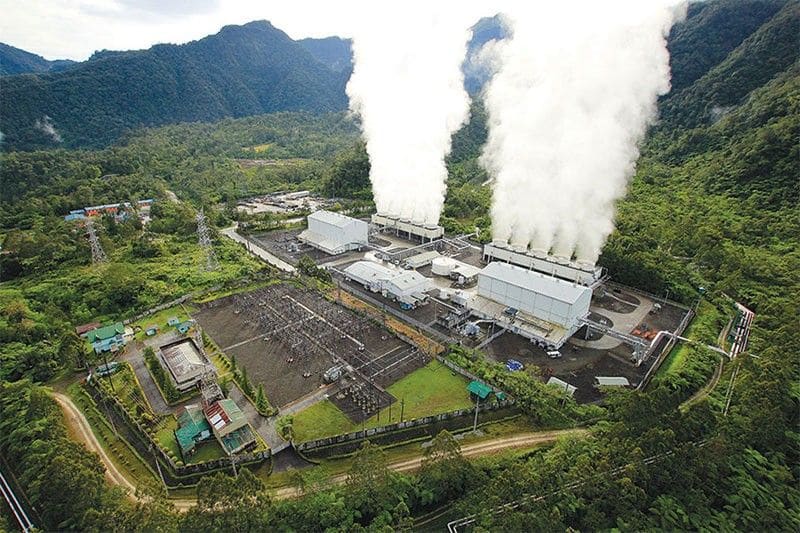
Seventeen Firms Compete for Manila's $200 Million Geothermal Risk Fund
Priyanka V. Rao · 3 min
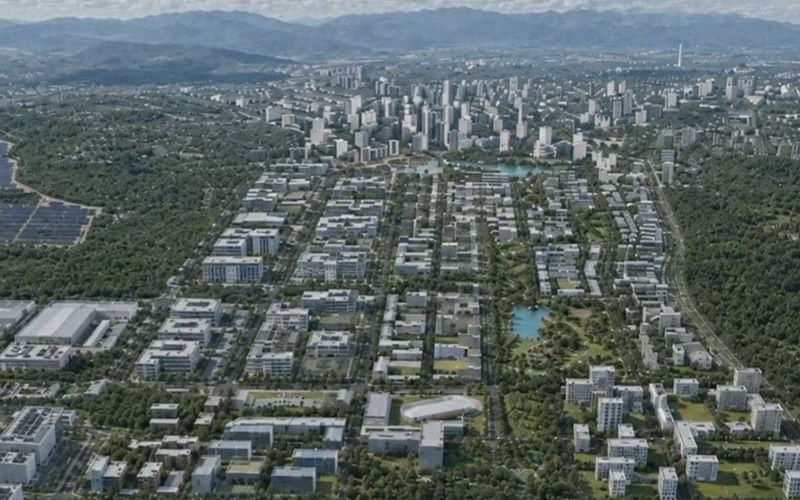
Manila's Chip Industry Still Stalled in Assembly While Taipei Built Fabs
Priyanka V. Rao · 4 min

Philippine National Bank Finances $109 Million Solar-Storage Plant in Iloilo
Priyanka V. Rao · 4 min

Philippines Energy Budget Climbs 26% as Electric Vehicle Funding Surges
Priyanka V. Rao · 3 min
Spot something wrong? Email editor@briefasia.com. We log every correction publicly.