Asia · Business
Manila's SMX Convention Centers Log 4.3 Million Visitors in First Half
SM Prime's events platform posts 18 percent traffic growth as it prepares to open the Philippines' largest convention venue in Cebu
KEY TAKEAWAYS
- ·SMX Convention Centers recorded 4.3 million visitors across Philippine venues in the first half, up 18 percent from 3.6 million a year earlier, hosting 807 events.
- ·SMX Convention Center Seaside Cebu, set to open in Q4 2026, will become the country's largest convention venue and anchor a mixed-use MICE precinct in the Visayas.
- ·SMXCITE in Pasay will open in early 2027 with 18,000 square meters of space and direct links to SM Mall of Asia and Ninoy Aquino International Airport.
Robust Growth Across the Network
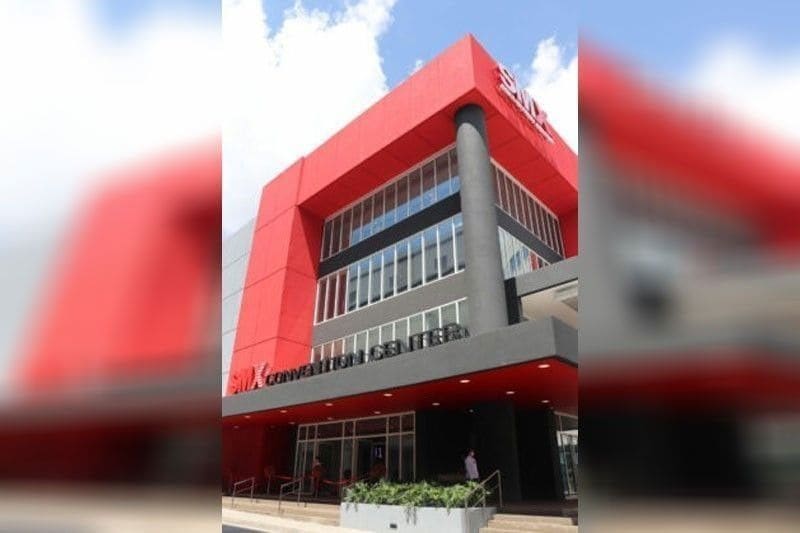
SMX Convention Centers, operated by SM Prime Holdings, recorded 4.3 million visitors across its Philippine venues during the first six months of the year, according to SM Hotel and Conventions Corp. The figure represents an 18 percent increase over the 3.6 million visitors tallied in the same period a year earlier.
The network hosted 807 booked events during the half, spanning corporate conferences, trade exhibitions, and industry gatherings. SMX Convention Center Manila accounted for the largest share of traffic, drawing more than 2.5 million attendees in the January-to-June period.
Regional sites also contributed to the uptick. SMX Convention Center Davao, SMX Convention Center Bacolod, and SMX Convention Center Clark each reported healthy visitor gains, underscoring demand for event infrastructure outside Metro Manila. The facilities sit within SM Prime's mixed-use developments, offering direct access to retail, dining, hotels, and transport nodes.
Expansion Pipeline Takes Shape
Two major projects are advancing on parallel tracks. SMX Convention Center Seaside Cebu is scheduled to open in the fourth quarter and will become the country's largest convention venue by leasable area. The facility is located beside SM Arena Seaside Cebu, which launched earlier this year, and connects to SM Seaside City Cebu via a link bridge. The integration is designed to create a single MICE, entertainment, and retail precinct in the Visayas.
In Metro Manila, SMXCITE in Pasay is on track for an early 2027 opening. The 18,000-square-meter venue will feature 900 parking spaces and an elevated walkway linking it to SM Mall of Asia. Its proximity to Ninoy Aquino International Airport and a cluster of international-standard hotels positions it for both domestic and cross-border events. SM Hotel and Conventions has already begun booking negotiations with event organizers.
Executive vice president Peggy Angeles said the co-location strategy reduces friction for attendees and exhibitors. "Locations within SM Prime's larger mixed-use developments give event organizers and attendees direct access to dining, accommodation, and transportation options, making events more convenient and attractive," Angeles noted.
Expanding Footprint and Capacity
Once the two new venues come online, SMX will operate seven convention centers and six trade halls across the Philippines, with combined leasable space exceeding 90,000 square meters. The buildout reflects broader momentum in Southeast Asia's events sector, where governments and developers are investing in convention infrastructure to capture regional association meetings, trade shows, and corporate gatherings.
The Philippines has long competed with Singapore, Bangkok, and Kuala Lumpur for MICE traffic, but capacity constraints in Metro Manila and limited inventory in secondary cities have historically capped market share. The SMX expansion addresses part of that gap, particularly in Cebu, which has emerged as a preferred venue for regional conferences targeting participants from across ASEAN.
SM Prime's model integrates event venues with retail anchors and hotel supply, a format that mirrors strategies employed by Suntec Singapore and IMPACT Exhibition Center in Bangkok. The approach aims to capture not only rental income from event organizers but also ancillary spending on accommodation, food and beverage, and retail.
Regional Demand Drivers
Several factors are fueling the uptick in business events. Corporate travel in the region has rebounded as pandemic-era restrictions have fully lifted, and multinational firms are resuming in-person sales meetings, product launches, and training seminars. Trade associations are also scheduling annual conventions and industry expos that were postponed or held virtually in prior years.
The growth in SMX's regional sites suggests that event organizers are diversifying venue selection beyond the capital. Davao, Bacolod, and Clark offer lower operational costs and can draw participants from specific geographic catchments, reducing travel time and expense for attendees based in Mindanao and the Visayas.
Meanwhile, the Philippine government continues to promote the country as a MICE destination through the Tourism Promotions Board and the Department of Tourism. Incentive packages, streamlined visa processing for delegates, and marketing campaigns targeting association planners are part of the effort to raise the country's profile on the regional events calendar.
The addition of SMX Seaside Cebu and SMXCITE will test whether supply can unlock latent demand or whether the market absorbs the new capacity gradually. Early booking activity for SMXCITE, which has not yet opened, suggests organizers are planning ahead for larger-scale events that current Metro Manila venues cannot accommodate.
For SM Prime, the convention center business complements its core retail and residential operations, generating steady lease income and driving foot traffic to adjacent malls and hotels. The company has signaled that further expansion may follow if utilization rates at the new venues meet internal benchmarks.
RELATED STORIES
San Miguel's Ramon Ang Takes Quarter Stake in Lopez Holding Company
Priyanka V. Rao · 5 min

Manila Eyes Nickel Processing to Escape China's Price Control
Priyanka V. Rao · 4 min

San Miguel's Ramon Ang Enters Lopez Family Holding Amid Boardroom Battle
Priyanka V. Rao · 3 min

Philippines SEC and BIR Launch Unified Filing Portal to Cut Compliance Burden
Priyanka V. Rao · 4 min
Spot something wrong? Email editor@briefasia.com. We log every correction publicly.