Finance · Markets
Manila Equities Slip as Traders Exit Positions Amid Iran Tensions
Philippine Stock Exchange index dropped 38 points as geopolitical uncertainty and downgraded growth forecasts triggered a wave of selling
KEY TAKEAWAYS
- ·The Philippine Stock Exchange index declined 38.08 points to 6,296.64, driven by escalating U.S.-Iran tensions and investor caution over domestic growth revisions.
- ·The World Bank recently downgraded the Philippines' economic growth projections for 2026 and 2027, while proposed tax changes added uncertainty to corporate valuations.
- ·Traders consolidated positions around the 6,300 level, with turnover reaching 4.54 billion peso and declining stocks outnumbering advancers 102 to 84.
Risk Appetite Evaporates
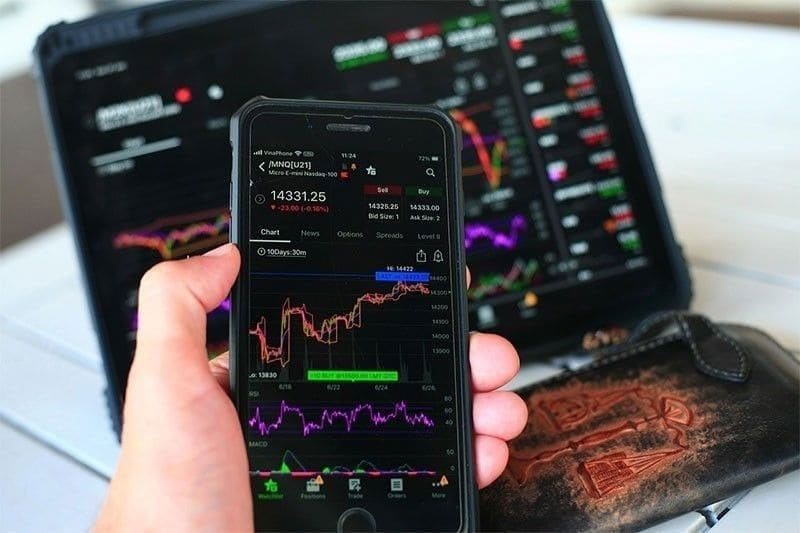
Manila's equity market closed lower on Monday as traders unwound positions accumulated during the previous session, spooked by escalating tensions in the Persian Gulf and fresh concerns about the domestic economic outlook. The Philippine Stock Exchange index shed 38.08 points, or 0.6%, settling at 6,296.64 in a session marked by broad-based selling and muted buying interest.
The broader All Shares gauge mirrored the retreat, losing 14.81 points to close at 3,415.35. Turnover reached 4.54 billion peso, with declining stocks outnumbering advancers 102 to 84. Fifty-four issues traded unchanged, underscoring the market's cautious tone.
International Container Terminal Services Inc., the country's largest port operator, was the session's most actively traded name. Its shares edged down 0.2% to close at 1,003 peso apiece, reflecting the broader retreat across industrial and logistics names as investors reassessed exposure to cyclical sectors.
Geopolitical Overhang
The sell-off came as diplomatic efforts between Washington and Tehran appeared to stall, with fresh reports of a U.S. blockade of Iranian ports prompting sharp warnings from Tehran. Iranian officials indicated that American naval vessels would face "serious risks" if the blockade continued, raising the prospect of a prolonged standoff in one of the world's most critical shipping corridors.
Regina Capital Development Corp. head of sales Luis Limlingan noted that the geopolitical uncertainty weighed heavily on sentiment across Asian markets. "Traders maintained short-term positions, as uncertainties surrounding the U.S.-Iran peace talks continued to weigh on their risk appetite," Limlingan said. The result was consolidation around the 6,300 level, with investors reluctant to add exposure ahead of clarity on the diplomatic front.
The Persian Gulf accounts for roughly one-fifth of global oil shipments, and any disruption to tanker traffic has the potential to send energy prices higher and complicate inflation management across Asia. While crude benchmarks have yet to spike dramatically, the threat of supply-chain disruption has been enough to keep regional equity investors on the sidelines.
Domestic Headwinds Mount
Compounding the geopolitical jitters were fresh revisions to the Philippines' growth outlook. The World Bank recently lowered its economic projections for the country for both 2026 and 2027, citing softer external demand and persistent inflationary pressures. RCBC chief economist Michael Ricafort pointed to the downgrade as a key factor behind Monday's decline, noting that investor confidence in the domestic recovery narrative had taken a hit.
Adding to the uncertainty is a proposed tax package under consideration by the Department of Finance. The package pairs middle-class income tax relief with a series of offsetting measures, including new wealth taxes and higher excise duties on select goods. While the income tax cuts are broadly popular, the offsetting revenue measures have raised concerns among equity analysts about their potential impact on corporate valuations, particularly for consumer-facing and industrial companies.
Ricafort noted that the proposed fiscal changes could weigh on the valuations of some listed firms, especially those in sectors directly affected by the excise tax adjustments. The lack of clarity around the final shape of the tax package has added another layer of uncertainty for investors trying to model earnings growth for the second half of the year.
Regional Context
The Philippines is not alone in grappling with a mix of external shocks and domestic policy uncertainty. Across Southeast Asia, equity markets have struggled to gain traction in recent weeks as investors weigh the implications of a stronger U.S. dollar, elevated interest rates, and uneven economic data. Jakarta's composite index has traded sideways for much of the past month, while Bangkok's SET index has seen episodic bouts of selling tied to political noise and export data misses.
What sets Manila apart is the degree to which its market remains sensitive to both global risk sentiment and domestic fiscal policy. The Philippine bourse has historically traded at a premium to regional peers during periods of strong consumption growth and political stability, but it can also be among the first to retreat when either pillar wobbles. The combination of geopolitical risk, revised growth forecasts, and fiscal policy uncertainty has created a challenging backdrop for portfolio managers trying to justify overweight positions in Philippine equities.
Technical Picture
From a technical perspective, the PSEi's retreat below 6,300 has drawn attention from chart watchers, some of whom view the level as a near-term pivot. A sustained break below 6,250 could open the door to further selling, particularly if turnover remains light and foreign investors continue to reduce exposure. Conversely, a rebound above 6,350 would signal renewed buying interest and could set the stage for a test of the 6,400 threshold.
For now, the path of least resistance appears to be sideways to lower, with traders reluctant to commit fresh capital in the absence of a catalyst. The next set of corporate earnings reports, due later this month, could provide that catalyst, but until then the market is likely to remain range-bound and vulnerable to headline risk.
Outlook
The immediate challenge for Manila's equity market is twofold: restoring investor confidence in the domestic growth story while navigating a period of elevated geopolitical uncertainty. Neither task will be straightforward. The World Bank's revised projections suggest that the tailwinds that powered the market's rally earlier in the year have weakened, and the proposed tax changes add a layer of complexity to earnings forecasts.
At the same time, the U.S.-Iran standoff introduces an element of unpredictability that is difficult to hedge. If tensions escalate further, the risk is not just higher energy prices but also a broader flight to safety that could pull capital out of emerging markets across the board. Manila, as a relatively small and open economy, would not be immune to such a move.
Investors will be watching closely for any signs of progress on the diplomatic front, as well as for further guidance from the Department of Finance on the timeline and scope of the proposed tax package. Until both sources of uncertainty are resolved, the market is likely to remain in a defensive crouch, with traders quick to lock in gains and slow to add new positions.
RELATED STORIES

Philippines Central Bank Fielded 120,000 Customer Disputes in 2025
Priyanka V. Rao · 3 min
Philippine SSS Net Income Falls 28 Percent as Pension Hike Drives Up Costs
Priyanka V. Rao · 2 min
Philippine Economy Slows to 2.3% as Energy Crisis and Spending Cuts Bite
Mariel D. Santos · 3 min
Philippine Economy Stalls as Investment Collapse Drags Growth to Pandemic Lows
Priyanka V. Rao · 3 min
Spot something wrong? Email editor@briefasia.com. We log every correction publicly.