Sustainability · Energy
Manila Confronts the Real Cost of Going Green
As electricity bills climb and grid bottlenecks persist, the Philippines wrestles with how fast it can shift to renewables without leaving consumers behind.
KEY TAKEAWAYS
- ·The Philippines aims to reach 35 percent renewable energy in its power mix by 2030, up from 25 percent today, with solar auctions planned to add capacity between 2027 and 2029.
- ·Transmission infrastructure remains the largest bottleneck, with ready projects unable to connect to the grid; new rules now allow power producers and other agencies to finance and build transmission assets.
- ·Nuclear energy is being considered as baseload complement to intermittent renewables, with the Department of Energy planning the country's first nuclear tender by June 2027 targeting 1,200 megawatts by 2032.
Solar Panels and Social Media Outrage
Scroll through Filipino social media and you will see a recurring complaint: photos of electricity bills with line items that baffle and infuriate. Two charges in particular draw ire, the feed-in tariff allowance and the green energy auction levy. Both exist to fund renewable projects, yet for households watching their monthly costs spiral, the logic feels abstract.
The tension is real. Few dispute that cleaner power is necessary, but the financial burden of building it is falling directly onto consumer bills. That has turned what should be a national infrastructure discussion into a kitchen-table problem.
Energy Secretary Sharon Garin frames the shift differently. Scaling renewables, she argues, is less about emissions than about cutting dependence on imported fuel. The Philippines buys coal from Indonesia and oil from global markets, exposing itself to price swings and supply shocks. Recent turmoil in the Middle East pushed oil higher, and coal followed. For a country running one of Southeast Asia's most coal-reliant grids, that volatility is expensive.
Garin's department believes that tapping domestic renewable resources can insulate the economy. "Energy security is inseparable from national security," she said, pointing to recent global disruptions as proof that reliance on imports carries strategic risk.
Rooftop Solar Gains Ground
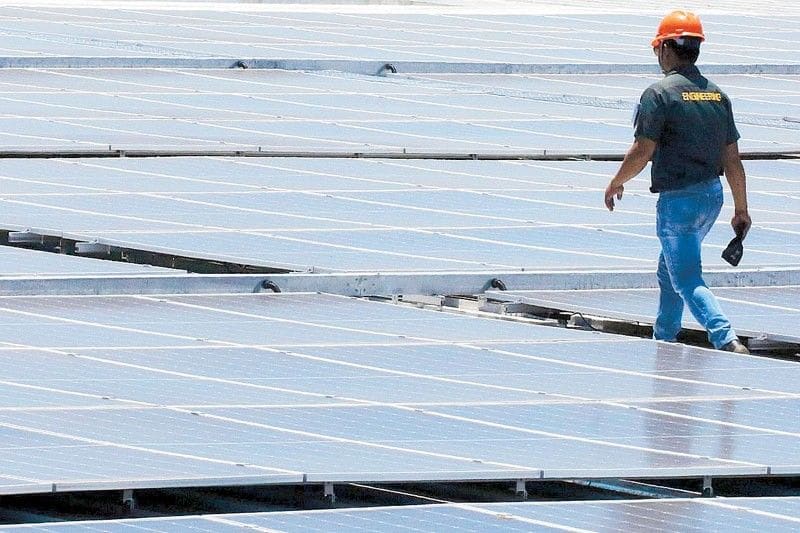
A Pulse Asia survey found that 93 percent of Filipinos view affordable rooftop solar as essential to meeting rising electricity demand. Six in 10 respondents said expanding renewables is the most effective way to address current power challenges.
Alberto Dalusung III, energy transition advisor at the Institute for Climate and Sustainable Cities, read the data as a policy mandate. Filipinos are not rejecting solar, he said. They want the conditions that make it accessible. Rooftop installations can lower bills, give households more control over their power supply, and reduce national reliance on imports.
The market has responded. According to Ember, a global energy think tank, China exported more solar panels to the Philippines than to any country except the Netherlands, a European import hub. Manila overtook Pakistan as a destination for Chinese panels, with shipments exceeding 4,000 megawatts in the first four months of the year.
The Department of Energy is preparing another green energy auction focused on solar, including rooftop, ground-mounted, and floating installations. Bidding is expected to start this year, with new capacity coming online between 2027 and 2029. Two additional auctions are planned for offshore wind and waste-to-energy projects.
The government has set a target of 35 percent renewables in the power mix by 2030, rising to 50 percent by 2040. Currently, the share sits at 25 percent. With five years left, officials say the goal remains achievable.
Execution Lags Ambition
Francis Saturnino Juan, chairman of the Energy Regulatory Commission, is less sanguine about the pace. "We are not on track at the pace we need to be, but we are accelerating," he said. The problem is not ambition but execution. Regulatory approvals dragged for years, grid connections were not built, and market rules failed to keep up with technology.
The biggest obstacle, Juan said, is transmission infrastructure. Projects sit ready, contracted, and financed, but cannot operate because the grid connection does not exist. The commission recently approved rules allowing entities other than the National Grid Corporation of the Philippines to finance and build transmission assets. Qualified power producers can now undertake developments identified by the Department of Energy as associated transmission projects. The National Transmission Corporation can also tap other government agencies for construction.
Juan called the rule change the most consequential regulatory intervention available, removing the largest structural barrier to connecting renewable projects already in the pipeline. If all systems align, he said, a 35 percent renewable share by 2030 is within reach. "Not easily. But achievable."
Nuclear as Baseload
As coal plants phase out, a new question emerges: can the Philippines rely on renewables alone? Solar and wind are intermittent. Panels produce only when the sun shines, turbines only when wind blows. That variability creates grid management challenges.
Nuclear energy is gaining attention as a complement. Unlike renewables, nuclear provides stable baseload power that runs continuously. Unlike fossil plants, reactors emit no air pollution or carbon dioxide during operation, according to the US Energy Information Administration.
The Philippines aims to bring at least 1,200 megawatts of commercial nuclear capacity online by 2032. By June 2027, the Department of Energy plans to conduct the country's first nuclear tender, with the winning bidder expected to secure a market for the project and potential access to state funding.
The Balancing Act
The Philippines has no shortage of energy targets. The harder task is balancing affordability, security, and sustainability, and deciding whether the public can afford the cost of getting there. Transmission bottlenecks, regulatory delays, and rising bills are testing the government's ability to deliver on its promises. Solar is gaining traction, nuclear is on the horizon, and coal is on the way out. But the transition is proving messier and more expensive than the targets suggest.
RELATED STORIES
Seventeen Firms Compete for Manila's $200 Million Geothermal Risk Fund
Priyanka V. Rao · 3 min

Philippine National Bank Finances $109 Million Solar-Storage Plant in Iloilo
Priyanka V. Rao · 4 min

Philippines Energy Budget Climbs 26% as Electric Vehicle Funding Surges
Priyanka V. Rao · 3 min
Philippine Banks See Bad Loan Ratio Tick Up to 3.35% in July
Tran Quoc Bao · 3 min
Spot something wrong? Email editor@briefasia.com. We log every correction publicly.