Sustainability · Nature
Maldives Resorts Turn to 3D-Printed Reefs as Coral Bleaching Accelerates
Luxury tourism operators deploy innovative restoration technologies as warming seas threaten the archipelago's underwater ecosystems
KEY TAKEAWAYS
- ·Severe coral bleaching observed at North Ari Atoll in January has driven Maldives resorts to deploy 3D-printed reef structures designed to accelerate marine life recruitment.
- ·Tourism accounts for approximately two-thirds of Maldives foreign exchange earnings, making reef health critical to the luxury hospitality sector's economic viability.
- ·Early 3D-printed coral deployments show promise for fish attraction and polyp settlement within months, though long-term survival data remains under evaluation.
Bleaching Crisis Hits Paradise
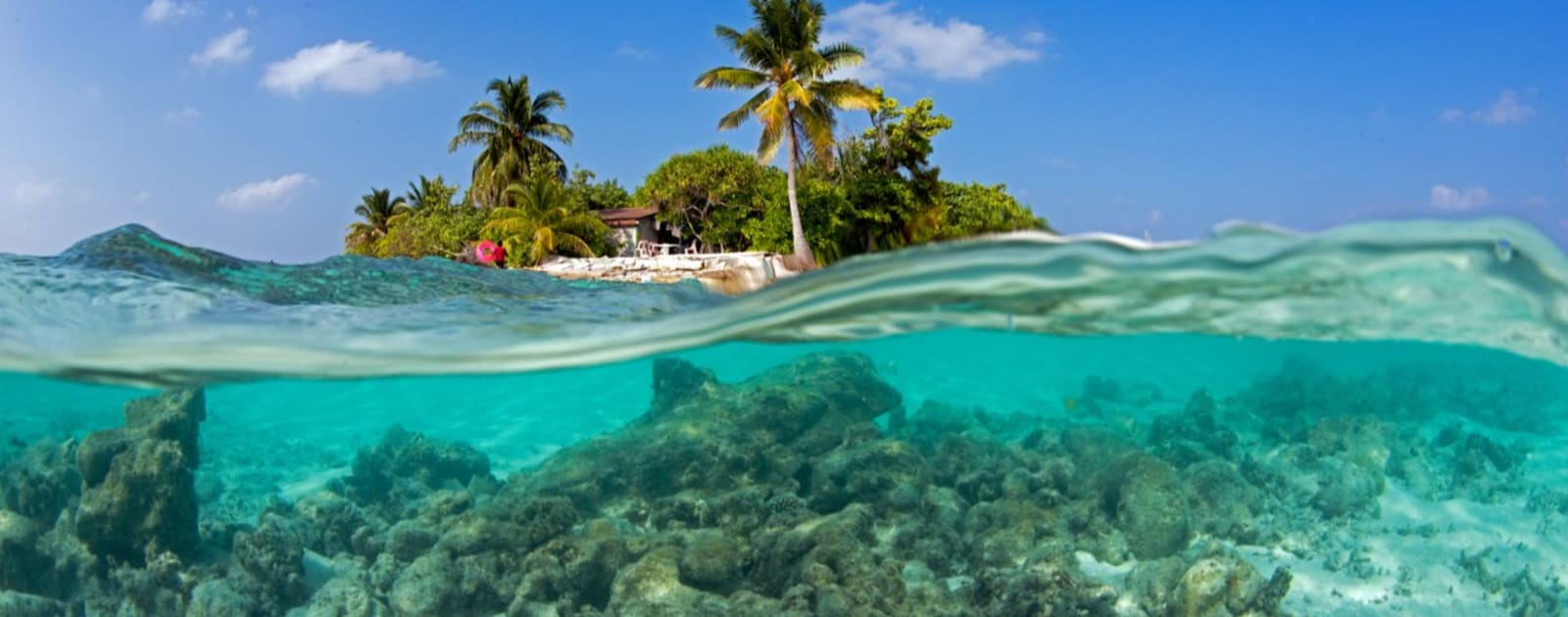
Severe coral bleaching has struck the Maldives' North Ari Atoll, with imagery from January revealing extensive damage linked to elevated sea temperatures. The phenomenon poses a direct threat to the nation's tourism industry, which relies heavily on pristine underwater environments to attract visitors to its luxury resorts.
The bleaching events reflect broader patterns across the Indian Ocean, where warming waters have accelerated coral mortality over the past decade. For an archipelago built on tourism revenue, the degradation of reef systems represents both an ecological and economic emergency.
Resorts Deploy Technology Solutions
In response, several Maldivian resort operators have begun implementing reef-restoration initiatives centered on 3D-printed coral structures. These artificial frameworks mimic the complex geometry of natural coral, providing attachment surfaces for larvae and accelerating colonization rates compared to traditional concrete modules.
The technology allows fabricators to design structures optimized for water flow and marine life recruitment. Early deployments suggest that properly designed units can attract fish populations and support coral polyp settlement within months, though long-term survival rates remain under study.
Resort sustainability programs have expanded beyond reef restoration to include energy efficiency upgrades, waste reduction protocols, and marine protected area designations. The shift reflects growing awareness among operators that environmental degradation directly undermines the luxury experience guests expect.
Tourism Economics at Stake
The Maldives depends on tourism for approximately two-thirds of its foreign exchange earnings, with underwater attractions serving as a primary draw for international visitors. Snorkeling and diving experiences command premium pricing, and resorts market their proximity to healthy reef systems as a competitive advantage.
Coral loss threatens this value proposition. Degraded reefs support fewer fish species, reduce water clarity through increased algae growth, and diminish the visual appeal that drives high-end bookings. Operators recognize that sustained bleaching could force a fundamental reassessment of the Maldives' positioning in the luxury travel market.
The economic pressure has accelerated private-sector investment in restoration technologies. While government agencies oversee marine conservation policy, individual resorts have taken the lead on experimental interventions, viewing reef health as integral to their business continuity.
Regional Context and Challenges
The Maldives situation mirrors challenges across Southeast Asia and the Pacific, where coral systems face combined pressures from temperature rise, ocean acidification, and coastal development. Regional collaboration on restoration techniques has intensified, with research institutions sharing data on species resilience and intervention effectiveness.
However, critics note that restoration projects address symptoms rather than root causes. Even the most sophisticated 3D-printed structures cannot reverse the thermal stress driving bleaching events, and their effectiveness depends on stabilizing ocean temperatures over the coming decades.
The gap between technological solutions and climate realities raises questions about the long-term viability of coral-dependent tourism models. Resort operators face the challenge of maintaining guest experiences while acknowledging that restoration efforts represent a holding action rather than a permanent fix.
Monitoring What Comes Next
The performance of 3D-printed reef structures deployed over the next two to three years will provide critical data on their scalability and cost-effectiveness. Operators are tracking coral recruitment rates, fish population density, and structural durability under monsoon conditions.
Success would likely trigger broader adoption across the archipelago and potentially in other coral-dependent tourism markets. Failure would force a more difficult conversation about adaptation strategies for destinations where underwater ecosystems cannot be sustained at historical levels.
For now, the Maldives' luxury resort sector is betting that technology and active management can buy time for its reefs, even as the broader climate trajectory remains uncertain.
RELATED STORIES

South Asia Loses 31 Million Full-Time Jobs Annually to Extreme Heat
Priyanka V. Rao · 3 min
India Blocks Sri Lanka's Deep-Sea Mining Claim in Race for Indian Ocean Minerals
Priyanka V. Rao · 4 min

Wise Adds Sri Lanka QR Payments for International Visitors
Priyanka V. Rao · 3 min

China's Electric Truck Exports Surge as Fuel Costs Rise Across Asia
Cheng Wei-Lun · 3 min
Spot something wrong? Email editor@briefasia.com. We log every correction publicly.