Finance · Markets
Malaysian Stocks Retreat on Profit-Taking and Regional Uncertainty
The FTSE Bursa Malaysia KLCI slipped in early trading Friday as investors locked in gains, while broader indices showed mixed performance ahead of December index changes.
KEY TAKEAWAYS
- ·Malaysia's FTSE Bursa Malaysia KLCI fell 2.92 points to 1,733.79 in early Friday trading as investors locked in gains, with losers outnumbering gainers 175 to 86.
- ·Bursa Malaysia plans to add 20 stocks to the FBM KLCI in December, including technology sector representation, which analysts expect will improve trading velocity and liquidity.
- ·Plantation stocks rallied against the broader decline, with the sector index climbing 13.34 points to 9,307.44 on resilient palm oil prices and commodity demand.
Early Losses Amid Profit-Taking
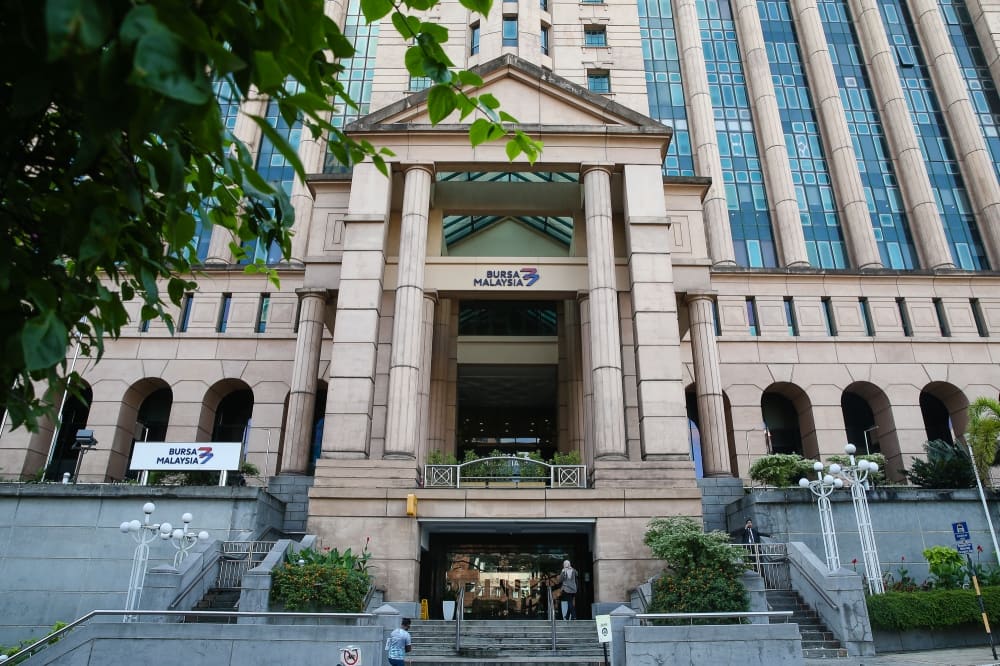
Malaysia's main stock benchmark retreated in the opening hour of trading Friday, shedding earlier momentum as investors unwound positions following gains in the prior session. The FTSE Bursa Malaysia KLCI stood at 1,733.79 at 9:02 a.m. local time, down 2.92 points from the previous close of 1,736.71. The index had initially edged up 0.63 points at the open before reversing direction.
Selling pressure dominated the broader market. Losers outpaced gainers 175 to 86, with 266 counters unchanged. Volume reached 77.90 million shares worth 46.67 million ringgit in the early session. Ongoing tensions in global hotspots continued to weigh on investor confidence, prompting a shift toward safer assets.
Index Expansion to Drive Liquidity
Rakuten Trade Sdn Bhd noted that the upcoming addition of 20 stocks to the FBM KLCI in December is expected to boost trading activity in the months ahead. The brokerage highlighted the inclusion of technology sector representation as a positive development for the benchmark's composition. The firm projected the index would trade between 1,730 and 1,745 points during Friday's session.
The planned expansion reflects efforts to broaden the index's sectoral coverage and improve liquidity, a key priority for Bursa Malaysia as it seeks to attract regional and international capital flows. Technology stocks have been underrepresented in the benchmark relative to peers in Singapore, Bangkok, and Jakarta, a gap the December reshuffle aims to narrow.
Blue-Chip Performance
Among large-cap names, banking heavyweights Maybank and CIMB Group held steady at 10.58 ringgit and 7.98 ringgit respectively. Public Bank and IHH Healthcare each declined one sen to 5.11 ringgit and 8.33 ringgit. Utility Tenaga Nasional dropped eight sen to 14.42 ringgit as investors rotated out of defensive plays.
The most actively traded counters showed limited movement. Omesti, MAG Holdings, and Comfort Gloves remained flat at 8.5 sen, 16 sen, and 17 sen respectively. GIIB Holdings added half a sen to 42.5 sen, while Notion VTec fell three sen to 50 sen.
Sectoral Divergence
Plantation stocks bucked the broader decline, with the sector index climbing 13.34 points to 9,307.44. Kuala Lumpur Kepong surged 24 sen to 21.68 ringgit, benefiting from resilient palm oil prices. Petronas Gas rose 12 sen to 17.60 ringgit, while Cnergenz gained 10.5 sen to 87.5 sen. CI Holdings and Can-One each advanced nine sen to 2.41 ringgit and 1.59 ringgit respectively.
On the downside, Malaysian Pacific Industries tumbled 1.18 ringgit to 44.12 ringgit, marking the session's steepest percentage loss. Telekom Malaysia and Vitrox Corporation each shed 10 sen to 8.00 ringgit and 9.16 ringgit respectively. Kelington Group declined nine sen to 8.91 ringgit, and Petronas Chemicals Group slipped seven sen to 4.30 ringgit.
Broader Indices Weaken
The FBM 70 Index fell 49.35 points to 18,124.76, while the FBM Emas Shariah Index declined 26.89 points to 12,631.68. The FBM Emas Index weakened 24.72 points to 12,812.90, and the FBM Top 100 Index gave up 24.58 points to 12,631.64. The FBM ACE Index, tracking smaller-cap stocks, decreased 6.01 points to 5,322.75.
Sector indices showed divergence. The Financial Services Index edged down 1.76 points to 20,273.72, while the Industrial Products and Services Index slipped 0.85 points to 186.70. The Energy Index fell 0.47 points to 774.67, reflecting weakness in oil and gas counters despite stable crude prices.
Regional Context
The pullback in Kuala Lumpur mirrors caution across Southeast Asian bourses, where investors have grown wary of stretched valuations following a multi-month rally. Regional markets from Jakarta to Manila have experienced similar profit-taking episodes as portfolio managers rebalance ahead of year-end.
Malaysia's equity market remains sensitive to shifts in global risk appetite, particularly given its heavy weighting toward export-oriented sectors and commodity producers. The December index reshuffle is expected to diversify sectoral exposure and reduce concentration risk, potentially attracting fresh inflows from passive funds tracking the benchmark.
Trading volumes suggest investors are adopting a wait-and-see stance, with many looking for clearer signals on monetary policy trajectories in major economies and the trajectory of regional trade flows. The technology sector's forthcoming inclusion in the index may offer a new growth narrative for the benchmark in the coming quarters.
RELATED STORIES
Malaysian Stocks Hover Near Flat as Fed Symposium Looms
Cheng Wei-Lun · 3 min
Malaysia Expands Main Index to 50 Stocks, Reducing Bank Concentration
Priyanka V. Rao · 3 min
Malaysian Regulator Secures RM103.75 Million Judgment in Multi-Company Fraud Case
Priyanka V. Rao · 3 min

Ringgit Climbs as US Debt Crosses $40 Trillion, Pressures Dollar
Cheng Wei-Lun · 3 min
Spot something wrong? Email editor@briefasia.com. We log every correction publicly.