Finance · Deals
Malaysian Regulator Secures RM103.75 Million Judgment in Multi-Company Fraud Case
Five individuals barred from directorships for a decade after High Court finds they siphoned proceeds from four listed firms between 2013 and 2014
KEY TAKEAWAYS
- ·Malaysia's High Court ordered five individuals to pay RM103.75 million for siphoning fundraising proceeds from four public companies between December 2013 and July 2014.
- ·The defendants received 10-year bans from serving as directors or managers in any Malaysian listed company, with asset restraining orders imposed until full payment.
- ·The Securities Commission's victory reinforces civil enforcement tools available to Asian regulators pursuing directors who abuse corporate structures and misappropriate capital.
Court Finds Evidence of Systematic Siphoning
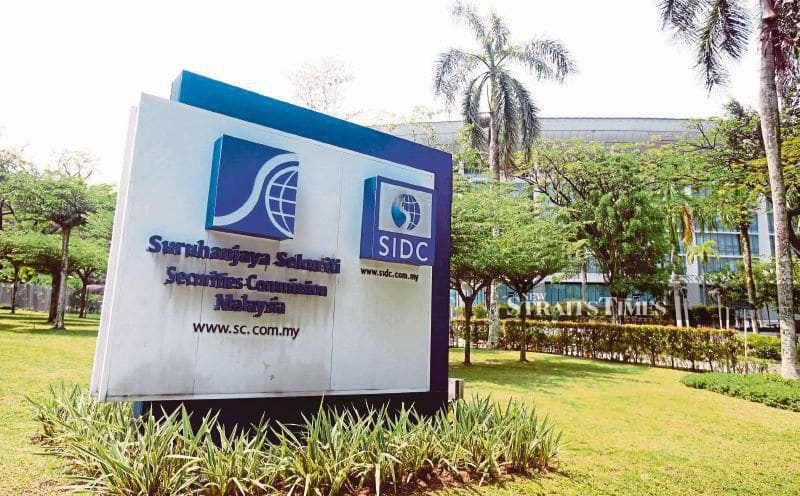
The Kuala Lumpur High Court has ordered five individuals to pay RM103.75 million after finding they orchestrated a scheme to drain funds from four Malaysian public companies. The Securities Commission brought the civil action against Tey Por Yee, Lim Chye Guan, See Poh Yee, Francis Tan Hock Leong, and Faizatul Ikmi Abdul Razak, alleging systematic misappropriation of corporate fundraising proceeds.
Justice Datuk Indera Mohd Arief Emran Arifin ruled that the commission had proven its case under the Capital Markets and Services Act 2007. The scheme targeted Nexgram Holdings Bhd, R&A Telecommunication Group Bhd, Asdion Bhd, and Ire-Tex Corp Bhd over an eight-month period spanning late 2013 through mid-2014.
Evidence presented to the court showed the defendants gained control of the companies and arranged fundraising exercises specifically to extract the proceeds. Four of the defendants held positions as directors and officers in the firms, while the fifth was found to have assisted the operation.
Penalties and Asset Freezes
The judgment breaks down into three components. The defendants must collectively return RM100.6 million to the Securities Commission, pay RM2.65 million in civil penalties, and cover RM500,000 in legal costs.
Individual fines varied by role and involvement. Tey faces a RM1 million penalty, Lim RM600,000, while See, Francis Tan, and Faizatul must each pay RM350,000. The court also imposed a blanket 10-year ban preventing all five from serving as directors or participating in the management of any Malaysian listed company.
To ensure collection, Justice Mohd Arief issued restraining orders on the defendants' assets. They are prohibited from disposing of or dealing with any property until the full amount owed has been settled.
Violations Span Multiple Statutes
The court found the defendants violated several provisions of the Capital Markets and Services Act. Specifically, they contravened Sections 179(a), 179(b), 317A, and 370, which govern director duties, prohibited conduct, and fraud in relation to securities.
The commission's case centered on demonstrating that the defendants systematically exploited their positions within the four companies. By timing fundraising exercises and then diverting the capital raised, they caused direct financial harm to the listed entities and their shareholders.
The case illustrates a pattern seen across Southeast Asian markets where individuals use director positions to orchestrate corporate asset stripping. Malaysia's securities framework allows regulators to pursue civil remedies alongside criminal prosecution, a dual-track approach that has become more common in the region.
Regional Context for Enforcement
The judgment arrives as Asian regulators intensify scrutiny of corporate governance failures. Singapore, Hong Kong, and Jakarta have all expanded their enforcement divisions over the past five years, pursuing directors who breach fiduciary duties or misuse corporate resources.
Malaysia's Securities Commission has emphasized that its enforcement strategy targets not just fraud but the abuse of corporate structures. The commission stated the ruling reinforces accountability for directors and officers entrusted with managing public companies, warning that misconduct involving misappropriation of fundraising proceeds would face action.
The 10-year directorship ban represents a significant penalty in Malaysia's corporate environment. Barred individuals lose access to board seats, advisory roles, and management positions across the entire listed company sector, effectively ending careers built on directorship networks.
For investors and analysts watching Malaysian equity markets, the case underscores risks in smaller-cap listed companies where control can change hands quickly. The four companies targeted, Nexgram, R&A Telecommunication, Asdion, and Ire-Tex, operate in sectors ranging from technology to textiles, suggesting the scheme was opportunistic rather than industry-specific.
The RM103.75 million recovery, if collected in full, would rank among the larger civil penalties secured by the Securities Commission in recent years. Asset restraining orders will be critical, as defendants in similar cases across Asia have moved assets offshore or into family trusts ahead of judgment enforcement.
RELATED STORIES

Ringgit Climbs as US Debt Crosses $40 Trillion, Pressures Dollar
Cheng Wei-Lun · 3 min
Malaysia's Currency Holds Steady as Federal Reserve Rate Shift Lifts Regional Outlook
Priyanka V. Rao · 5 min
Malaysia's Provident Fund Adds 442,000 Members as Labour Market Holds Steady
Priyanka V. Rao · 3 min

GCash Chief Calls for Digital Tools That Help MSMEs Run Better Businesses
Mariel D. Santos · 3 min
Spot something wrong? Email editor@briefasia.com. We log every correction publicly.