Finance · Markets
Malaysia's Currency Holds Steady as Federal Reserve Rate Shift Lifts Regional Outlook
The ringgit traded in a narrow band against the dollar as cooling inflation and shifting US monetary policy expectations create tailwinds for Southeast Asian currencies
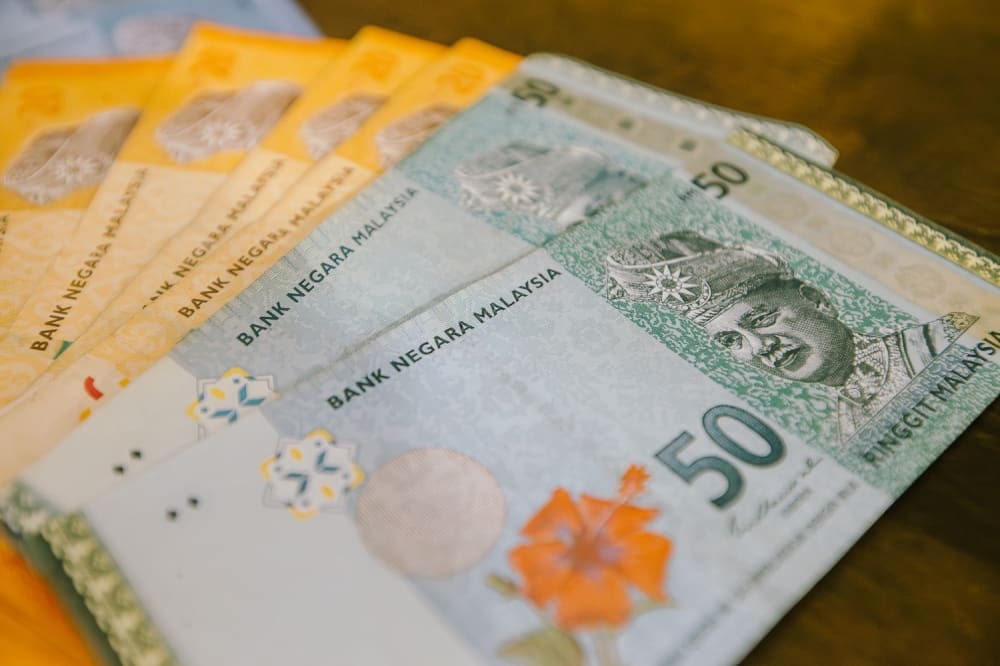
KEY TAKEAWAYS
- ·Malaysia's ringgit opened Tuesday at 4.0585 per dollar with both headline and core inflation moderating to 1.8% in July, well below thresholds that trigger tightening.
- ·Lower US Federal Reserve rate hike probability for September supports emerging market currencies as yield differentials narrow and capital flow dynamics shift.
- ·Economists expect the ringgit to trade between 4.06 and 4.08 against the dollar as robust GDP growth and contained inflation create a favorable policy environment.
Opening Bell Stability
Malaysia's ringgit began Tuesday's session with modest gains against most major currencies, holding at 4.0585 per US dollar in early trading. The stability comes as market participants digest shifting expectations around Federal Reserve policy, with traders now assigning lower probability to a September interest rate increase in the United States.
The local currency appreciated against the Japanese yen, moving to 2.5471 from the previous session's close of 2.5496, while strengthening against the British pound to 5.4993 from 5.5021. Against the euro, the ringgit improved to 4.7010 from 4.7062. These moves reflect broader recalibration across Asian foreign exchange markets as the prospect of tighter US monetary conditions recedes.
Bank Muamalat Malaysia chief economist Mohd Afzanizam noted that diminished odds of a Federal Reserve rate hike would provide support for emerging market currencies across the region. Lower US interest rates reduce the yield differential that has historically pulled capital toward dollar-denominated assets, creating space for currencies in developing economies to stabilize or appreciate.
The Inflation Sweet Spot
Malaysia's economic backdrop offers a particularly favorable environment for currency stability. Gross domestic product growth remains robust while consumer price pressures stay contained, a combination that central bankers often describe as an ideal scenario. July consumer price index data showed both headline and core inflation moderating to 1.8%, well below the thresholds that typically trigger monetary tightening.
This inflation print matters for several reasons. First, it gives Bank Negara Malaysia room to maintain accommodative policy settings without risking runaway price growth. Second, it signals that domestic demand is expanding at a sustainable pace rather than overheating. Third, it contrasts with the inflation challenges faced by several other Southeast Asian economies, where food and energy costs have pushed price growth above 3%.
The 1.8% figure represents a deceleration from earlier months and sits comfortably within the central bank's tolerance band. Core inflation, which strips out volatile food and energy components, matching the headline rate suggests that underlying price pressures remain benign across the economy. This gives policymakers flexibility to prioritize growth support over inflation control in the near term.
Regional Currency Dynamics
The ringgit's performance against regional peers showed a mixed picture Tuesday. Against the Singapore dollar, the Malaysian currency strengthened to 3.1772 from 3.1804, reflecting relative optimism about Malaysia's growth trajectory compared to its neighbor's more mature, service-driven economy. The ringgit also gained ground against the Thai baht, moving to 12.2836 from 12.2948.
However, the currency showed minimal movement against the Philippine peso, holding nearly flat at 6.60, and remained largely unchanged versus the Indonesian rupiah at 228.0. This divergence highlights how currency movements within ASEAN reflect individual country fundamentals rather than monolithic regional trends. Indonesia's economic resilience and the Philippines' remittance-supported current account both provide their currencies with distinct support mechanisms.
Singapore's slightly weaker position relative to Malaysia may reflect the city-state's greater sensitivity to global trade headwinds. As a major transshipment hub and financial center, Singapore's economy tends to move more closely with global growth cycles, while Malaysia's more diversified economic base, including commodity exports and manufacturing, can provide cushioning during periods of external uncertainty.
The Federal Reserve Factor
The shift in Federal Reserve expectations stems from recent US economic data suggesting that inflation is cooling faster than anticipated while labor market conditions remain relatively healthy. This combination has led traders to reduce their bets on aggressive monetary tightening, with futures markets now pricing in a higher probability that the Fed will hold rates steady in September.
For emerging markets, this represents a significant change in the external environment. Throughout 2025 and early 2026, many developing economy currencies faced sustained pressure as the Fed maintained restrictive policy settings to combat persistent US inflation. The resulting yield advantage for dollar assets triggered capital outflows from emerging markets, putting downward pressure on currencies from Bangkok to Jakarta.
A pause or pivot in Fed policy reverses this dynamic. As US Treasury yields stabilize or decline, the relative attractiveness of emerging market assets improves. This is particularly true for economies like Malaysia that offer solid growth prospects, manageable debt levels, and improving current account positions. Portfolio investors seeking higher returns begin to look beyond developed markets, channeling capital back into Asian equities and bonds.
Trading Range Outlook
Bank Muamalat's projection of a 4.06 to 4.08 trading range for the ringgit against the dollar reflects expectations of near-term stability rather than dramatic movement. This narrow band suggests that while conditions are supportive, there are no immediate catalysts for a sharp appreciation.
The upper bound of 4.08 likely represents a level where exporters become more active sellers of dollars, converting overseas revenue back into ringgit. Malaysian manufacturers, particularly in electronics and palm oil sectors, generate substantial dollar earnings that must eventually be repatriated. The lower bound of 4.06 may reflect where importers and companies with dollar-denominated debt step in to purchase greenbacks, creating natural support.
This technical range also aligns with broader regional currency patterns. The ringgit's recent performance has tracked closely with the Thai baht and Indonesian rupiah, all three moving within relatively tight bands as their respective central banks balance growth support with external stability. None of the three economies face immediate balance of payments pressures that would necessitate sharp currency adjustments.
Implications for Policy and Markets
The combination of low inflation and stable currency creates favorable conditions for Malaysian policymakers. Bank Negara can maintain supportive monetary settings without worrying that accommodative policy will trigger capital flight or import-driven inflation. This policy space is particularly valuable as the economy navigates global uncertainties, including ongoing US-China trade tensions and uneven recovery patterns across major export markets.
For Malaysian businesses, currency stability reduces hedging costs and planning uncertainty. Companies with cross-border supply chains can project costs more accurately, while those servicing dollar-denominated debt face lower refinancing risks. The tourism and hospitality sectors also benefit, as a stable ringgit makes Malaysia an attractive destination for visitors from stronger-currency economies while not eroding competitiveness.
The current environment underscores how domestic fundamentals and external conditions can align to create windows of stability. Malaysia's ability to sustain growth while keeping inflation in check positions the ringgit to weather external volatility better than peers facing either overheating or stagnation. As long as the Federal Reserve maintains its current trajectory and Malaysian inflation remains contained, the currency is likely to trade within a relatively narrow range, providing the stability that both businesses and policymakers value.
RELATED STORIES
Ringgit Strengthens as Fed Rate Hike Odds Drop Below 30 Percent
Priyanka V. Rao · 3 min

Malaysia's Money Supply Growth Hits Pandemic-Era Pace as Producer Prices Surge
Priyanka V. Rao · 3 min
Malaysian Ringgit Gains Ground on 6% GDP Growth in Second Quarter
Priyanka V. Rao · 3 min
Ringgit Gains Ground as Weaker US Data Shifts Fed Outlook
Priyanka V. Rao · 2 min
Spot something wrong? Email editor@briefasia.com. We log every correction publicly.