Finance · Markets
Malaysian Ringgit Gains Ground on 6% GDP Growth in Second Quarter
Currency strengthens against dollar as economic resilience surprises analysts, though geopolitical tensions and Fed policy keep traders cautious
KEY TAKEAWAYS
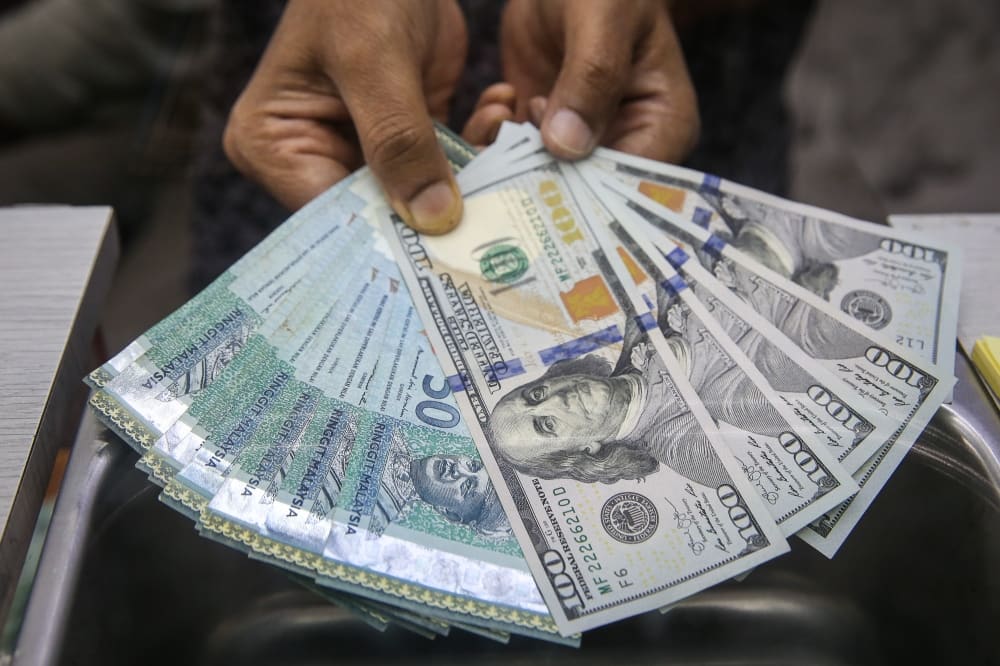
- ·Malaysia's economy grew 6.0% in the second quarter of 2026, exceeding analyst forecasts and pushing the ringgit to 4.0830 per US dollar from 4.0840.
- ·Bank Muamalat Malaysia projects the ringgit will trade between 4.07 and 4.09 against the dollar as geopolitical tensions and crude oil prices create volatility.
- ·Traders await the US Federal Reserve's September 15-16 policy meeting for signals on interest rates that could determine the ringgit's near-term direction.
Currency Rally Follows Strong Economic Data
The Malaysian ringgit opened stronger against the US dollar in early Monday trading, buoyed by second-quarter GDP figures that exceeded market forecasts. The local currency climbed to 4.0830 per dollar from Friday's close of 4.0840, reflecting renewed investor confidence in Southeast Asia's third-largest economy.
Malaysia's economy expanded 6.0% year-on-year in the second quarter of 2026, according to official data released over the weekend. The figure underscores the country's economic momentum despite global headwinds, marking another quarter of above-trend growth for the export-driven nation.
Bank Muamalat Malaysia chief economist Mohd Afzanizam noted the economy has demonstrated consistent resilience. "The Malaysian economy has remained resilient and continues to surprise on the upside," he said, projecting the ringgit would trade between 4.07 and 4.09 against the dollar in the near term.
Regional Currency Movements
Against other major currencies, the ringgit showed mixed performance in early trading. The local note strengthened to 2.5645 per Japanese yen from 2.5660 previously, while also gaining against the euro to reach 4.7257 from Friday's 4.7182. However, it softened against the British pound, slipping to 5.5312 from 5.5232.
Within ASEAN, the ringgit posted marginal gains against the Singapore dollar at 3.1923 but weakened versus the Thai baht to 12.3190. It held steady against both the Philippine peso and Indonesian rupiah, trading flat at those crosses as regional currencies digested the Malaysian growth data.
External Pressures Remain
Despite the domestic growth story, currency traders face competing forces that may limit further ringgit appreciation in the weeks ahead. Crude oil prices have edged higher on persistent geopolitical tensions, a development that typically supports commodity-linked currencies but also raises inflation concerns for importing nations.
The uncertainty extends to monetary policy expectations. Market participants are closely monitoring signals from the US Federal Reserve ahead of its September 15-16 policy meeting. Any indication of prolonged higher interest rates in the United States could strengthen the dollar and cap gains for emerging Asian currencies, including the ringgit.
Mohd Afzanizam pointed to this dynamic as a key constraint. "Traders and investors were uncertain how this would play out and impact inflation, which ultimately hinges on how the US Federal Reserve decides its monetary policy," he said.
Malaysia's Growth Trajectory
The 6% expansion in the second quarter reflects strength across multiple sectors of the Malaysian economy. Manufacturing output has remained robust, driven by electronics exports and semiconductor production, while domestic consumption has held up despite moderating from pandemic-era highs. Tourism receipts have also contributed to growth as international arrivals continue their recovery.
The GDP figure positions Malaysia among the faster-growing economies in Southeast Asia for the quarter, outpacing several regional peers. Analysts had previously forecast growth in the 5.5% to 5.8% range, making the actual result a positive surprise that may prompt upward revisions to full-year 2026 projections.
Policy Implications
The strong growth reading gives Bank Negara Malaysia, the central bank, additional room to maintain its current policy stance. Policymakers have kept the overnight policy rate unchanged this year, balancing the need to support growth against inflation management and currency stability considerations.
With the economy demonstrating resilience and inflation remaining within the central bank's comfort zone, the case for near-term rate adjustments appears limited. However, the Fed's September decision will likely influence Bank Negara's calculus, particularly if US rate policy creates capital flow pressures.
Currency strategists expect the ringgit to trade within a narrow band in the coming sessions, supported by domestic fundamentals but constrained by external uncertainty. The 4.07 to 4.09 range cited by economists suggests limited volatility unless fresh catalysts emerge from either domestic policy shifts or changes in the global rate environment.
For now, the Malaysian currency's trajectory hinges on whether the growth momentum can be sustained through the second half of 2026 and how central banks in major economies navigate the final stages of the current tightening cycle.
RELATED STORIES
Malaysia's Ringgit Strengthens on 6% Second-Quarter GDP Beat
Priyanka V. Rao · 3 min
Ringgit Strengthens as Malaysia Awaits Q2 GDP Print
Priyanka V. Rao · 3 min
Malaysian Ringgit Strengthens as 6.0% GDP Growth Beats Forecasts
Priyanka V. Rao · 2 min

Malaysian Stocks Fall as Investors Look Past Strong GDP Print
Priyanka V. Rao · 3 min
Spot something wrong? Email editor@briefasia.com. We log every correction publicly.