Finance · Markets
Malaysian Ringgit Strengthens as 6.0% GDP Growth Beats Forecasts
Second-quarter economic expansion exceeded consensus estimates, lifting the local currency against the dollar as US inflation data weighed on the greenback
KEY TAKEAWAYS
- ·Malaysia's economy grew 6.0% in the second quarter of 2026, exceeding consensus estimates of 5.8% and accelerating from 5.4% in the first quarter.
- ·The ringgit firmed to 4.0840 per US dollar as domestic demand and export strength, particularly in electronics and LNG, supported the local currency.
- ·Bank Negara Malaysia attributed growth to steady household spending, investment in structures and equipment, and robust electrical and electronics exports.
Currency Gains on Economic Resilience
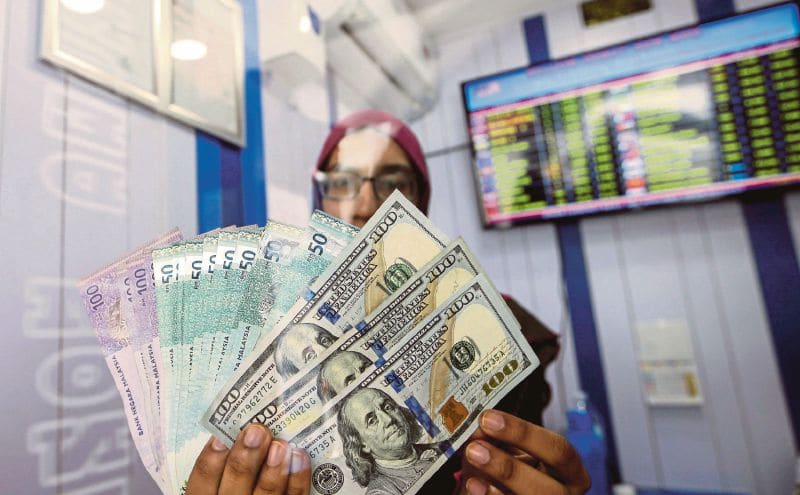
The Malaysian ringgit edged higher against the US dollar on Friday, closing at 4.0840 per dollar compared to Thursday's 4.0850, as investors digested Malaysia's second-quarter economic performance. The local currency's advance came alongside a 0.17% decline in the US Dollar Index to 99.798 points, pressured by softer American inflation readings.
Malaysia's economy expanded 6.0% year-on-year in the second quarter of 2026, according to Bank Negara Malaysia, the country's central bank. The figure topped consensus forecasts of 5.8% and marked a notable acceleration from the 5.4% growth recorded in the first quarter.
Dr. Mohd Afzanizam Abdul Rashid, chief economist at Bank Muamalat Malaysia, noted that the performance demonstrates the economy's ability to withstand external headwinds. The growth trajectory reflects stability even as global economic uncertainties persist, he explained.
Domestic Demand and Export Strength
Bank Negara Malaysia attributed the expansion to sustained domestic consumption and robust external trade. Household spending remained solid, supported by steady wage growth and continued government policy measures. Investment activity strengthened, driven by capital expenditure in structures, machinery, and equipment.
On the external front, Malaysia's export sector accelerated during the quarter. Electrical and electronics products continued their strong run, while services exports maintained their expansion. The quarter also saw a recovery in liquefied natural gas shipments and broader manufacturing exports beyond the electronics segment.
The combination of internal consumption resilience and export diversification underscores Malaysia's positioning within regional supply chains, particularly as semiconductor and electronics demand remains elevated across Asia-Pacific markets.
Cross-Currency Movements
While the ringgit firmed against the dollar, it weakened against several major currencies. The local unit slipped to 2.5660 per Japanese yen from 2.5634, and declined to 5.5232 per British pound from 5.5119. Against the euro, the ringgit eased to 4.7182 from 4.7120.
Among regional peers, the ringgit posted mixed results. It gained marginally against the Philippine peso, moving to 6.64 from 6.66, and edged up versus the Thai baht to 12.3153 from 12.3239. However, it softened against the Indonesian rupiah, falling to 229.0 from 228.4, and dipped slightly against the Singapore dollar to 3.1924 from 3.1912.
Regional Context
Malaysia's growth acceleration places it among the stronger performers in Southeast Asia's post-pandemic recovery phase. The 6.0% expansion reflects not only rebounding global electronics demand but also the effectiveness of domestic policy support in sustaining consumption through a period of elevated living costs.
The interplay between US monetary policy signals and Asian currency movements remains a key dynamic for regional finance ministries. Softer US inflation data has tempered expectations for prolonged dollar strength, creating space for emerging-market currencies to recover some lost ground. For Malaysia, the combination of stronger growth fundamentals and a stabilizing dollar environment has provided a near-term tailwind.
Export-driven economies across the region continue to benefit from the semiconductor upcycle and infrastructure buildouts in digital and energy transition sectors. Malaysia's role as a hub for chip packaging and testing, alongside its LNG export capacity, positions the ringgit's performance as a barometer for broader trade flows within ASEAN corridors.
Bank Negara Malaysia's data release offers policymakers room to maintain current interest rate settings while monitoring inflation and external vulnerabilities. The central bank has signaled a data-dependent approach, balancing growth support with currency stability as global rate cycles evolve.
RELATED STORIES
Malaysia's Ringgit Strengthens on 6% Second-Quarter GDP Beat
Priyanka V. Rao · 3 min
Ringgit Strengthens as Malaysia Awaits Q2 GDP Print
Priyanka V. Rao · 3 min
Malaysia's Ringgit Holds Steady as Traders Await GDP Data
Priyanka V. Rao · 3 min
Malaysian Ringgit Holds Steady as Markets Await GDP Release
Priyanka V. Rao · 2 min
Spot something wrong? Email editor@briefasia.com. We log every correction publicly.