Finance · Markets
Malaysian Ringgit Holds Steady as Markets Await GDP Release
Currency traders adopt cautious stance ahead of Friday's second-quarter growth data, with economists forecasting expansion above 5.8 percent
KEY TAKEAWAYS
- ·The ringgit closed at 4.0850 per US dollar, virtually unchanged from the prior session, as investors awaited Malaysia's Q2 GDP release scheduled for Friday.
- ·Malaysia's Industrial Production Index rose 6.5 percent year-on-year in June and services volume climbed 5.9 percent in Q2, suggesting the official GDP estimate of 5.8 percent may be met or exceeded.
- ·US inflation moderated to 3.4 percent in July, reducing expectations for a September Fed rate hike and shifting focus to interest-rate differentials between Malaysia and the United States.
Pre-Data Calm
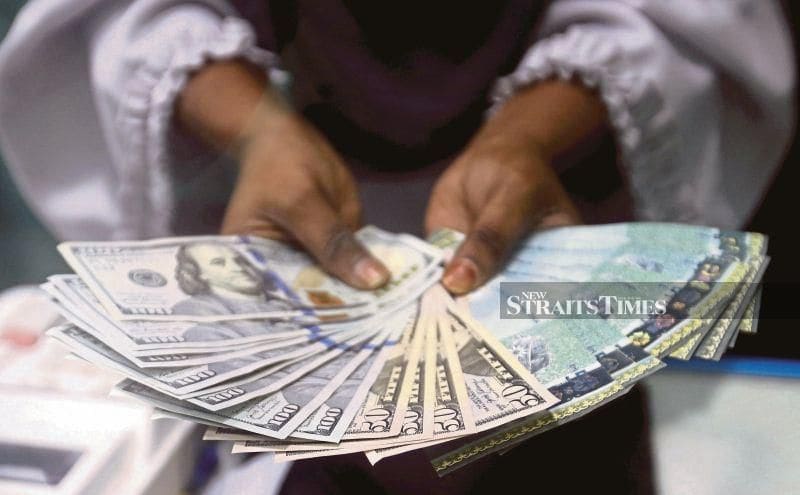
The Malaysian ringgit barely moved against the US dollar on Thursday, settling at 4.0850 per dollar compared to 4.0835 the previous session. The stability reflects a broader market pause ahead of Malaysia's second-quarter GDP figures, scheduled for release Friday by the Department of Statistics Malaysia and Bank Negara Malaysia.
Currency desks across Kuala Lumpur reported thin volumes and narrow spreads as institutional players opted to sit out ahead of the data. The advance estimate for Q2 2026 growth stands at 5.8 percent year-on-year, up from 5.4 percent in the first quarter.
Industrial Strength Points to Upside
Dr Mohd Afzanizam Abdul Rashid, chief economist at Bank Muamalat Malaysia, noted that underlying economic indicators suggest the official GDP print could meet or exceed the consensus forecast. Malaysia's Industrial Production Index jumped 6.5 percent year-on-year in June, with gains distributed across manufacturing, mining, and utilities.
The services sector has also accelerated. Malaysia's services volume index climbed 5.9 percent in the second quarter, propelled by wholesale and retail trade, food and beverage establishments, and accommodation activity, according to previously released data from the statistics department.
Both metrics provide a real-time snapshot of domestic demand and export-oriented production, the twin engines of Malaysia's growth model. If Friday's headline number confirms the momentum, it would mark the fastest pace of expansion since late 2024.
Fed Policy Overhang
The dollar's own trajectory remains a variable. US consumer price inflation moderated to 3.4 percent in July, down from 3.6 percent the prior month. That reading has cooled expectations for another Federal Reserve rate increase at the September policy meeting.
Mohd Afzanizam highlighted that the CPI deceleration opens the door to a pause, shifting investor focus back to interest-rate differentials. Malaysia's overnight policy rate currently sits at 3.00 percent, unchanged since May 2023, while the Fed's target range is 5.25 to 5.50 percent. A narrower gap would typically weigh on the ringgit, but sustained domestic growth and portfolio inflows have provided a counterbalance.
Regional Cross-Rates
Against Asian peers, the ringgit posted mixed results. It edged higher versus the Philippine peso, closing at 6.66 from 6.67, and appreciated slightly against the Thai baht to 12.3239 from 12.3488. The currency held flat against the Indonesian rupiah at 228.4 but slipped marginally to 3.1912 per Singapore dollar from 3.1905.
In developed-market crosses, the ringgit strengthened to 2.5634 per yen and 5.5119 per pound sterling, while softening to 4.7120 against the euro. The divergence reflects broader dollar dynamics and varying policy stances among major central banks.
What Comes Next
Friday's GDP release will set the tone for the ringgit's near-term path. A print in line with or above 5.8 percent would likely support the currency and dampen speculation of monetary easing by Bank Negara Malaysia. Conversely, a miss could prompt profit-taking and renewed hedging demand.
Beyond the headline figure, traders will scrutinize the expenditure breakdown, particularly private consumption and fixed investment, for clues on domestic resilience. Export performance and inventory adjustments will also matter, given the region's sensitivity to global electronics demand and China's uneven recovery.
The interplay between Malaysia's growth trajectory and the Federal Reserve's next move will determine whether the ringgit can sustain its recent stability or faces renewed pressure in the months ahead.
RELATED STORIES
Malaysia's Ringgit Holds Steady as Traders Await GDP Data
Priyanka V. Rao · 3 min
Malaysia's Ringgit Slides Against Dollar as Markets Brace for US Inflation Data
Priyanka V. Rao · 5 min
Malaysian Ringgit Dips Against Dollar as Markets Brace for US Inflation Print
Priyanka V. Rao · 2 min
Malaysia's Currency Holds Ground as Dollar Index Climbs on Hormuz Tensions
Priyanka V. Rao · 4 min
Spot something wrong? Email editor@briefasia.com. We log every correction publicly.