Finance · Markets
Malaysian Ringgit Slips as Oil Shock Revives US Rate Hike Bets
Crude prices surge past $98 per barrel amid West Asia tensions, pushing the greenback higher and rattling Asian currencies.
KEY TAKEAWAYS
- ·The ringgit closed at 4.0870 per US dollar on Thursday, down from 4.0850, as Brent crude jumped 4.23 per cent to $98.05 per barrel on West Asia supply fears.
- ·Markets now assign higher odds to a US Federal Reserve rate increase in September, lifting the dollar index to 101.169 points and pressuring Southeast Asian currencies.
- ·Central banks face a tough choice between tolerating temporary inflation from higher oil costs and tightening policy to anchor expectations, with implications for regional FX stability.
Oil Surge Tilts FX Dynamics
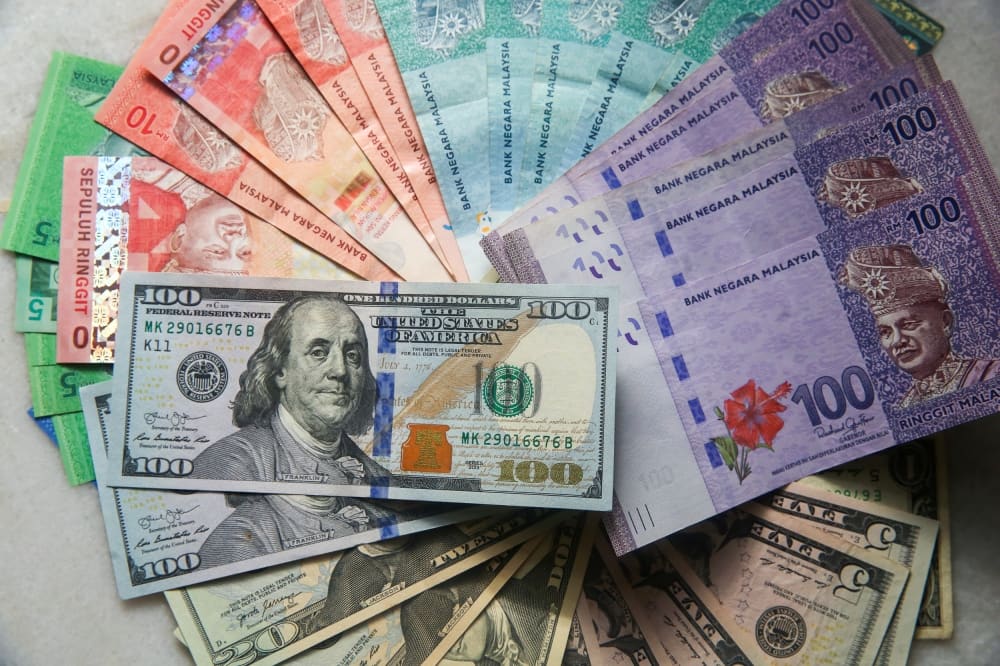
The Malaysian ringgit weakened to 4.0870 per US dollar at Thursday's close, retreating from 4.0850 the previous session, as a sharp rally in crude oil rekindled concerns about inflation and the trajectory of US monetary policy. Brent crude climbed 4.23 per cent to $98.05 per barrel, while West Texas Intermediate rose 3.19 per cent to $89.60, driven by renewed military activity in West Asia that threatens regional supply routes.
The oil spike has forced markets to recalibrate expectations for central bank action. Mohd Afzanizam Abdul Rashid, chief economist at Bank Muamalat Malaysia, noted that fragile US-Iran peace negotiations have amplified supply uncertainty, prompting traders to price in a higher probability of a Federal Reserve rate increase at the September meeting. The US Dollar Index edged up 0.04 per cent to 101.169 points, reflecting renewed demand for the greenback as a hedge against policy tightening.
Regional Currencies Under Pressure
The ringgit traded in a tight band between 4.0833 and 4.0908 throughout the session, mirroring broader weakness across Southeast Asian currencies. Against regional peers, the Malaysian unit slipped to 3.1667 per Singapore dollar from 3.1635, declined to 12.0860 per Thai baht from 12.0787, and weakened to 6.62 per Philippine peso from 6.61. It posted a modest gain against the Indonesian rupiah, firming to 227.8 from 228.0.
Among major currencies, the ringgit strengthened to 2.5015 per Japanese yen from 2.5057 but lost ground against the euro, sliding to 4.6641 from 4.6585, and the British pound, easing to 5.4647 from 5.4612. The mixed performance underscores the competing forces at play: a resilient dollar buoyed by rate expectations and selective yen strength as investors hedge geopolitical risk.
Central Bank Calculus
The oil price shock poses a dilemma for central banks across the region. Higher energy costs feed directly into headline inflation, yet many Asian economies are still navigating uneven post-pandemic recoveries and cannot afford aggressive tightening without choking growth. According to Mohd Afzanizam, some jurisdictions may opt for pre-emptive rate increases to anchor inflation expectations, even as others hold steady and tolerate temporary price pressures.
Market attention has also turned to the European Central Bank, which was scheduled to announce its policy decision Thursday evening. Consensus forecasts anticipated no change to the benchmark rate, but economists flagged the accompanying statement as critical. Any shift in language around inflation risks or the West Asia situation could ripple through currency markets, particularly for euro-ringgit and euro-dollar cross rates that influence Asian FX positioning.
What Comes Next
The ringgit's near-term path hinges on two variables: the durability of the oil rally and the Fed's reaction function. If Brent holds above $95 and US core inflation data remain sticky, the odds of a September hike will continue to climb, keeping upward pressure on the dollar. Conversely, any de-escalation in West Asia or a surprise draw in US crude inventories could ease supply fears and allow Asian currencies to recover lost ground.
For now, traders are watching the US-Iran diplomatic track and weekly petroleum status reports as closely as central bank calendars. The interplay between geopolitics, energy markets, and monetary policy has rarely been tighter, and currencies from Kuala Lumpur to Manila are caught in the crossfire.
RELATED STORIES
Malaysian Ringgit Strengthens on Strong US Jobs Data
Tran Quoc Bao · 3 min
Ringgit Gains Ground as Traders Await Fed Chair Warsh's Jackson Hole Address
Priyanka V. Rao · 3 min
Ringgit Strengthens as Malaysia's Stable Rates Signal Policy Flexibility
Mariel D. Santos · 3 min
Ringgit Set to Hold Gains as Malaysia Central Bank Meeting Nears
Priyanka V. Rao · 3 min
Spot something wrong? Email editor@briefasia.com. We log every correction publicly.