Finance · Markets
Malaysian Equities Drop 9% as Geopolitical Risks Weigh on Regional Markets
Bursa Malaysia retreated sharply Wednesday while the ringgit gained ground against the dollar, reflecting divergent investor sentiment across asset classes
KEY TAKEAWAYS
- ·Bursa Malaysia's benchmark index closed 9% lower at 1,711 points Wednesday, driven by Middle East geopolitical tensions and US trade policy uncertainty.
- ·The ringgit strengthened to 4.0850 per US dollar despite equity weakness, reflecting divergent sentiment across asset classes and potential capital repatriation or policy factors.
- ·Bitcoin and Ethereum declined in tandem with risk assets, underscoring continued correlation between crypto markets and traditional equities during periods of heightened uncertainty.
Equity Selloff Reflects Regional Caution
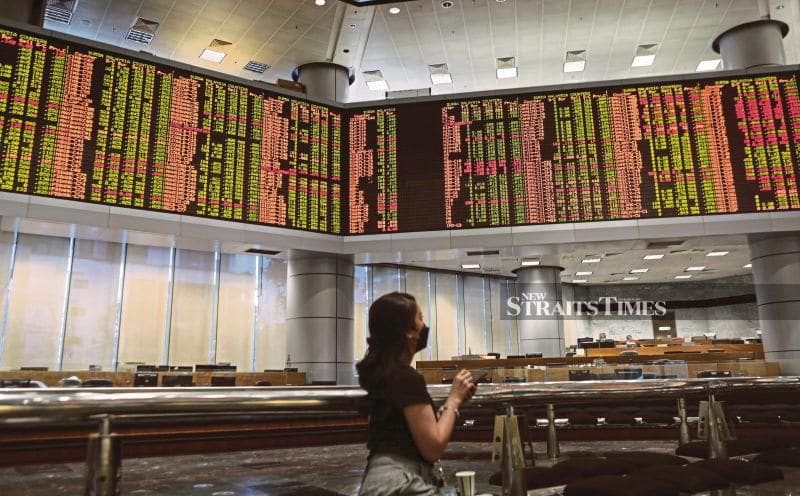
Malaysian equities suffered a sharp decline Wednesday, with the Bursa Malaysia benchmark index closing 9% lower at 1,711 points as investors pulled back from risk assets. The selloff came amid escalating geopolitical tensions in the Middle East and fresh uncertainty over US trade policy, factors that have weighed on sentiment across Southeast Asian markets in recent sessions.
The magnitude of the decline underscores how quickly regional bourses can pivot when external risk factors intensify. While Malaysia's economy has shown resilience in recent quarters, its equity market remains sensitive to global capital flows and investor appetite for emerging-market exposure. A 9% single-session drop is significant by any measure and suggests institutional money moved decisively to the sidelines.
Currency Strength Against the Grain
In a noteworthy divergence, the ringgit strengthened against the US dollar, closing at 4.0850. This move runs counter to the equity market's weakness and points to differentiated drivers in currency markets. A firmer ringgit can reflect several dynamics: capital repatriation by domestic institutions, central bank intervention, or positioning ahead of expected policy shifts.
For Malaysian corporates with dollar-denominated debt, a stronger ringgit eases servicing costs. For exporters, however, it introduces margin pressure, particularly in sectors like electronics and commodities where pricing is typically set in dollars. The currency's resilience even as equities tumbled suggests that foreign exchange participants may be pricing in factors distinct from those driving stock traders, whether that's interest rate differentials, commodity price expectations, or regional monetary policy divergence.
Crypto Markets Mirror Risk-Off Tone
Digital assets also retreated. Bitcoin declined to RM269,731, while Ethereum stood at RM7,862. Both figures reflect the broader risk-off mood that swept through traditional markets. Cryptocurrencies, despite narratives of decentralization and independence from legacy finance, have increasingly traded in tandem with risk assets, particularly US tech stocks and emerging-market equities.
The crypto price action suggests that digital assets are still viewed by many institutional participants as speculative positions rather than safe havens. When geopolitical uncertainty rises and policy clarity dims, liquidity tends to flow back toward cash and sovereign debt, leaving both equities and crypto exposed to selling pressure.
What Drove the Retreat
Two external factors dominate the current risk calculus. Middle East geopolitical tensions have flared again, raising concerns about energy supply disruptions and broader instability that could ripple through global trade. For Asia, where energy import dependence runs high, any threat to supply chains or shipping lanes carries immediate economic implications.
Simultaneously, uncertainty around US trade policy has resurfaced. While specifics remain unclear, the mere prospect of renewed tariff measures or protectionist rhetoric is enough to spook investors in export-dependent economies. Malaysia, with its significant electronics and manufacturing base tied to global supply chains, is particularly vulnerable to any shift in US trade posture.
Outlook for Malaysian Assets
The sharp equity decline raises questions about near-term market direction. If geopolitical risks continue to escalate, further outflows from regional equities are likely. Conversely, if tensions ease or policy clarity improves, the depth of Wednesday's selloff could present a tactical entry point for investors with a longer time horizon.
The ringgit's resilience offers a partial offset. A stable or appreciating currency can help anchor inflation expectations and support consumer purchasing power, both important for domestic demand. Yet if the currency strengthens too quickly, it risks undermining export competitiveness at a time when global demand is already fragile.
For now, Malaysian markets are caught between conflicting crosscurrents: external risk aversion pulling equities lower, and currency dynamics that suggest underlying economic fundamentals may be more solid than headline market moves imply. How these forces resolve in coming sessions will determine whether Wednesday's drop marks the start of a deeper correction or merely a sharp but temporary repricing of risk.
RELATED STORIES

Malaysia's KLCI Index to Add 20 Stocks in Phased Expansion
Jun-ho Seo · 2 min
Ringgit Strengthens as Malaysia's Stable Rates Signal Policy Flexibility
Mariel D. Santos · 3 min
Ringgit Set to Hold Gains as Malaysia Central Bank Meeting Nears
Priyanka V. Rao · 3 min
Ringgit Gains Ground as Traders Await Fed Chair Warsh's Jackson Hole Address
Priyanka V. Rao · 3 min
Spot something wrong? Email editor@briefasia.com. We log every correction publicly.