Finance · Markets
Malaysian Equities Climb on Consumer and Telecom Strength Amid Regional Caution
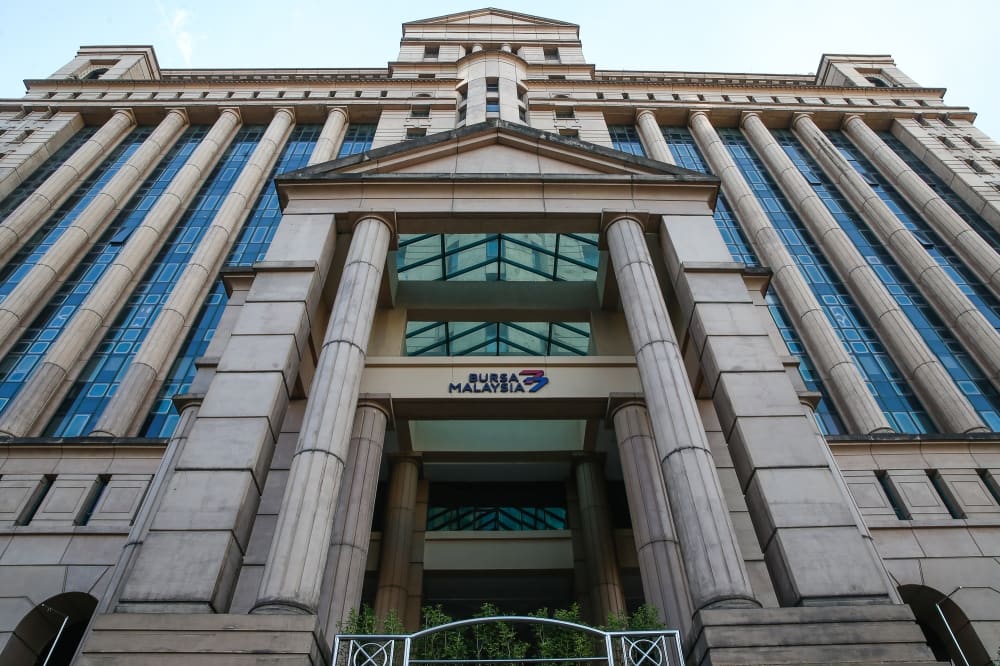
Bursa Malaysia's benchmark index gained ground Wednesday as investors rotated into defensive sectors while awaiting US Fed signals and monitoring West Asia tensions
KEY TAKEAWAYS
- ·Bursa Malaysia's benchmark KLCI index rose 3.08 points to close at 1,715.56 on Wednesday, driven by consumer and telecommunications stocks.
- ·Investors rotated into defensive sectors as geopolitical tensions in West Asia and upcoming US Federal Reserve policy decisions limited broader risk appetite.
- ·Plantation counters surged with KL Kepong up 22 sen and United Plantations gaining RM1.00, while financial services stocks declined 37.49 points overall.
Defensive Rotation Lifts Index
Malaysia's benchmark equity gauge edged higher Wednesday afternoon, closing at 1,715.56 after a session marked by rotation into consumer staples and telecommunications names. The FTSE Bursa Malaysia KLCI added 3.08 points from Tuesday's 1,712.48 finish, moving within a 1,710.79 to 1,720.59 range as investors weighed sector fundamentals against a backdrop of external uncertainty.
Turnover reached 2.96 billion shares worth RM2.48 billion, a modest increase in volume from the prior session's 2.94 billion units, though total value dipped from RM2.56 billion. Gainers outnumbered losers 550 to 476, with 612 counters unchanged. Nearly 1,200 stocks either went untraded or remained suspended, underscoring selective participation.
Mohd Sedek Jantan, director of investment strategy and country economist at IPPFA, attributed the index's resilience to strength in consumer products and services alongside telecommunications stocks, both considered defensive plays given their relatively stable earnings profiles. He noted that these sectors attracted capital even as broader market sentiment remained tentative.
Geopolitical Noise and Crude Dynamics
Reports of missile strikes on US military installations by Iranian forces rekindled concerns over West Asian stability, bringing energy security back into market conversations. While Brent crude prices have retreated from recent highs, the geopolitical landscape remains fluid, according to Sedek, limiting appetite for riskier asset classes across the region.
The energy index fell 2.74 points to 760.68, reflecting investor caution in the sector. Tenaga Nasional, the national utility, declined six sen to RM14.60, while Velesto Energy held flat at 24.5 sen despite active trading.
Financial stocks presented a mixed picture. CIMB Group rose five sen to RM7.81 and IHH Healthcare added one sen to RM8.35, yet the Financial Services Index dropped 37.49 points to 20,216.97. Maybank and Public Bank each shed four sen, closing at RM10.86 and RM5.15 respectively, while Hong Leong Bank fell 26 sen to RM24.04.
Plantation and Consumer Gains
Plantation counters delivered standout performance. Kuala Lumpur Kepong climbed 22 sen to RM20.76, United Plantations gained RM1.00 to RM34.00, and the sector sub-index accumulated 70.33 points to finish at 9,301.92. Demand for palm oil derivatives and favorable weather patterns have supported plantation earnings in recent quarters, making the sector an attractive defensive bet.
Nestle Malaysia surged RM3.12 to RM96.78, leading consumer names higher. Hong Leong Industries strengthened 22 sen to RM18.10, while technology play Vitrox jumped 19 sen to RM8.05. The FBM Emas Index rose 31.09 points to 12,672.81, and the mid-cap FBM Mid 70 Index advanced 79.77 points to 17,981.63.
On the downside, SAM Engineering & Equipment led losers with a 26 sen decline to RM4.24. UMS Integration dropped 22 sen to RM7.00, and Concrete Engineering Products fell 14 sen to RM3.46. Sarawak Oil Palms slipped 10 sen to RM5.10.
Wait-and-See Mode Before Fed
Market participants are positioning ahead of the US Federal Reserve's upcoming policy announcement and quarterly results from major US technology firms. Investors are scrutinizing whether the billions of dollars flowing into artificial intelligence infrastructure are translating into revenue growth and sustainable margins, Sedek observed.
That anticipation has injected caution into Asian trading sessions. While Kuala Lumpur managed modest gains Wednesday, the tone remains one of selective buying rather than broad-based enthusiasm. The FBM ACE Index, which tracks smaller listings, expanded 38.42 points to 4,924.71, suggesting some risk appetite persists at the speculative end of the market.
Warrant turnover rose to 1.16 billion units worth RM148.38 million, up from 978.15 million units and RM126.23 million the day prior. Main Market volume, however, declined to 1.32 billion units valued at RM2.16 billion, down from 1.51 billion units and RM2.27 billion on Tuesday, pointing to a shift in trading interest toward smaller-cap and derivative instruments.
Sector Flows and Outlook
Consumer products and services counters accounted for 176.83 million shares on the Main Market, while industrial products and services saw 273.73 million units change hands. Technology counters registered 251.03 million shares, and property names traded 160.54 million. Financial services turnover remained comparatively light at 49.73 million shares, consistent with the sector's subdued performance.
Telecommunications and media stocks contributed 27.54 million shares, a modest absolute figure that nonetheless proved influential given the sector's weighting in the benchmark. The FBM Emas Shariah Index recovered 47.84 points to 12,505.37, reflecting demand for compliant instruments.
The session underscores a familiar pattern in Southeast Asian markets: defensives outperform when macro visibility dims, and investors park capital in names with predictable cash flows. With crude prices volatile, US monetary policy in flux, and geopolitical risks simmering, Kuala Lumpur's rotation into consumer staples and telecoms mirrors positioning seen in Singapore, Bangkok, and Jakarta over recent weeks.
Whether this defensive tilt persists will hinge on signals from Washington and clarity around earnings from the US technology sector, both of which carry implications for regional equity flows. For now, Malaysia's equity market is navigating a narrow path between modest gains and cautious sentiment, with sector rotation doing the heavy lifting in the absence of broad conviction.
RELATED STORIES
Malaysian Equities Climb in Morning Session as Regional Investors Weigh Oil Price Rally
Anand Sundaram · 3 min
Malaysia's KLCI Index to Add 20 Stocks in Phased Expansion
Jun-ho Seo · 2 min
Ringgit Set to Hold Gains as Malaysia Central Bank Meeting Nears
Priyanka V. Rao · 3 min

K-One Technology Shares Surge 15% on RM94 Million Subsidiary Sale Vote
Tran Quoc Bao · 3 min
Spot something wrong? Email editor@briefasia.com. We log every correction publicly.