Finance · Markets
Malaysia's Islamic Finance Market Tops RM2.75 Trillion as Shariah Investing Gains Global Momentum
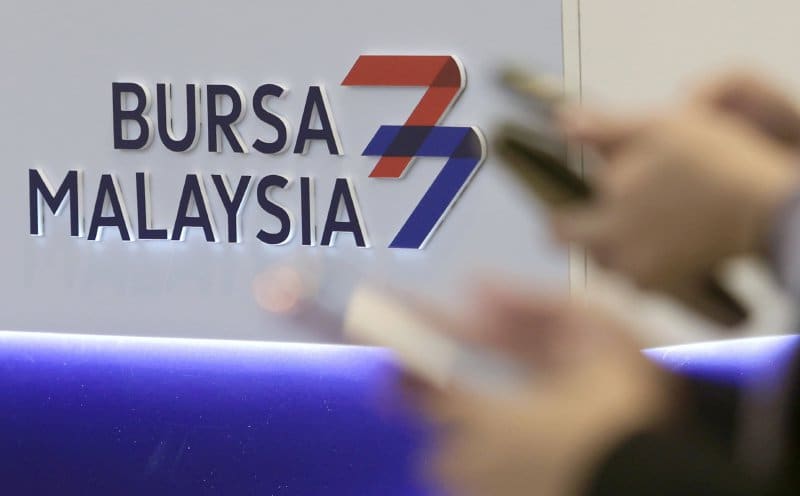
Bursa Malaysia CEO says ethical investment principles are proving resilient as AI reshapes trading and global uncertainty drives demand for transparency
KEY TAKEAWAYS
- ·Malaysia's Islamic capital market reached RM2.75 trillion in 2025, representing nearly two-thirds of the country's total capital market.
- ·The country holds 31.6 percent of global outstanding ESG sukuk as of June 30, making it the world's largest market for this asset class.
- ·Bursa Malaysia reports 81 percent of its listed companies are Shariah-compliant, accounting for 69 percent of average trading value on the exchange.
A Resilient Investment Strategy
Malaysia's Islamic capital market has reached RM2.75 trillion, underscoring the growing appeal of Shariah-compliant investing as global markets contend with geopolitical uncertainty and the disruptive force of artificial intelligence. The figure, representing nearly two-thirds of the country's total capital market in 2025, signals a shift in how institutional and retail investors are thinking about value creation.
Bursa Malaysia positions Shariah investing as more than a niche segment. The exchange now counts 81 percent of its listed companies as Shariah-compliant, while Shariah-compliant securities account for 69 percent of average daily trading value. These proportions suggest that ethical investing frameworks have moved into the mainstream of Southeast Asian capital markets.
The growth trajectory reflects broader investor demand for transparency and accountability. While AI-driven tools accelerate research, portfolio construction, and trade execution, the fundamental criteria investors use to allocate capital have not changed. Markets still reward clarity, governance, and long-term performance, qualities embedded in Islamic finance principles that prohibit speculation, excessive debt, and certain business activities.
Dominance in Green Finance
Malaysia has carved out a leadership position in environmental, social, and governance sukuk issuance. As of June 30, the country held 31.6 percent of global outstanding ESG sukuk, making it the world's largest market for this asset class, according to Bursa Malaysia.
The intersection of Islamic finance and sustainable investing has created a natural alignment. Shariah principles emphasize social welfare and prohibit harm, concepts that map closely onto ESG criteria. This convergence has allowed Malaysian issuers to tap both Islamic and sustainability-focused investor bases, broadening the pool of capital available for green projects.
The Capital Market Masterplan 2026-2030 sets a target to mobilize between RM90 billion and RM100 billion by the end of the decade to support climate action, just transition initiatives, and broader social progress. The plan explicitly integrates Maqasid al Shariah, a principle that directs capital toward economic and social objectives alongside financial returns.
Infrastructure and Ecosystem Strength
Malaysia's established Islamic finance infrastructure provides operational depth that newer markets lack. The country has built regulatory frameworks, legal precedents, and a network of Shariah scholars and advisors that support both issuers and investors. This ecosystem reduces friction for international players looking to access Shariah-compliant instruments.
The digital investment landscape in Malaysia is also maturing. Fintech platforms and robo-advisors now offer Shariah-compliant portfolios, lowering barriers to entry for younger and less wealthy investors. This democratization of access is expanding the market beyond institutional players and high-net-worth individuals.
Bursa Malaysia is encouraging listed companies to embed Maqasid al Shariah into measurable business strategies, moving the concept from theory to operational practice. The exchange is also urging investors to exercise active stewardship, channeling capital intentionally toward sustainable outcomes rather than simply screening for compliance.
Asia's Shifting Capital Flows
The growth of Shariah investing in Malaysia comes as capital flows across Asia are being reshaped by several forces: regulatory tightening in China, the energy transition, digitalization, and a generational shift in investor preferences. Younger investors in the region show stronger interest in values-aligned portfolios, a trend that benefits both ESG and Islamic finance products.
Malaysia's position at the crossroads of these trends offers strategic advantages. The country can serve as a testing ground for financial products that meet both Shariah and ESG criteria, potentially setting standards that other markets adopt. Its deep capital markets, combined with a supportive regulatory environment, create conditions for innovation in structured products, ETFs, and digital securities.
The challenge will be translating this infrastructure into sustained leadership. Competition is intensifying from the Gulf states, which are expanding their own Islamic finance offerings, and from Indonesia, which has a larger Muslim population and is building its own sukuk market. Malaysia's edge lies in execution and the ability to integrate Islamic finance with broader capital market development.
For global investors, the expansion of Shariah-compliant markets in Asia represents both diversification and alignment with ethical investment mandates. As the asset class grows, liquidity improves and pricing becomes more efficient, reducing the premium that investors once paid for values-aligned portfolios. The next phase will test whether Malaysia can maintain its lead as the market matures and competition deepens.
RELATED STORIES
Malaysian Equities Climb in Morning Session as Regional Investors Weigh Oil Price Rally
Anand Sundaram · 3 min
Malaysian Engineering Firm Pioneer Heat Sees 26% Pop on Kuala Lumpur Debut
Priyanka V. Rao · 5 min
K-One Technology Shares Surge 15% on RM94 Million Subsidiary Sale Vote
Tran Quoc Bao · 3 min
Malaysia's KLCI Index to Add 20 Stocks in Phased Expansion
Jun-ho Seo · 2 min
Spot something wrong? Email editor@briefasia.com. We log every correction publicly.