Asia · Business
Malaysia Pursues Halal Hub Strategy Beyond Certification Strength
Prime Minister Anwar Ibrahim says global leaders from China, Brazil, and South Africa are seeking partnerships as the country shifts focus to building a complete industry ecosystem.
KEY TAKEAWAYS
- ·Prime Minister Anwar Ibrahim disclosed that leaders from China, Brazil, and South Africa have approached Malaysia for halal industry partnerships and certification access.
- ·Malaysia is shifting strategy from relying solely on its halal certification system to building an integrated ecosystem linking standards with production and export capabilities.
- ·The halal sector has expanded beyond food into pharmaceuticals, cosmetics, logistics, and finance, positioning Malaysia to capture a larger share of the global halal economy valued above two trillion dollars annually.
Global Interest in Malaysian Standards
Malaysia's halal certification system has attracted attention from major economies seeking to develop their own halal industries. Prime Minister Anwar Ibrahim disclosed that leaders from China, Brazil, and South Africa have approached Malaysia for partnerships in the sector.
According to Anwar, President Xi Jinping, President Luiz Inácio Lula da Silva, and President Cyril Ramaphosa each acknowledged Malaysia's performance in halal industry development during separate meetings. The three heads of state expressed interest in obtaining Malaysian halal certification and exploring collaborative arrangements.
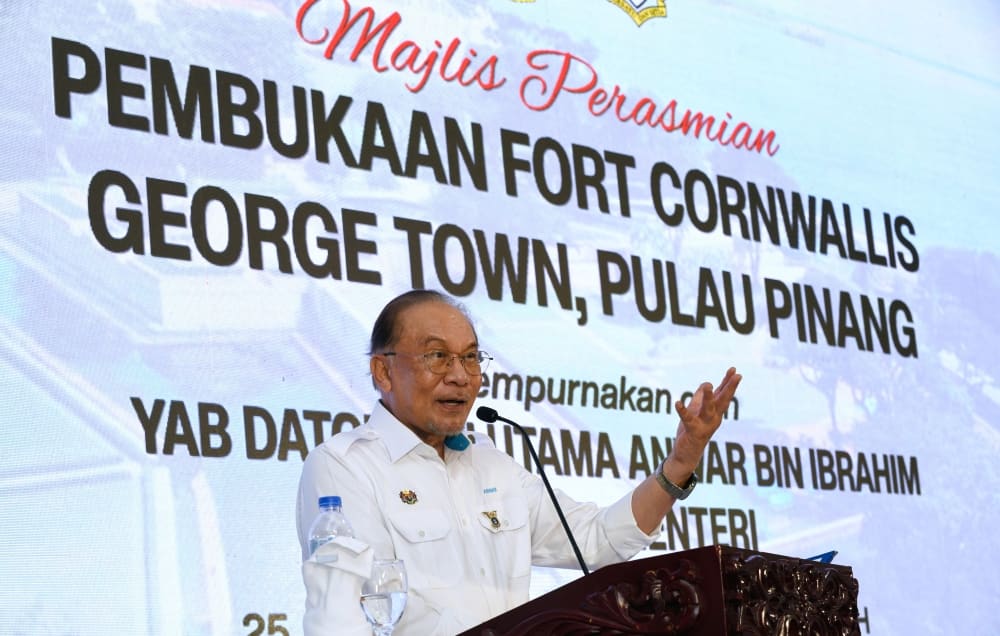
The Prime Minister made these remarks while officiating the Penang International Halal Expo 2026 and the Penang Bumiputera Entrepreneurs Gathering at Politeknik Seberang Perai in Permatang Pauh on July 25. The event was attended by Communications Minister Fahmi Fadzil and Penang Deputy Chief Minister Mohamad Abd Hamid, who chairs the Penang Halal Industry Development Council.
Ecosystem Over Certification Alone
Anwar emphasized that Malaysia cannot rely exclusively on its certification framework to maintain its competitive position. He called for building a more comprehensive halal industry ecosystem that integrates production capabilities with regulatory standards.
"Our strength lies not only in certification, but also in creating synergy between certification and industry," Anwar stated. The approach signals a shift from viewing halal certification as an isolated regulatory function to treating it as one component within a broader industrial strategy.
The Prime Minister stressed that government-industry collaboration is essential to uphold halal standards while enabling Malaysian companies to access international markets. This dual objective requires coordination between certification bodies, manufacturers, logistics providers, and export promotion agencies.
Expanding Beyond Food
The halal industry in Malaysia has evolved beyond its traditional association with food products. Anwar noted that the sector now encompasses pharmaceuticals, cosmetics, logistics, finance, and tourism, transforming it into a high-value economic segment.
This diversification reflects broader trends across Southeast Asia, where halal-compliant offerings have expanded into personal care, healthcare, and financial services. Malaysia's established certification infrastructure positions the country to capture a larger share of the estimated global halal economy, which industry analysts peg at over two trillion dollars annually.
The Penang International Halal Expo serves as a platform for Malaysian companies to showcase capabilities across these diverse categories. Penang, with its manufacturing base in electronics, pharmaceuticals, and food processing, represents a microcosm of the integrated approach Anwar outlined.
Strategic Positioning in Asia
Malaysia's push to become a halal industry hub intersects with its broader ambitions in regional trade. The country's participation in the Comprehensive and Progressive Agreement for Trans-Pacific Partnership and the Regional Comprehensive Economic Partnership provides export channels for halal-certified goods.
The interest from China, Brazil, and South Africa suggests that non-Muslim-majority countries see commercial value in halal certification for accessing markets in the Middle East, Southeast Asia, and North Africa. Malaysia's role as a certification provider and knowledge partner could generate services revenue alongside goods exports.
However, sustaining this position will require ongoing investment in laboratory facilities, auditor training, and regulatory harmonization with importing countries. The government has signaled that building these capabilities, rather than simply expanding certification volume, will be the priority in the next phase of halal industry development.
RELATED STORIES
Malaysia's Petronas Reports Steady Earnings Amid Energy Security Push
Priyanka V. Rao · 2 min
Proton Eyes 200,000 Units in 2026, Aiming for Best Sales Year Since 2011
Priyanka V. Rao · 3 min
Penang Captures 34% of Malaysia's Manufacturing Investment in First Half
Anand Sundaram · 2 min
Malaysia's Rare Earth Deposits Draw Foreign Interest Ahead of China Export Controls
Priyanka V. Rao · 3 min
Spot something wrong? Email editor@briefasia.com. We log every correction publicly.