Finance · Deals
Malaysia Doubles Down on Factory Automation With New 2:1 Matching Fund
Kuala Lumpur raises co-investment ratio for smart manufacturing projects, offering RM2 of government capital for every RM1 from private investors through 2030
KEY TAKEAWAYS
- ·Malaysia will contribute RM2 for every RM1 private investors put into smart manufacturing projects through 2030, doubling government backing for automation and Industry 4.0 upgrades.
- ·The co-investment ratio for firms outside priority sectors rises temporarily to 1:1 until end-2027, matching private capital ringgit-for-ringgit and easing access during market uncertainty.
- ·The Strategic Co-Investment Fund uses equity crowdfunding and peer-to-peer platforms to channel public money alongside private capital into 25 sectors under the New Industrial Master Plan 2030.
A New Gear for Industrial Upgrading
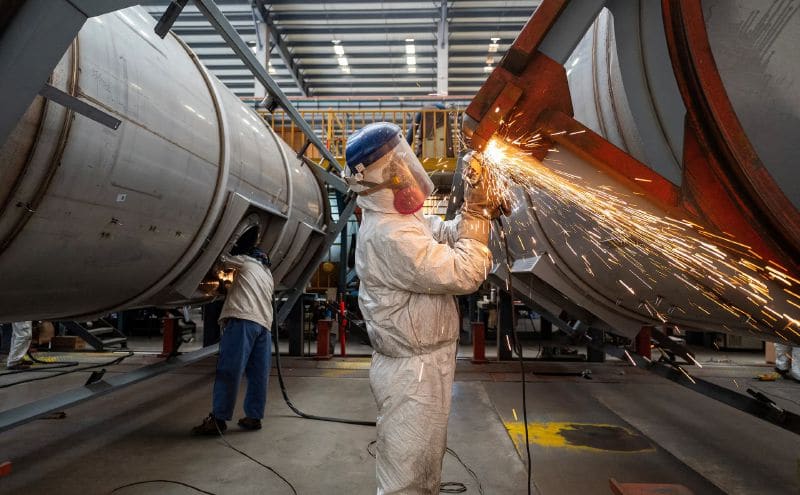
Malaysia is making it cheaper for small manufacturers to automate. The Investment, Trade and Industry Ministry and the Securities Commission have introduced a Smart Manufacturing scheme that offers RM2 of government funding for every RM1 a private investor commits, running through the end of the decade. The enhanced ratio applies to companies undertaking automation, Industry 4.0 rollouts, digitalization projects, and other productivity upgrades.
The scheme sits within the Strategic Co-Investment Fund framework of the New Industrial Master Plan 2030, a blueprint that identifies 25 strategic sectors the government wants to accelerate. Small and medium enterprises and mid-tier companies working on factory-floor transformation now qualify for double the government backing compared to the standard 1:1 match, signaling a clear policy tilt toward production modernization.
Capital Gets Easier for Other Sectors, Too
Alongside the new smart manufacturing category, the two agencies have temporarily lifted the co-investment ratio for businesses outside priority sectors. Until the end of 2027, firms in the "Other Sectors" bucket will receive RM1 of government capital for every RM1 raised privately, up from the previous 1:2 ratio where the government contributed only fifty sen per ringgit. The revision brings these companies level with priority and new-growth sectors under NIMP 2030, broadening access to capital during what officials describe as continued economic and market uncertainty.
The Strategic Co-Investment Fund channels public money through equity crowdfunding and peer-to-peer financing platforms, offering an alternative to bank loans. Since launch, the program has backed fundraising campaigns for Malaysian businesses operating within the 25 NIMP sectors, though cumulative deployment figures were not disclosed.
What the Ratios Mean in Practice
The math is straightforward. A manufacturer seeking to install collaborative robots or deploy real-time production dashboards can now raise RM1 million from private backers and receive an additional RM2 million from the government, yielding RM3 million in total capital. Under the old 1:1 structure, the same RM1 million would have unlocked only RM1 million in public funds.
For companies in other sectors, the improvement is equally tangible. A services firm or an agricultural processor raising RM500,000 privately will now draw RM500,000 from the fund instead of RM250,000, effectively cutting the private-capital hurdle in half for the next two and a half years.
Strategic Intent Behind the Move
The two agencies said the enhanced funding support is designed to accelerate capital deployment, strengthen business resilience, and help companies scale within the industrial sectors mapped out under NIMP 2030. The intervention reflects a broader Southeast Asian pattern: governments in the region are using co-investment vehicles to de-risk private capital and steer it toward sectors they judge critical for competitiveness.
Malaysia's approach leans on digital infrastructure already in place. Equity crowdfunding and peer-to-peer platforms have matured enough to serve as distribution channels, bypassing the slower pace of traditional grant administration. The model also keeps skin in the game, requiring private investors to commit first before public funds flow.
What Comes Next
The Smart Manufacturing ratio holds through 2030, giving firms an eight-year runway to plan capital raises around the 2:1 match. The temporary lift for Other Sectors expires at the close of 2027, after which the ratio will likely revert unless extended. Companies eyeing the enhanced terms have a clear window to structure their fundraising.
The real test will be uptake. Co-investment schemes depend on pipeline quality, investor appetite, and the operational readiness of the platforms that host campaigns. If deal flow accelerates and capital deployment rises, the structure may prove a durable template for industrial policy in an era when fiscal space is tight but strategic sectors still need a push.
RELATED STORIES
Malaysian Palm Oil Giant KLK Swings to RM1.34 Billion Quarterly Loss
Priyanka V. Rao · 3 min
Malaysia's KLCI Index to Add 20 Stocks in Phased Expansion
Jun-ho Seo · 2 min

Ringgit Strengthens as Malaysia's Stable Rates Signal Policy Flexibility
Mariel D. Santos · 3 min

Ringgit Set to Hold Gains as Malaysia Central Bank Meeting Nears
Priyanka V. Rao · 3 min
Spot something wrong? Email editor@briefasia.com. We log every correction publicly.